
–:– / –:–
This voice experience is generated by AI. Learn more.
This voice experience is generated by AI. Learn more.
Summary
The U.S. Open has cemented its status as a premier cultural event, far exceeding a traditional tennis tournament. Its “showoff” identity and record-breaking revenue attract a wide array of corporate sponsors seeking more than mere logo visibility. Today’s brands demand immersive, interactive experiences that engage fans, generate social content, and yield valuable consumer data. The tournament’s extended Fan Week and unique activations, like the viral Honey Deuce, exemplify this shift. Brands integrate top athletes and increasingly utilize content creators to foster deep connections, transforming the U.S. Open into a dynamic, three-week consumer carnival where active participation is paramount for turning fans into brand advocates.
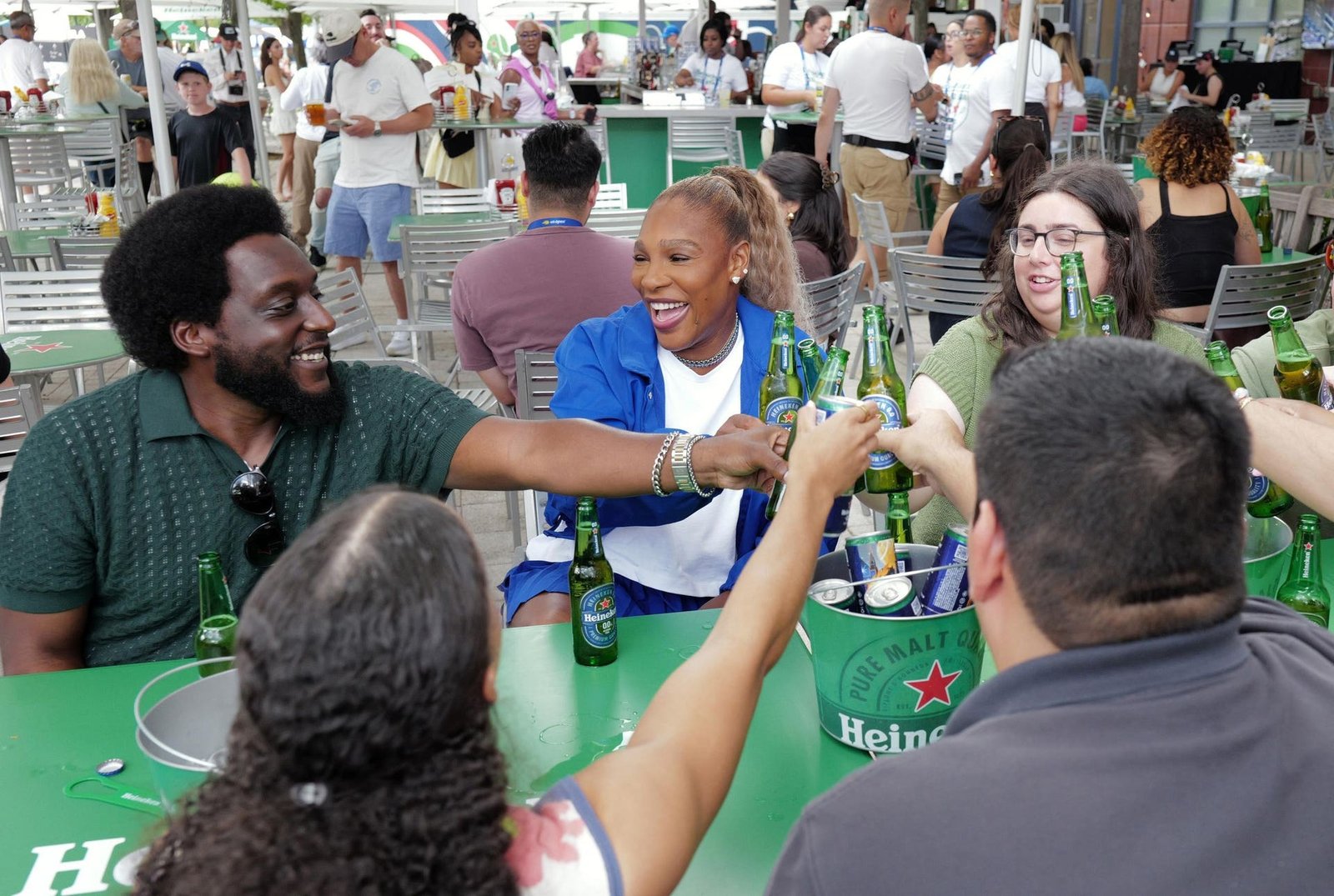
NEW YORK, NEW YORK – AUGUST 24: Serena Williams surprises fans at the US Open for Heineken’s Second Serve Ticket Campaign at the USTA Billie Jean King Tennis Center in New York City on August 26, 2026. (Photo by Craig Barritt/Getty Images for Heineken)
Getty Images for Heineken
The 2026 U.S. Open will attract more than tennis fans. Last year, a record 1.14 million people attended the U.S. Open. Among them were influencers, celebrities, sports agents, vendors, corporate sponsors, athletes, sports and government officials. All participated in an evolving sports sponsorship ecosystem.
No longer satisfied with merely slapping logos
No longer satisfied with merely slapping logos on stadiums and signage, today’s sports sponsors seek an immersive experience that extends beyond Flushing Meadows and lingers long after the U.S. Open champions are crowned.
Tennis is a spectator sport, but the U.S. Open is a carnival for consumers. Corporate brands want tennis fans to do something, feel something, and share what they do and feel. The U.S. Open, the USTA’s crown jewel, offers the ideal venue to activate these immersive experiences.
“The U.S. Open is one of the most exciting, entertaining events in sports and attracts a lot of brands that are not involved in sports sponsorship,” said Fabien Paget, CEO and Co-Founder at 17 Sport, a sports marketing agency. “But it’s not just a sports or tennis event; it’s a cultural event.”
If you look at the U.S
If you look at the U.S. Open by the numbers, Arthur Ashe Stadium is the largest tennis venue of the four Majors. The U.S. Open pays out the most prize money,a record $108 million this year. The U.S. Open is the most lucrative Grand Slam tournament, generating more than $500 million in revenue. This year marks the first year of the U.S. Open’s new $2.04 billion deal with ESPN, the event’s exclusive domestic broadcaster.
Each Major has an identity, or what Paget calls “Slam DNA.”
“I mean for France, it’s French elegance. For Wimbledon, it’s the British tradition,” said Paget. “I remember when I was a kid, I wanted to go to the night session at the U.S. Open because of the show.”
The U.S. Open identifies as showoff, loud and proud. The show lures corporate sponsors to the marketing mecca, where brands hope to convert experience seekers into true believers, eventually disciples.
Athlete endorsements remain part of the marketing strategy
Athlete endorsements remain part of the marketing strategy. However, more brands want measurable fan interaction that produces first-party consumer data, social media content, product trials, and repeat engagement.
“I think the U.S. Open does an incredible job of creating an experience not just with the tennis itself, but the entire ecosystem of the event,” said Chris Lucraz, RWS Global, a London-based company that creates customized guest experiences across entertainment and sports. “They’ve been really innovative with things like the Fan Week, which obviously with free tickets, gets a lot of activations.”
Brands like Grey Goose Vodka benefit from sponsorships that feel organic, like the Honey Deuce, the most popular cocktail at the U.S. Open. Unlike the long tradition of strawberries and cream at Wimbledon, the Honey Deuce has only been around since 2006. Yet, it gets more publicity than most of the players.
The amount of Instagramable traction they’ve gotten
“The amount of Instagramable traction they’ve gotten with things like you know the Honey Deuce. Like who doesn’t know about the viral every year?,” said Lucraz. “It’s a drink that ties into the event.”
Fan Week includes qualifying rounds and a revamped mixed doubles tournament, which paid champions Karolina Muchova and Jakub Mensik $1 million (to split), compared to the approximately $141,826 the French Open mixed doubles team earned earlier this summer.
Moving mixed doubles to Fan Week and including top singles players extended the U.S. Open to a three-week event, creating a Super Bowl-like atmosphere with ample opportunities to launch activation strategies.
Players attract fans
Players attract fans. Alexandria Eala, a rising global superstar, draws a new Filipino fanbase. Coco Gauff is the world’s highest-paid female athlete, and Novak Djokovic has devoted followers.
But those athletes are at all the Grand Slams, where they do promotional appearances. However, because of New York City’s infrastructure — public transportation, media outlets — the U.S. Open can provide more opportunities for player appearances.
Heineken’s Second Serve Ticket Campaign at the Billie Jean King Center included a surprise visit from Serena Williams, shared a beer and conversation with thrilled fans.
The Lotte New York Palace Hotel offered guests
The Lotte New York Palace Hotel offered guests a Game, Set, Sparkle package that included a minimum two-night stay in the Jewel Suite, designed by renowned jeweler Martin Katz; a 12-carat tennis bracelet; a champagne and canapés welcome; and a private meet-and-greet with Palace Invitational athletes, including Serena and Caroline Wozniacki.
Frances Tiafoe and Carlos Alcaraz were guests at a block party in the Dumbo section of Brooklyn to celebrate E
The U.S. Open culture includes fan engagement beyond the venue.
Dove’s “Don’t Sweat It. Make a Racket,” campaign features on-site cooling and beauty experiences, social content and women’s finals watch parties at women-owned sports bars around the country.
IHG Hotels & Resorts is providing the Racquet
IHG Hotels & Resorts is providing the Racquet Cruiser, a branded ride-home experience for fans leaving late matches. The motor coach features food, match replays, charging and hospitality.
IBM created an AI-powered U.S. Open experienceat Madison Square Park for championship weekend. Fans can try IBM’s simulated serve speed and watch the semifinals on a jumbo screen. IBM has partnered with the USTA since 1992; however, even a long-standing partnership benefits from a modern strategy.
Ishveen Jolly is founder and CEO of OpenSponsorship, which connects brands with athletes for sponsorships and marketing partnerships. A former sports agent, Jolly says sponsorship deals evolved from straightforward endorsements, such as an athlete wearing the brand logo, to influencers and content creators generating viral moments.
The shift changed client conversations from focusing
The shift changed client conversations from focusing on transactional partnerships with athletes to more content creator deals.
“I pulled some numbers from our database, and it’s amazing how many tennis deals we’ve done with just tennis content creators,” said Jolly. “Okay, do we really need the athlete, or do we need the tennis content creator who’s going to make some really cool stuff on YouTube and go viral versus the athlete who’s busy, who’s playing, who might get knocked out in the first round.”
Athletes remain brand ambassadors. However, their endorsement deals are part of a greater immersive experience. Coco Gauff and Taylor Fritz are ambassadors for Oura, the USTA’s first official wearable partner. Gauff and Fritz are featured in video and print ads. But the sponsorship deal includes on-site product giveaways, personalized health feedback, and product fitting.
The future of U.S. Open sponsorships probably rests with brands that can make fans feel they are a part of more than a tennis event. Perhaps the most valuable sponsorship asset is immersing the brand in U.S. Open culture and inviting fans to join the party.
Editorial StandardsReprints & Permissions
Source: www.forbes.com