

Vietnam may be the world’s second-largest coffee producer—and home to one of its great café cultures—but coffee beans are a surprisingly recent import here. First introduced by French missionaries in the mid-19th century, the crop eventually took root in the Central Highlands. Production surged following the Đổi Mới economic reforms of the late 1980s, transforming Vietnam into the coffee powerhouse it is today.
But Vietnam’s contribution to the coffee-drinking world extends beyond its export. From the countryside to urban areas like Ho Chi Minh City, still colloquially known as Saigon, café culture is an all-day affair, with cups enjoyed over long conversations from morning until late at night perched on plastic stools in old family-run shops, and, increasingly, design-forward specialty cafés.
Historically, Vietnamese coffee has centered on robusta, whose bold, chocolaty character lends itself particularly well to the phin, a single-serve metal filter that slowly drips concentrated coffee into the glass below. Add sweetened condensed milk and ice, and you get Vietnamese iced coffee, or cà phê sữa đá: bitter, sweet, and cold. Then there’s bạc xỉu, the sweeter, milkier Saigon remix that flips the ratio, adding just enough coffee to a glass of mostly milk for something lighter.
Across Vietnam, different regions and communities have developed their own ways of drinking coffee. The northern capital, Hanoi, gave rise to silky cà phê trứng, made with whipped egg yolks and sugar, while in central Vietnam, the former imperial capital of Huế produced cà phê muối, which tempers coffee’s bitterness with salt. Saigon’s historic Chinese immigrant community also left its mark with cà phê vợt, a once-common method of brewing coffee through a cloth “sock” filter that survives at a handful of old-school shops today.
In more recent years, a third- and fourth- wave generation of roasters and baristas has been expanding the definition of Vietnamese coffee once again. Beyond robusta, they’re spotlighting modern brewing methods like pour-overs using arabica from Sơn La, Măng Đen, and other high-altitude growing regions. Meanwhile, new-school cafés experiment with local ingredients and flavors ranging from citrus to tamarind. Here are nine Vietnamese coffees to try and where to find them in Saigon.
Cà phê sữa đá (iced coffee) at Highlands Coffee
No drink is more synonymous with Vietnam than cà phê sữa đá, the deceptively simple combination of robusta coffee, sweetened condensed milk, and ice. Traditionally brewed through a phin filter, the coffee drips slowly onto the milk before being stirred and poured over ice, producing a flavor profile that is simultaneously bitter, sweet, rich, and refreshing. Founded by Vietnamese American entrepreneur David Thái, Highlands Coffee helped bring this everyday ritual into the modern Vietnamese coffee chain without losing the drink’s distinctly local character. Its version is unapologetically strong and dark, with enough condensed milk to round out robusta’s bitterness without burying it. With hundreds of Highlands locations across Vietnam—plus a few new outposts in the U.S.—it’s also among the easiest versions to seek out.
Bạc xỉu (white coffee) at Lacàph Coffee Bar
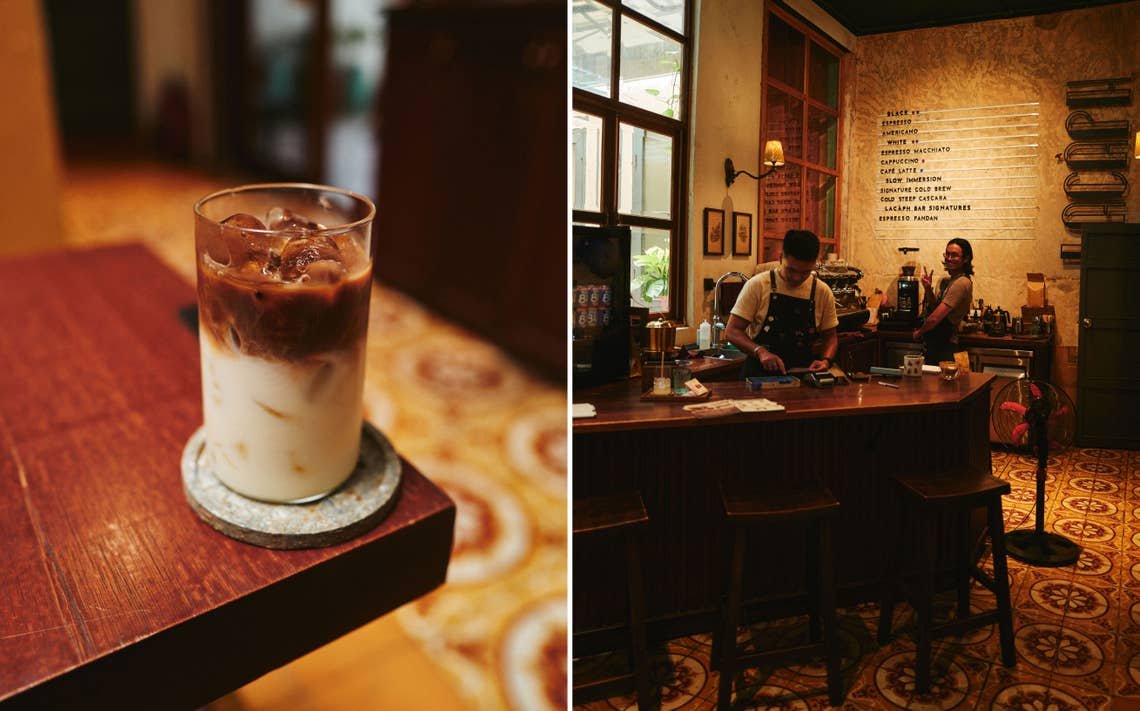
While cà phê sữa đá puts coffee first, bạc xỉu completely flips the ratio. Tracing its roots to the Cantonese community in Saigon’s Chinatown, its name is shortened from bạc tẩy xỉu phé (roughly, “a glass of white with a little coffee”). The drink was originally made by diluting condensed milk with hot water and adding just a splash of coffee, offering a sweeter, gentler alternative to robusta’s intensity. Today’s versions often incorporate fresh milk for an even creamier profile. While you can find bạc xỉu pretty much anywhere in the city, the tucked-away, design-forward Lacàph Coffee Bar offers a particularly polished take on this “white coffee” brewed through microfilter phins using premium Vietnamese beans.
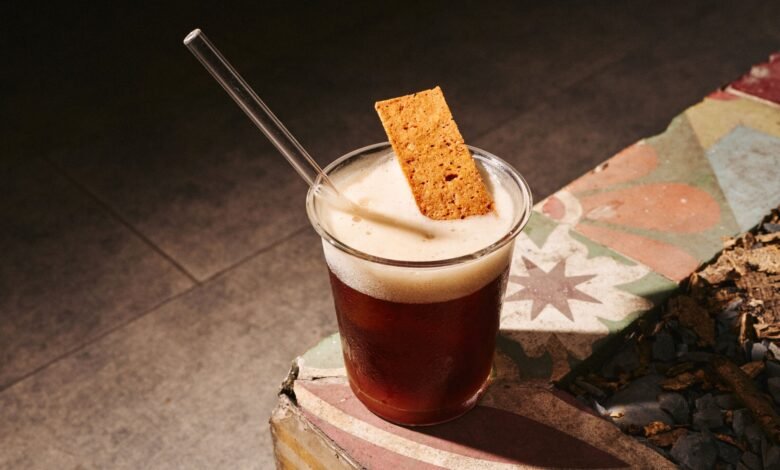
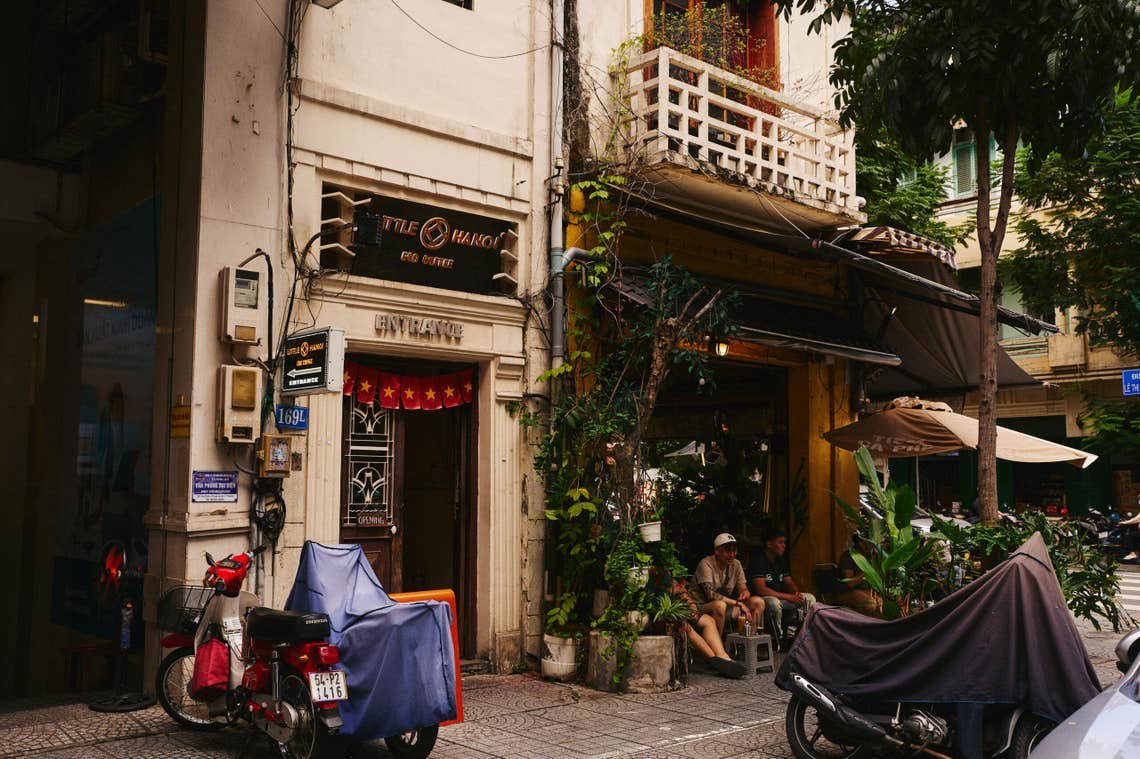
Cà phê trứng (egg coffee) at Little Hanoi Egg Coffee
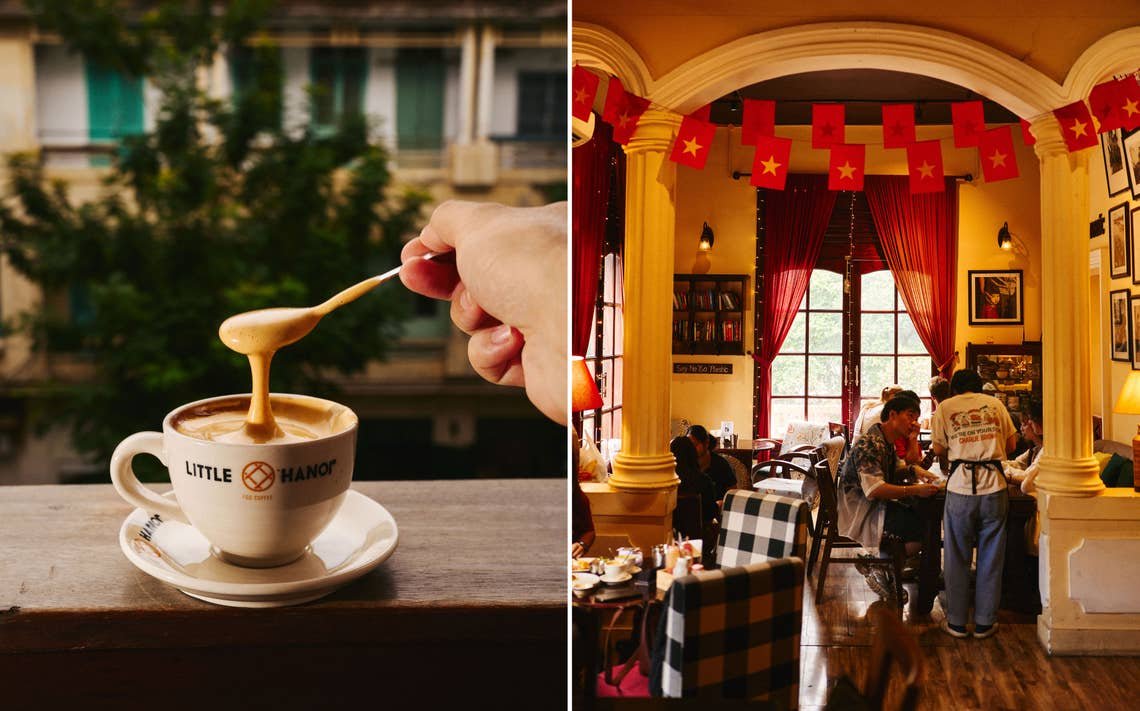
Created in Hanoi in 1946, cà phê trứng is credited to Nguyễn Văn Giảng, a bartender at the city’s famed 125-year-old Sofitel Legend Metropole Hanoi, who reportedly began whipping egg yolks with sugar and condensed milk when fresh milk was scarce. The foamy mixture is spooned over intensely concentrated coffee, creating a pick-me-up that veers into dessert territory. The taste is rich and custardy without the strong egginess that first-timers often expect. To try it in Saigon, head to Little Hanoi, a specialist of the Northern classic.
Cà phê muối (salt coffee) at Hue Cafe Roastery

Associated with the central Vietnamese city of Hue, cà phê muối has spread throughout the country with remarkable speed. While many versions top strong coffee with a whipped salted cream, Hue Cafe Roastery takes a more demure approach, blending the salt directly into the coffee and condensed milk. Regardless of how it’s prepared, the touch of salinity tempers both the sweetness of the milk and the bitterness of the coffee, giving the drink the subtle finesse and balance that central Vietnamese cooking is also known for.
Cà phê vợt (sock-filter coffee) at Cà Phê Vợt
Hidden down an alley in Phú Nhuận, near the airport, Cà Phê Vợt preserves a brewing tradition with roots in Saigon’s Chinese community. Here, “vợt” refers not to a particular drink but to the method: Finely ground coffee is brewed through a long cloth “sock” filter rather than the more familiar metal phin, producing a dark, aromatic base that can then be served as cà phê sữa đá, bạc xỉu, and more. This particular shop has been run by the same family for more than 70 years; second-generation owner Mrs. Tuyết, now 78, started helping her parents here when she was just seven, and her children have since joined the business. She remembers when plenty of Saigon shops brewed coffee this way, but she has watched them gradually disappear. Asked why hers has endured, she offered a simple explanation: “I stayed the longest because I love this work.”
Cà phê cốt dừa (coconut coffee) at Cộng Cà Phê
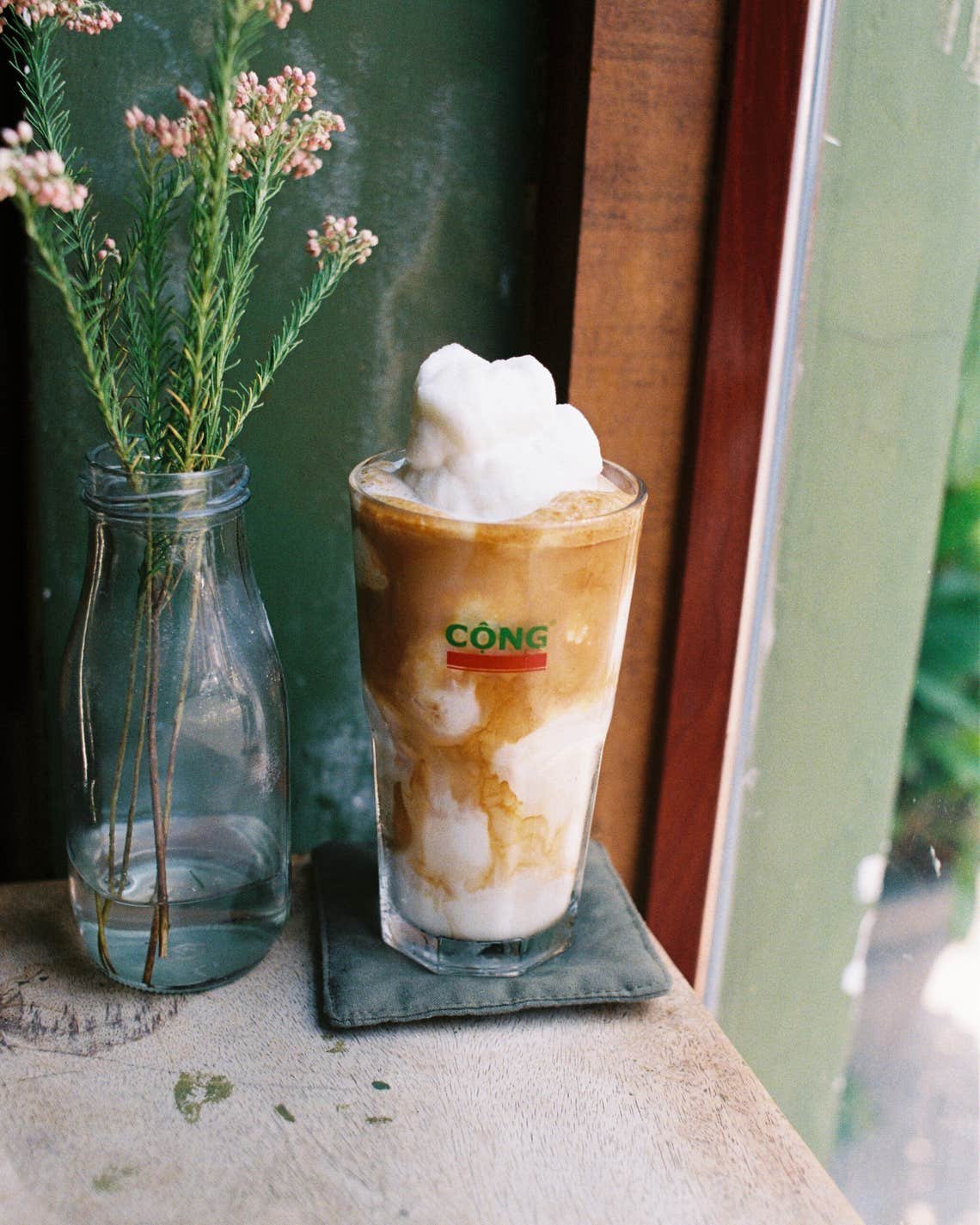
Few Vietnamese drinks blur the line between caffeine and dessert quite like an icy cà phê cốt dừa. At Cộng Cà Phê, the chain’s now-iconic version blends coconut cream, condensed milk, and ice into a thick frozen base that’s paired with strong Vietnamese coffee and topped with toasted coconut. The coffee provides just enough bitterness to balance out the sweetness, while the toasted flakes on top offer a welcome bit of crunch as the drink winds down—best scooped with the long spoon served alongside it. With design inspired by Vietnam’s post-war era, Cộng’s nostalgic, military-green interiors only add to the experience.
Vietnamese pour-over at Sipply Coffee
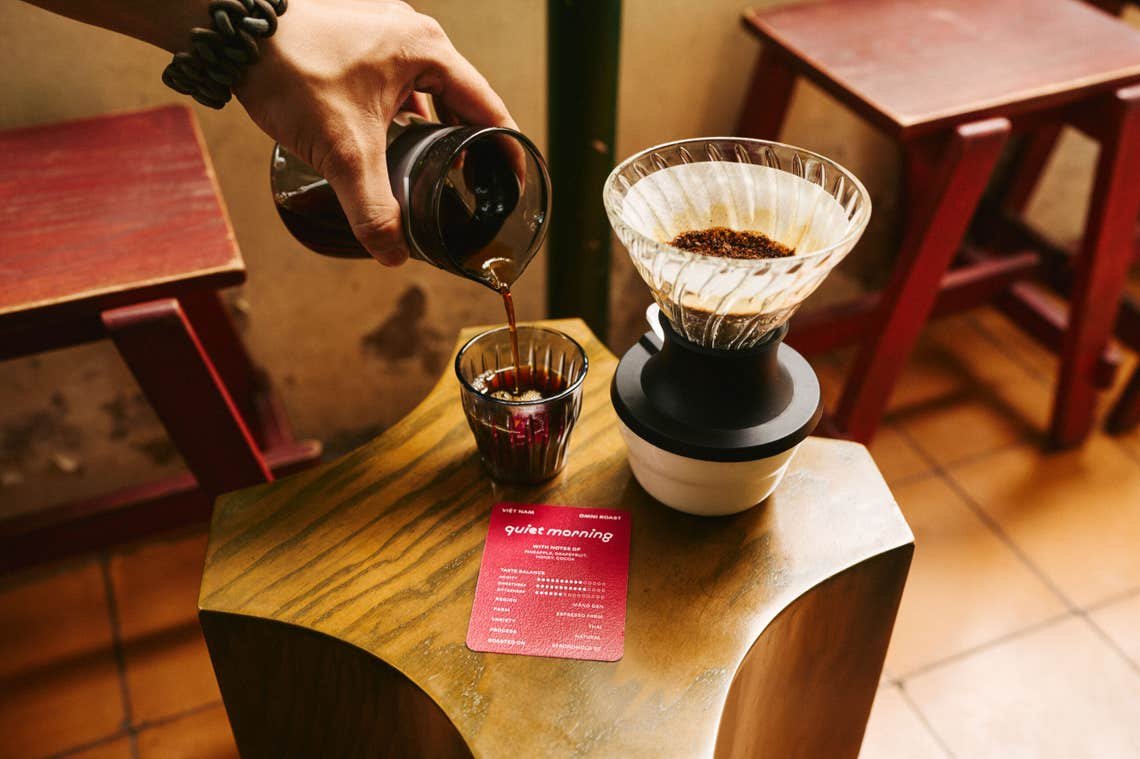
Vietnamese coffee doesn’t stop at robusta. At this new-wave micro-roastery’s two locations, the menu spotlights specialty arabica grown in high-altitude regions like Măng Đen, Sơn La, and Cầu Đất. Order the pour-over, and you might encounter tropical fruit, honey, or an almost tea-like subtlety—a compelling counterpoint to the dark, intensely bitter profile of the more traditional stuff. And, if you want a break from filter coffee, try Sipply’s other standard espresso classics and creative specialties, like its bestselling Triple Citrus, made with a splash of kombucha and served over ice.
Cold-brew citrus punch at Every Half Coffee Roasters
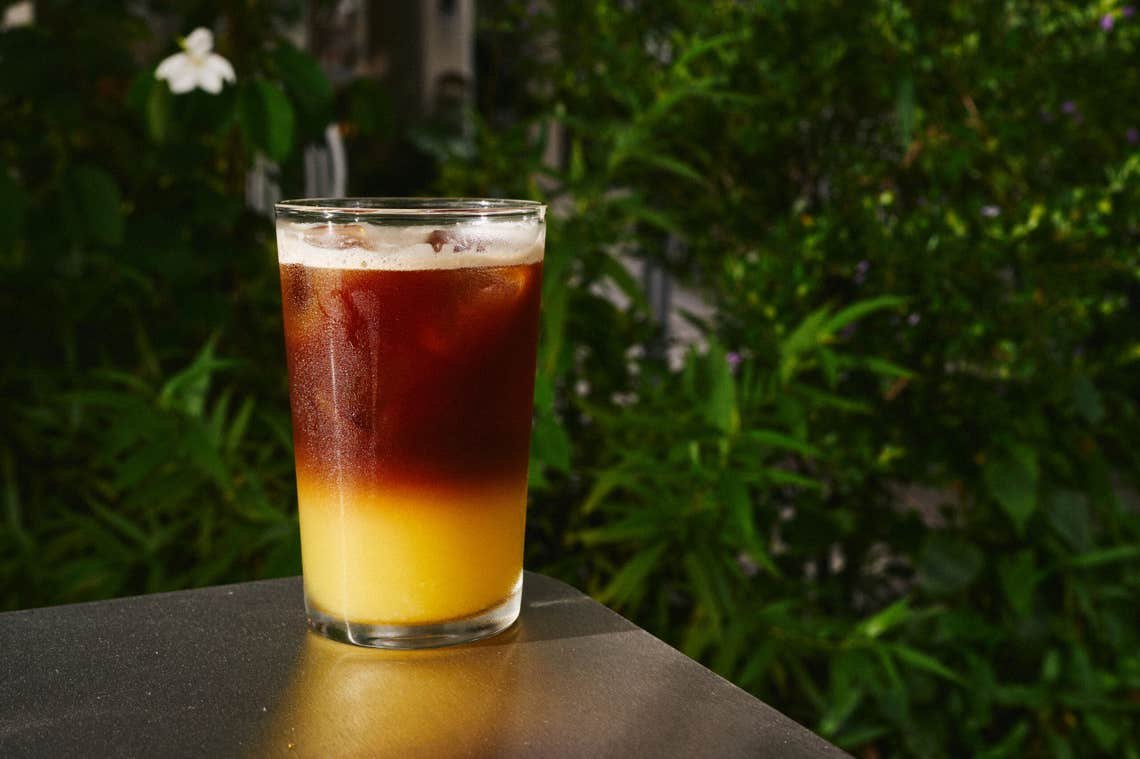
Every Half Coffee Roasters sits at the forefront of Vietnam’s specialty coffee movement, working with locally grown arabica, fine robusta, and even liberica. Its signature citrus punch amps up cold brew with pineapple and lemon juice, reflecting Saigon’s widespread appetite for pairing coffee with fresh fruit flavors.
Yogurt coffee at Hoff Specialty Coffee
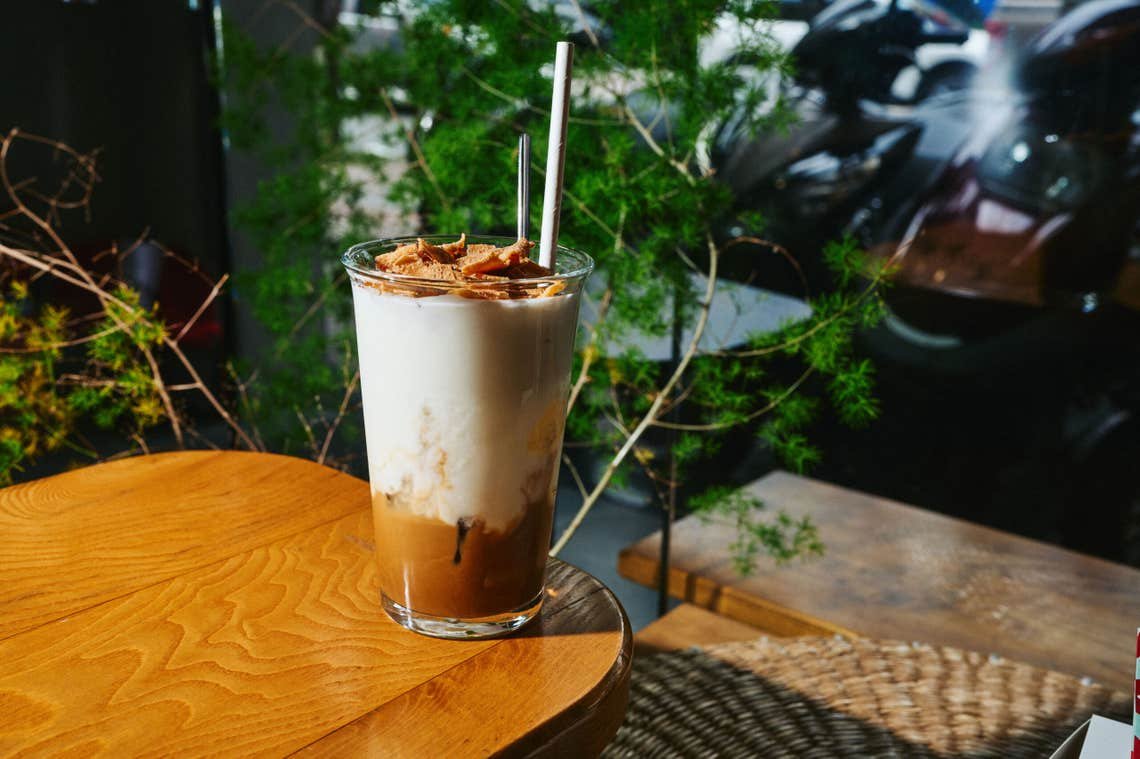
Yogurt—or “yaourt,” as the French loanword is still widely used in Vietnam—has long been part of the country’s food culture and has inevitably found its way into coffee. The combination works surprisingly well, with the tartness of the local yogurt variety balancing out the coffee’s bitterness and richness. At Hoff Specialty Coffee, the Northern classic gets a contemporary treatment: Locally grown Lâm Hà robusta is layered over fresh yogurt and finished with toasted coconut flakes.
Tamarind cold brew at The Hummingbird Café & Roastery
Riffing on đá me—the classic Vietnamese street drink of sweet-and-sour tamarind, ice, and crunchy peanuts—The Hummingbird pairs those familiar local flavors with an Ethiopian cold brew. A housemade tamarind foam floats on top, while a touch of pineapple adds sweetness and acidity. Though the beans themselves aren’t Vietnamese, the inspiration certainly is—a clear example of how Saigon’s new generation of cafés look to local palates, not just local coffee, for ideas.
Keep Reading
Vietnamese Iced Coffee
Eat Your Way Through Saigon
Where to Find the Best Cơm Tấm in Saigon
The SAVEUR Field Guide to Vietnamese Street Food Dishes
Are Hybrid Grapes the Future of American Wine?
Black Raspberries Are the Fleeting Summer Fruit Worth Seeking Out
Meet the Children’s Book Illustrator Who Sees the World Through Food

The Mortar and Pestle Is the Timeless Kitchen Tool You Need

The Ultimate Edinburgh Pub Crawl

Source: www.saveur.com