
Welcome to Open Tab, a weekly roundup of the news, gossip, and stories that have stayed open in my tabs all week. Last time we covered DoorDash’s dip into drone delivery and AI. It’s pawpaw season in some parts of the country—the fleeting few weeks a year when the fruit is ripe for the picking in the Eastern U.S. and Great Lakes regions, up into lower Ontario, Canada. As a resident of New York City, I’m without access to a pawpaw tree, but I’ve jealously watched as everyone on my feed enjoys the custardy fruit that this very publication called “the best American fruit.” Just know, pawpaw enjoyers, that I am seething with jealousy.
Lots of bar world buzz this week: The World’s 50 Best Bars list dropped, and Hong Kong’s Bar Leone, which I highlighted on Instagram, remains in the number 1 spot. New York City’s Schmuck, which we named a Best New Bar of 2025, zoomed up 48 spots from last year to number 11. In fact, there were no U.S. bars on the list outside of New York City. We may not have pawpaws, but we’ve got some great cocktail spots.
In other news: Keith McNally is upset with Vanity Fair, and, if his Instagram caption is to be believed, he’s suing the magazine. This recent flare-up follows the publication’s article “Keith McNally Absolutely Loathes Thomas Straker. Loathes.” McNally claims he shared his remarks with the writer off the record. “I’m now suing Vanity Fucking Unfair,” he wrote—though faithful McNally-ites will recognize a definitive ring of his characteristically bone-dry humor.
Although I loathe Tom, I love his food,
“Although I loathe Tom, I love his food, and plan to eat at his NY restaurant every other day for the next 40 years or until I die,” he’s quoted as saying, “whichever comes first.”
Also in today’s Open Tab: It’s the end of cookie shops as we know them (I feel fine, for the record), the controversy around “personalized pricing,” and Atlanta’s booming bagel scene.
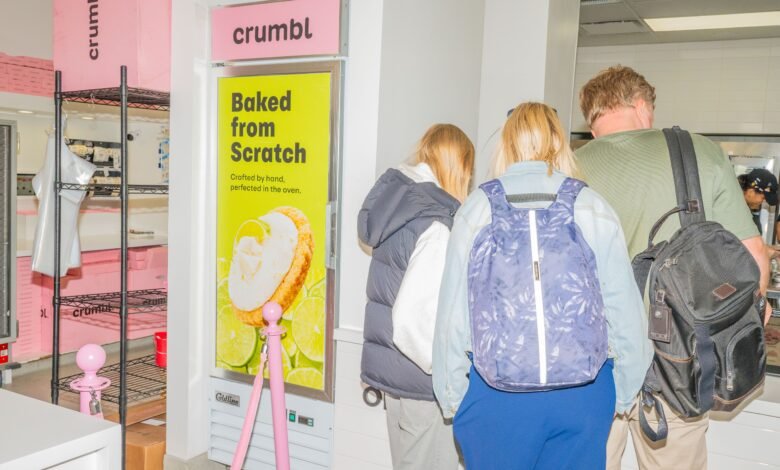
Just three years ago, Crumbl was the fastest growing dessert chain in America. You couldn’t swipe through a short-form video feed without happening upon a fresh-faced influencer taking an exaggerated bite, rolling their eyes back in apparent ecstasy. Were the cookies too sweet, mostly flavorless, and five dollars a pop? Yes, but that didn’t matter. Lines down the street, and much hype around weekly flavor drops became the norm.
Cut to today, and Crumbl is, uh, crumbling. A report in trade publication Restaurant Business details just how far its franchises across the country have fallen. Fifty-seven locations have closed this year, and August sales were down 70% from two years ago. But this is larger than Crumbl. Chip City, a major rival, suddenly closed all its locations this week citing “significant macroeconomic headwinds” which is corporate speak for “everything is too expensive.” Insomnia Cookies is actually growing in scale, but that comes after major investment from private equity which historically isn’t great for restaurants in the long term.
Crumbl didn’t respond to a request for comment,
Crumbl didn’t respond to a request for comment, but the downturn certainly isn’t due to demand for baked goods. We’re in a golden age of little treats—and treat-lovers seem to be more interested in independent bakeries selling unique, interesting bakes. Just as cupcakes before them, cookies are falling out of favor, replaced by frozen yogurt as the hot dessert du jour. What if I told you that you were paying more for your McDonald’s fries than everyone else?
A new lawsuit against the chain alleges the fast food giant is using unfair practices to collect data franchises wouldn’t normally have access to, feeding it into an AI program, and recommending what the company calls “optimal pricing” to its franchisees. Translation: two McDonalds locations a couple miles apart could have different prices for the same item based on customers’ perceived “sensitivity to price” as the system puts it, according to a report from Reuters.
Dynamic pricing, as it’s called, isn’t relegated to chain restaurants. Gas companies have employed a similar strategy. So has JetBlue. And some hotels. Some states have banned this kind of pricing in specific circumstances, others are considering bans, but the outcome of the McDonald’s lawsuit could be a bellwether for how effective those bans will actually be in protecting consumers.
Oh you thought you could only find good bagels in New York City? You’re living in the past. Contributor Sheeka Sanahori takes us to Atlanta, famously known as a biscuit town, where bagels are booming. Read on to see how ex-New Yorkers revolutionized the bagel scene down South.
Source: www.bonappetit.com