

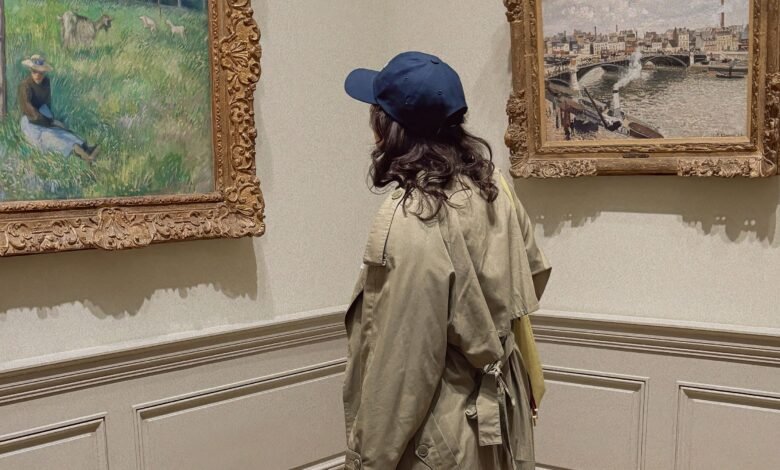
For years, brands have worked to both feed into and embed themselves in culture. But as audiences tire of branded content where the sales pitch overshadows the creativity, and the commercial machinery of marketing becomes harder to ignore, some brands are reconsidering their roles. Instead of trying to create culture themselves, they’re helping to fund the conditions upon which others do so.
Once upon a time, Procter & Gamble sponsored daytime dramas such as Ma Perkins, becoming so synonymous with the genre they eventually became known as “soap operas”; the Grand Ole Opry started out simply as a radio program sponsored by an insurance company, before becoming one of the defining institutions of American country music; the Tour de France came from French newspaper L’Équipe; and the Michelin Guide — including its coveted stars — was created by Michelin tyres.
Despite these past wins, a new generation of brands and platforms is beginning to rethink what it means to participate in culture, moving beyond contracted deliverables and multiple rounds of sign-offs toward models that put more money, access and resources behind the people making it. Substack, which has built its business around subscriptions, is developing a sponsorship model that it says will fund the ambitious work of its publishers rather than replicate the advertising playbooks of Instagram or TikTok.
Its initial partners include Balenciaga, Ralph Lauren, Uber,
Its initial partners include Balenciaga, Ralph Lauren, Uber, T-Mobile, Yahoo, and Granola, whose sponsorship money will go directly to select Subtack creators. “An ad is sort of grabbing you by the collar, and a sponsorship is kind of like the wind at your back,” says Dan Robbins, Substack’s head of partnerships. “There’s a long history of the commercial world funding the artistic world,” says Charlie Smith, chief brand officer of Nothing.
“In the US, a lot of the museums — the Getty Museum, the Hammer Museum — were founded by super-rich industrialist families. Today, there’s been a bit of a shift, from family wealth funds to actual brands.” Smith flags that he wants Nothing to be among this new wave of patron brands, a move that also furthers his ambition to become the most beloved tech company by Gen Z.
“The way I see it, modern-day brands can be patrons of the arts and help support artists, musicians and filmmakers. That’s when the creative community can see that you want to engage in a dialogue and not just take from them,” he adds. It’s an important proposition at a time of mass inequality. “The amount of wealth in this world is just so visible, and the amount of good that could be done, or the impact it could have in your local, immediate environment or even larger, could be monumental,” says creative director Juliana Salazar.
If we think about some of the biggest
“If we think about some of the biggest tech leaders. They’re all people who are, culturally or in pop culture, not on the right side of history, whereas historically, these patrons of the arts all contributed something that their whole society benefited from.”
The opportunity is not simply to create another marketing channel, but to reconsider where brands’ cultural spending goes.
If these businesses have spent years depending on culture to remain relevant, should more of their money be used to sustain the people and institutions producing it? And can patronage offer a model for brand-building that is less extractive — and potentially more valuable — than trying to own culture itself? Where does patronage end and marketing begin? Traditional marketing has often been about using culture to make a brand more relevant, whether through piggybanking onto viral internet trends, commissioning a campaign around a cultural moment, or enlisting an individual who already has the audience a brand wants.
A patronage model takes more of a backseat: rather than expecting anything directly in return, it supports the conditions for arts and culture to flourish, building relationships with important institutions and people, rather than extracting immediate value with clear deliverables and expected ROI. Pandora announced a partnership with the National Portrait Gallery in August to sponsor Tim Walker’s upcoming “Fairyland: Love and Legends” exhibition.
Chanel has been a partner of Lincoln Center’s
Chanel has been a partner of Lincoln Center’s BAAND Together Dance Festival for six years, as well as a major patron of the Paris Opera since 2023. Meanwhile, Rolex has maintained an 18-year relationship with the Royal Ballet and Opera, where it is now a principal partner. Despite the instant positive PR that arrives with becoming a patron, it’s not an entirely selfless set-up.
“Whether it’s churches commissioning works that make them seem more authoritative, or the Medici family supporting Michelangelo for their own family status. There’s always some kind of value exchange if it’s not direct sales,” says Sophie Kitchen, senior strategist at WME. “There’s a kind of long-view ROI to things, which, to me, is less of an ROI and more like a mutual benefit,” says Thom Bettridge, editor-in-chief of i-D and founder of creative studio Content World.
“If I was Apple and I was funding design high schools for young people to learn about product design, that wouldn’t necessarily lead to more people buying laptops from me in the near term or even mid-term. But it would create a culture where more people appreciate design. Ergo, more people would appreciate Jony Ive.”
For Bettridge, that is the fundamental distinction between patronage and marketing.
There’s patronage, which is about supporting the existence
“There’s patronage, which is about supporting the existence of culture monetarily, without a particular end in mind. And then there’s what I would describe as deploying culture as a way to market products. Those two things sometimes get confused,” he says. Bettridge points to Fondation Louis Vuitton as an example. “Imagine if they only did Murakami exhibitions, and then you bought the bag in the gift shop.
No one would take that place seriously as a museum. You have to do things that are about enriching the culture around art or media or whatever the thing is that you’re patronizing.”
The value for a brand comes less from owning a particular cultural moment than from creating a richer cultural environment around it. “If you enrich the culture around you, that’s beneficial.
That’s why fashion brands invest in the arts. It’s widening the amount of aesthetic literacy people have, which creates a world where more people are going to be interested in fashion,” says Bettridge. It is a very different proposition from proving that a cultural investment directly drives sales. “That’s sort of a long-view, mutual benefit, less so than it is transactional: ‘We found that people who went to this museum show were seven times more likely to buy a Speedy bag.’”
Substack’s Robbins says CMOs are already thinking beyond immediate reach and sales.
When we talk to a lot of CMOs
“When we talk to a lot of CMOs about Substack, the thing they often bring up is: ‘We want to build authority or credibility,’ or ‘We want to be famous for,’ or ‘We want to enhance trust’ in whatever area their business is operating in,” he says. “So we’re thinking a lot about what the right ways to measure the impact of trust and authority are.”
But there is a catch: if the return is less immediate, brands also have to relinquish some control over what they are funding.
The work may not perfectly reinforce a brand’s worldview — or even be universally liked. “When you are building a genuine relationship, which I believe is the biggest pillar of the patron model, that relationship, that person you’re speaking to, that voice needs to be autonomous. It needs to be challenging. It can’t just hold a mirror up to your own worldview,” says Kitchen.
The recipe for a successful patronage
If brands want to move from borrowing culture to supporting it, the most obvious place to start is by putting money behind the people making it. “Paying for things, that’s the biggest part,” says Smith. “The worst thing you can do as a brand is appropriating culture or kind of just trying to ride on a trend without any sense of participation or giving back.”
At Nothing, that philosophy has translated into grassroots investment.
Its Club Nothing Fund will offer $10,000
Its Club Nothing Fund will offer $10,000 to four music collectives to support them in hosting their next event, judging the winners based on their “innovative creativity”, “rebellious sound” and “community values”. The initiative was launched in response to what Smith sees as the growing difficulty of sustaining club culture as rents rise and venues disappear. “At Nothing, a big part of our business is audio — we really want to connect to music culture.
We do that in a meaningful way, where we’re really involved at a grassroots level, rather than just working with a big superstar talent,” he says. “To me, that’s a really important thing, and it’s what helps people see that you really mean it.”
But patronage can take many forms beyond writing a check. At Nothing’s March launch of its Phone 4(a) series at Central Saint Martins, the brand opened the experience to 300 students, who could meet its industrial designers and experience the work firsthand.
“There’s funding, there’s providing a platform or visibility, and then there’s also access as well,” says Smith. The ambition is to create a pipeline between supporting emerging talent and giving that talent opportunities to work. “In the future, I want to host competitions for photography and art direction, and then have those people work on our campaigns. To me, that’s a way that you can be a patron of the arts beyond just paying for things.”
Balenciaga’s partnership with Substack uses the brand’s resources to support individual voices and uplift the conversations they want to have on the media platform.
Substack’s capacity for longer form content and deep
“Substack’s capacity for longer form content and deep conversation presents an exciting opportunity for the brand,” Balenciaga told Vogue Business over email, noting that the partnership allows creators to individually interpret brand sponsorship, sharing their own expertise and creative direction, with the help of luxury savoir faire. To celebrate the partnership, the brand hosted an event at their store with Substack during Cannes Lions, where it had French novelist Pauline Klein, fashion author Plum Sykes and international Substack head Farrah Storr host a panel on how brands can support artistry, creativity and deep thinking across Substack.
“Today, evidence of genuine interest and lasting affinities holds more weight than broad, instant appeal,” the brand added. Patronage also doesn’t necessarily need to begin with grand cultural ambitions. Salazar argues that brands can start with the people and the communities around them. “We’ve kind of gone too big picture. If you just zoom in, if you can have an immediate local impact on your surroundings, that becomes like a domino effect that can billow out and be impactful,” she says.
“We shouldn’t be carried away with trying to save the world. If you can make your corner of the world nice, that’s really impactful as well.”
Sometimes, that can be as simple as paying people fairly. “Start off by paying the creatives and the talent that you work with at a competitive rate that’s actually indicative of market value, and actually uphold them and value them in the same way that they’re adding value to you,” Salazar adds.
It can also be recognizing and platforming those
It can also be recognizing and platforming those working in creative roles that don’t often gain visibility. Outlander magazine recently shared a post spotlighting its first-ever intern, Caira Coleman, with the caption: “We wanted to use our platform to shine a light on a role that goes by too fast in this industry and one that’s often overlooked, but is actually one of the most important beginnings of a career.” In the carousel, Coleman was interviewed about what she learned during the internship; the post went on to receive more than 6,400 likes.
This new patron proposition comes at a time when a fresh crop of cultural happenings are emerging across London, from the Soho Reading Series, consisting of literary events founded by Tom Willis, to Singing With My Friends, the karaoke night that’s become a fixture of the city’s fashion crowd. “In the end, the things that are made without an intent to commercialize really quickly always feel way more exciting,” says music and cultural journalist Shaad D’Souza, who last year turned his Instagram account into Shaad Magazine, a bet on the continued appetite for writing in a struggling media landscape.
“It is crazy to think what a brand could get from giving a tiny amount of their money to someone who could do great things with it,” he says. “The reason a lot of brands are failing is that they can’t connect with that ineffable thing that people are seeking. The only way to get that is to forge these relationships.”
Ultimately, patronage is about brands adopting a different mindset: taking a step back from culture rather than always trying to put themselves at the center of it, while recognizing that value isn’t always about the brand’s own creative vision, but in giving someone else the resources to pursue theirs.
That doesn’t mean brands have to be altruistic, or that the relationship stops being commercially useful, patronage has always involved an exchange of value. The starting difference is believing that culture is worth supporting in its own right, instead of being something to exploit for relevance.
Source: www.vogue.com





One Comment