
A Fake Sorority Hopeful Took Over RushTok. The Real Lesson Was What Happened After the Reveal

Andreessen Horowitz partner Oli

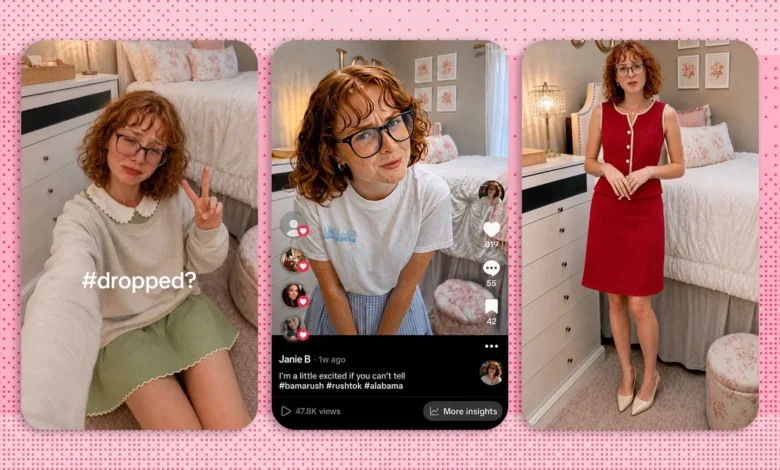
Every August, college students flood TikTok with videos of themselves jockeying for spots at exclusive University of Alabama sororities—a phenomenon called “Bama Rush” or “#RushTok.” This year, one of those sorority hopefuls was completely fake.
OliAndreessen Horowitz, revealed she was behind the stunt last week in a video that reached more than 76,500 views on TikTok
It’s part of an experiment she started on a whim last year as a self-described “fan of the Bama Rush viewership experience” in order to determine how well consumers can recognize AI-generated content—and how they feel about it.
Knowing the digital landscape has shifted since 2025,
Knowing the digital landscape has shifted since 2025, when she used AI tools to create a conventionally attractive blonde character named Tinsley whose top video reached nearly 180,000 views, Moore opted to create a shy-looking redhead named Janie instead this year. She amassed more than 1 million views over seven days by posting 21 TikToks that showed Janie going through rush week, getting dropped by sororities, and eventually revealing she was AI-generated through a The Truman Show-inspired finale.
The daily digest for entrepreneurs and business leaders
An Inc.com Featured Presentation
Inc. sat down with Moore to learn what the week-long experiment taught her about media literacy and consumer sentiment towards AI. This interview has been condensed and lightly edited.
Why did you decide to conduct this experiment?
We’re still so early in terms of AI’s dissemination into culture, everyday work, entertainment, social experiences. I’m always fascinated by the question of, as the models get better, what does that mean in terms of how people make and react to content that is AI-assisted?
Last year, there was really only one model, Google’s Veo, that unlocked video and lip sync matching. Looking back on those videos, they look so fake. The character looks considerably different every time. But most people hadn’t really seen AI content on their feed at that point, or at least live talking content versus static images or text.
Source: www.inc.com