–:– / –:–
This voice experience is generated by AI. Learn more.
This voice experience is generated by AI. Learn more.
Summary
U.S. coal-fired power generation fell 10 percent in the first half of the year as natural gas strengthened its grip on the power market. Even as Mideast tensions pushed oil prices higher, U.S. natural gas prices declined. The reason: booming “associated gas” production from oil drilling, especially in the Permian Basin. Higher oil prices encouraged more drilling, producing a flood of low-cost natural gas that undercut coal. That market shift has proved more powerful than Washington’s efforts to revive coal. In the end, rising gas output from Texas and Louisiana is reshaping the U.S. power mix, showing that market forces can outweigh federal policy.
Coal-fired power generation in the United States fell 10 percent in the first six months of this year. Natural gas is still the largestAdministration expects gas to keep gaining through 2027 while coal keeps slipping
None of that is news, but what caused it should be.
Tanker traffic through the Strait of Hormuz has
Tanker traffic through the Strait of Hormuz has been disrupted on and off since spring, and crude oil has averaged $84 a barrel through July, up from $65 last year. Missiles near shipping lanes are the textbook recipe for a price shock.
So why is American natural gas getting cheaper?
In its August outlook, EIA cut its forecast for the benchmark Henry Hub price to $2.87 per million BTU for this quarter, 50 cents below its projection a month earlier, and it expects gas to stay under $3 until November. In January the agency thought 2027 gas would run close to $4.60. It now says $3.31. The forecast has been marked down, and marked down again, in the middle of a shooting war.
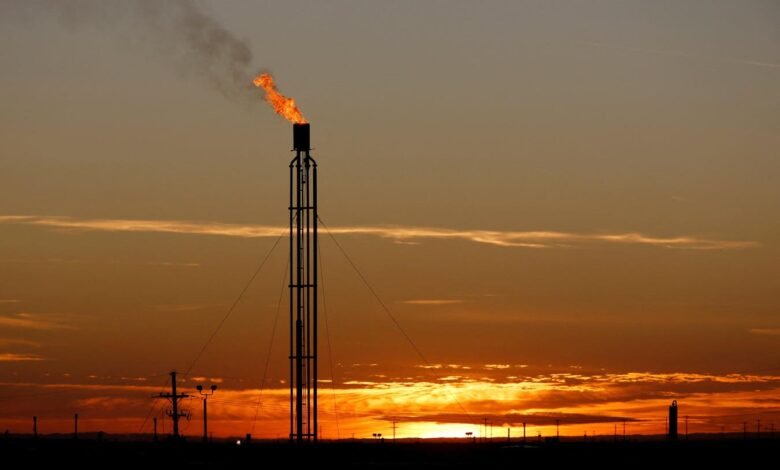
The answer is production, and the path to it isn’t intuitive. American gas doesn’t come only from gas wells. In the Permian Basin of West Texas and New Mexico, it comes up with oil, whether anybody wants it or not. Permian operators told the Dallas Fed that their breakeven price was in the low $60s. Oil has been trading $20 above that, so the rigs went to work, and Permian gas output is running 6 percent above last year.
Follow the dominos. Trouble in the Persian Gulf
Follow the dominos. Trouble in the Persian Gulf raised the price of oil, oil sent drillers into West Texas, and the gas nobody was aiming for undercut the one fuel that competes directly with coal.
Louisiana’s Haynesville field added 9 percent on its own. Total output is on pace for 122.5 billion cubic feet a day, a record for the second straight year, with storage heading toward the highest pre-winter level since 2016. No agency has a budget line for any of it. The country got a discount on its heating bill out of a war.
Now consider what else happened over the same stretch. The last 18 months brought the most determined federal effort to help coal in living memory. Interior opened 13.1 million acres to coal leasing and cut the royalty rate. The Energy Department invoked the Defense Production Act and says it has saved or supported 45 coal plants and 40 gigawatts of capacity, and it keeps issuing emergency orders forcing plants to run past their retirement dates. EPA rescinded the endangerment finding, rolled back the 2024 mercury rule and has a full repeal of the power plant carbon standards awaiting release.
Eleven state attorneys general went further and sued
Eleven state attorneys general went further and sued the financiers, arguing in the Eastern District of Texas that BlackRock, State Street and Vanguard used their shareholdings to hold down coal production. The merits are for a judge. But the premise is that coal’s decline was arranged, that someone chose it and could have chosen otherwise.
Then there is the tonnage. EIA expects power plants to burn 38 million fewer tons of coal this year, a 9 percent drop, with another decline coming in 2027. Unsold coal is stacking up at the plants, 126 million tons as of May. Utilities barely touched their stockpiles this summer. They didn’t need to.
Federal power kept the plants standing. It couldn’t make anyone buy the fuel.
That’s the trouble with the antitrust theory as an explanation, whatever a judge eventually does with it. If the asset managers set out to squeeze coal out of the market, a fuel that got cheap on nobody’s instruction beat them to it. There is no meeting to subpoena in Midland. Coal is losing to a cheaper competitor, which is the oldest story in business and a hard one to take to court.
Washington can’t legislate a price
Washington can’t legislate a price. When the competing fuel costs three dollars instead of five, dispatchers notice within the hour, and no executive order reaches into the control room.
None of this makes gas invincible. Turbine makers are sold out into the next decade, so cheap gas can’t absorb the data center boom on any useful timeline, and LNG exports will tighten the domestic market eventually.
Still, look at what the last year and a half produced. Through a Persian Gulf war and the most coal-friendly administration in half a century, the biggest force reshaping American power generation was a few thousand people in Texas and Louisiana producing more associated gas than anyone expected.
That outcome showed once again that market signals are more powerful than policy mandates.
Editorial StandardsReprints & Permissions
Source: www.forbes.com