

–:– / –:–
This voice experience is generated by AI. Learn more.
This voice experience is generated by AI. Learn more.
Summary
U.S. Air National Guard units recently trained in Michigan, advised by Ukrainian doctors, on evacuating a field hospital amidst a simulated drone swarm attack. This groundbreaking exercise marked the first large-scale test for combat medics facing such a threat, reflecting modern warfare realities. Drawing on Ukrainian frontline experience, Guard members learned to protect patients from aerial threats, utilizing drone nets, fortified bunkers, and shooting down unmanned aircraft with firearms. A robot dog assisted in analyzing downed drones. This training underscores a critical shift in combat medicine, as drones eliminate traditional safe zones, demanding new skills for military personnel to safeguard lives under persistent aerial assault.
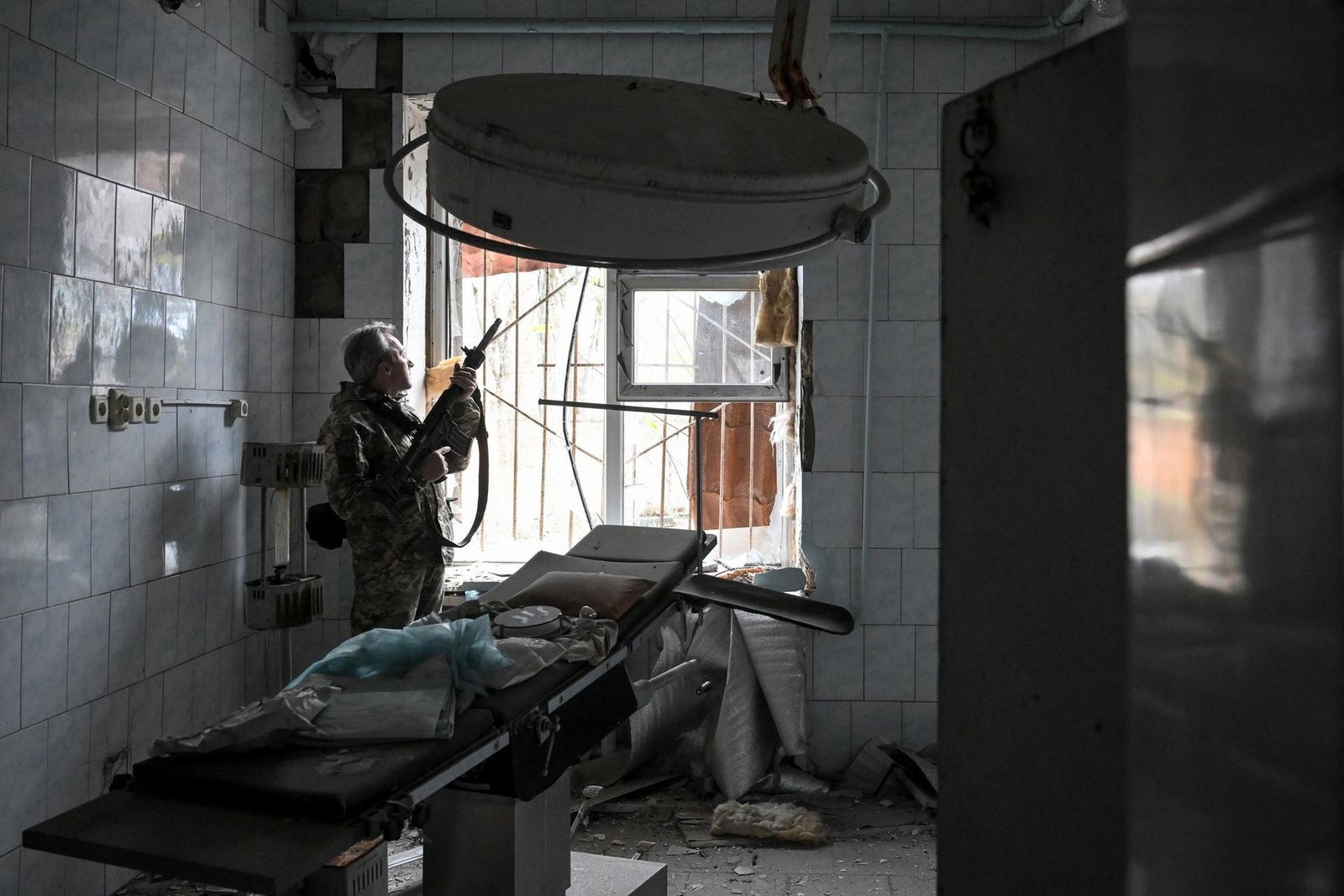
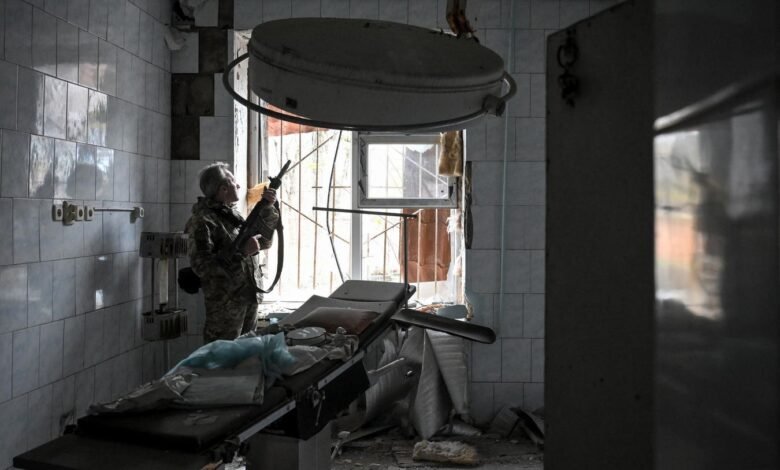
A Ukrainian soldier watches for a Russian drone from a barred window in a room in a maternity hospital in the front-line town of Orikhiv in the Zaporizhzhia region of Ukraine in November 2025. Ukrainian doctors recently advised U.S. National Guard troops on how to evacuate hospitals under drone attacks based on their experience. (Photo by Dmytro Smolienko/Ukrinform/NurPhoto via Getty Images)
NurPhoto via Getty Images
Units of the U.S. Air National Guard received guidance from Ukrainian doctors as they practiced evacuating a field hospital under attack by drones during a large exercise held this month in Alpena, Michigan.
During the multinational military training event called Northern
During the multinational military training event called Northern Strike 26-2, Ukrainian doctors with frontline experience advised over 100 Air National Guard members drawn from seven units on how to care for wounded patients under siege from a mass of swarming drones.
The event marked the first test of National Guard combat medics’ abilities on a large scale under the simulation of an intense drone threat.
The harrowing scenario saw multiple small unmanned aircraft systems swarm a hospital site.
Mirroring combat situations from Ukraine, the drones simulated immediate fatal threats to service members and patients receiving treatment.
The exercise aimed to give U.S
The exercise aimed to give U.S. military personnel experience at defending injured people from small unmanned systems under high stress while performing combat casualty care.
“One of the largest lessons learned here was the need to go underground more,” U.S. Air Force Col. Patrick Frank, deputy director of air staff for the Michigan National Guard Joint Forces Headquarters, said in a statement.
“The Ukrainian doctors discussed with the medics and leadership about how tents are okay, but underground is better.”
The Guard used drone nets to fortify
The Guard used drone nets to fortify the hospital location. These nets were specially designed to block many variations of small unmanned aircraft while allowing humans to easily maneuver through them.
“The specific type of netting is supposed to be impenetrable by most drones, creating large tunnels that casualties could be evacuated through,” said U.S. Air Force Maj. Sarah Blackthorne, a medical planner for the Northern Strike Air Component, in a statement.
Using the nets to defend the site, Guard troops shot down swarming drones with firearms to stop them from attacking patients and evacuated wounded to a secondary fortified location in a bunker, mirroring tactics used in Ukraine.
A four-legged unmanned ground vehicle, popularly known
A four-legged unmanned ground vehicle, popularly known as a robot dog, approached the destroyed drones to analyze them for troops at a safe distance.
Many National Guard members specialize in providing emergency medical treatment not only to fellow military service members but members of the public while responding to disasters and performing rescues.
Guard troops frequently deploy across state lines to help respond to disasters including tornadoes and hurricanes. Nearly 40% of requests for assistance received by the Emergency Management Assistance Compact, a national mutual aid system for states, specifically request Guard troops, according to the National Guard Bureau.
They are not only called upon to respond
They are not only called upon to respond to emergencies formally but often render assistance to people in unexpected situations. This month, four members of the Illinois Army National Guard gave life-saving aidto an injured motorcyclist they found on U.S. Highway 72 highway in Michigan. Last month, three soldiers of the Pennsylvania Army National Guard stepped into help victims of a rollover crash in Texas.
With emergency medical aid forming a pillar of their expertise, National Guard troops across the country train constantly to improve their medical skills.
However, this new model of counter-drone training for National Guard units is very different from past training regimens and marks a new area for U.S. combat medicine.
Unmanned aircraft systems capable of striking far behind
Unmanned aircraft systems capable of striking far behind fortified areas have eliminated the concept of a frontline and have potential to strike at military medical facilities previously assumed to be safe.
These new circumstances place extra burdens on military service personnel not only to master caring for wounded people under fire from bullets but under threat from aerial attacks.
The Ukrainian doctors included in the exercise were able to share firsthand knowledge with U.S. troops about best practices for shielding injured personnel not only from isolated drones but from persistent and heavy attacks.
The drone swarm attack scenario for Guard troops sets a new benchmark for skills that U.S. combat medics will be expected to master. It draws attention to drone swarms as a defining characteristic of modern warfare and also the demands that U.S. military service members will face not only to defend themselves but save the lives of vulnerable people.
Editorial StandardsReprints & Permissions
Source: www.forbes.com