

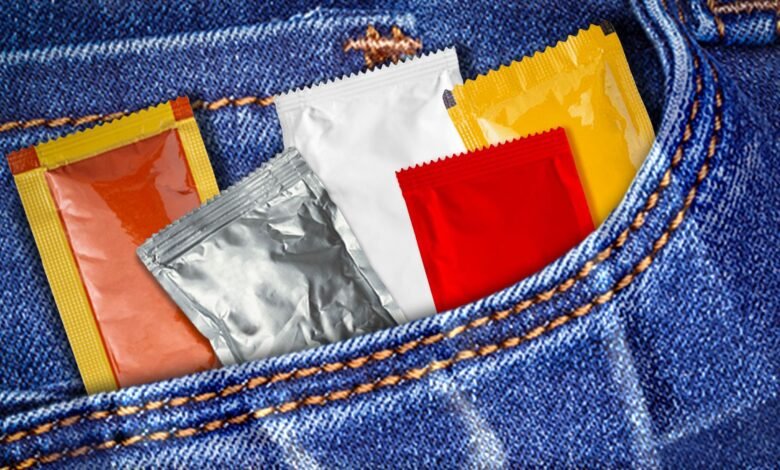
If the phrase season to taste was a person, it might be Julia Coney. The Washington, DC-and-Houston-based wine consultant, journalist, and regular traveler has spent a decade perfecting her personal bring-your-own spice and condiment kit, which includes more than half a dozen finishing salts, Calabrian chili oil, cracked black pepper, everything seasoning, dehydrated lemon juice, Kyoord olive oil, Cholula and Original Louisiana hot sauces, Bon Maman honey, and Dijon mustard.
She repackages the products as needed (she prefers Muji containers), labels each one, then zips them into a pouch branded with the words “EMERGENCY SNACKS.”
Coney deploys her so-called “seasoning package” as insurance against bad or flavorless meals on the road. But she’s been known to break it out in fine-dining settings, too. What if an upmarket pizzeria has red pepper flakes, but not her preferred chili oil?
Or sea salt, but not Coney’s desired crunchy “big flake” Maldon? “It’s mainly because I’m particular,” she explains. “People will laugh at me, and then they’re like, ‘Wait, that’s genius. Can I take a picture?’”
Few take pocket seasoning quite so seriously, but an informal social media poll I conducted reveals that plenty of diners—chefs included!—carry their own additives when dining out, from Heinz ketchup and Sweet’N Low packets to mini Tajín, hot sauce (the Ninja Squirrel brand, if you’re Hillary Clinton), gochujang, vinegar, and, most frequently, salt, which can take the form of every imaginable flake and color.
Chalk it up to a collective spice
Chalk it up to a collective spice and condiment obsession, which grows more nuanced by the day. Brands seem all too happy to enable us. But is it a faux pas to break out a BYO seasoning kit in a restaurant setting? Some chefs argue there’s a time and place for it, as in more casual settings like breakfast joints or taverns. “If a restaurant is known for a particular point of view, I’d encourage guests to try the dish first and be respectful of the restaurant’s culinary intent,” says Jonathan McDowell, culinary director at FORTH Hotel in Atlanta.
Matthew Dion, executive chef of Southern-inspired Lowland in Charleston, South Carolina, agrees that it depends on the restaurant and the dish. “We like to think we season our food well, but sometimes a guest wants a hit of hot sauce or a little extra seasoning,” he admits. That said, Dion thinks it’s worth speaking up if a dish isn’t quite to your (insert sensory adjective here) liking before applying your own additives.
Chances are, the restaurant’s house-made version of the desired element will better complement the food and be made out of superlative ingredients. “We make our own mayo, ferment our own hot sauce, and make this buttermilk vinaigrette that feels like ranch,” Dion says. “There’s always an option if they ask, and that’s something we want our guests to understand.”
For her part, Coney always asks if a fancy restaurant has Maldon salt before taking hers out and tapping a little pile onto the edge of her plate.
She hasn’t offended anyone to her knowledge, though
She hasn’t offended anyone to her knowledge, though she has inspired several copycats. “I don’t think that it is bad for some things to need a little more salt,” says Chicago-based chef Cecil Rodriguez, who created the private dining club and pop-up dinner series FatCap. Rodriguez never leaves home without his little tin of Jacobsen sea salt, because why sit through an underseasoned meal that could otherwise be delicious?
(In case you weren’t sure he’s serious, he has S-A-L-T tattooed on the knuckles of his left hand.)
Does he feel the need to be discreet about seasoning at the table? “Hell no!” In fact, if he knows the chef, he likes to rub proverbial salt in the wound by texting them a picture of him salting their carefully calibrated dish. Always with love, of course. “We sometimes feed hundreds of people a day,” he adds.
“Not everything can be seasoned to everyone’s palate.”
Source: www.bonappetit.com





One Comment