

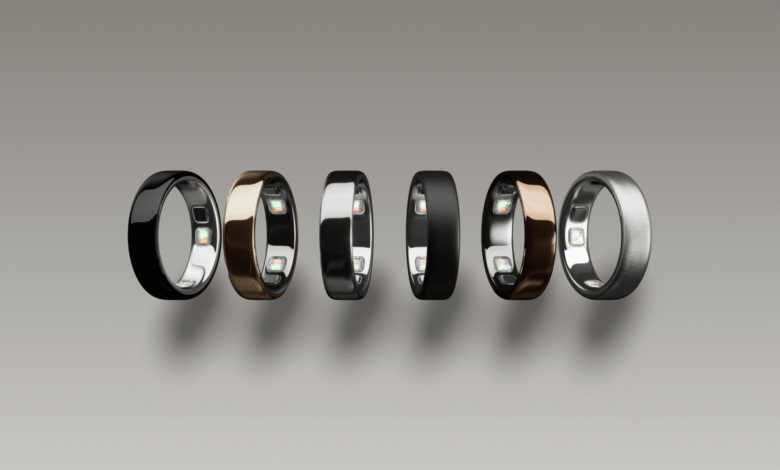
Oura, the smart ring maker, with offices in San Francisco and Finland, is reportedly planning to raise up to $3 billion as soon as next month in a U.S. IPO that values the more than 900-person company at [spits out coffee] north of $16 billion The outlet adds that investors are expected to sell a major chunk of stock in the offering
A $16 billion valuation would mark an enormous jump from the $10.9 billion valuation Oura was assigned last September, when it closed an $875 million Series E round backed by Fidelity, ICONIQ, Whale Rock, and Atreides, joining earlier backers like Dexcom, The Chernin Group, Forerunner Ventures, Coatue, and Temasek.
The wearables space has gotten crowded fast.
Samsung launched its own ring, the Galaxy Ring, two years ago. But Oura’s most direct rival may be the fitness band maker Whoop, which has undergone its own reinvention. Once a performance tool for elite athletes and young men, Whoop has spent the past year courting a much broader audience, layering in hormone tracking and blood-panel testing for perimenopause and thyroid health. The move drove its own valuation up to $10 billion back in March. Oura has followed a similar path, evolving from its starting niche of biohacking CEOs into a more mainstream sleep-and-recovery brand.
Oura announced in May that it had filed confidentially for an IPO.
The company has said that it generated $500
The company has said that it generated $500 million in revenue in 2024, roughly $1 billion in 2025, and that it expected to generate close to $2 billion in revenue in 2026, though we’ll learn much more once its S-1 filing becomes publicly available.
Not all of Oura’s recent attention has been positive. A proposed class action lawsuit filed last week in San Francisco is accusing Oura of misleading consumers about the accuracy of its sleep tracking features. Among other complaints in the filing, Oura is accused of not just claiming “to measure a heartbeat or a temperature, but the exact stage of sleep the wearer is in—which in reality requires electrodes in the scalp and sensors on the eyes, as only a hospital or other clinical setting can do.”
In a statement to TechCrunch sent over the weekend, a spokesperson pushed back against claims in that suit, saying the company plans to “defend against them in the appropriate legal forum” and that “[w]hile Oura Ring is not a medical device or a substitute for a clinical sleep study, Oura’s sleep staging has been validated and compared favorably in multiple studies against polysomnography, the gold standard.” The statement continued on to say that “[m]ultiple third-party, independent studies support our claims of accuracy and we have transparently reported on the mechanisms and measures that inform Oura’s sleep staging.”
Source: techcrunch.com