
Oura Wants a Bigger Share of This $25 Billion Market, So It’s Partnering With 10 Health Companies

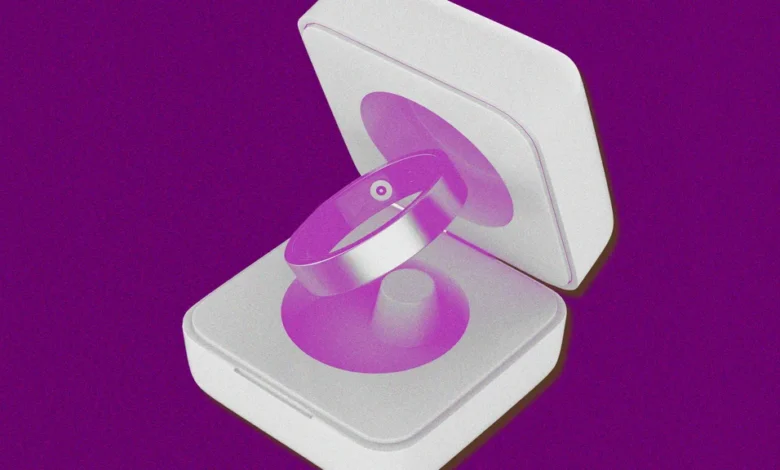
The maker of the Oura Ring is integrating its proprietary menopause survey with outside providers to help women receive better care.

Menopause is the new hot topic in health tech—and the maker of Oura Ring is fighting for a bigger share of a market that could be worth $25 billion by 2030.
Oura Health announced on Wednesday that it is opening up its proprietary menopause questionnaire, called the Menopause Impact Scale, for integration with 10 real-world clinical providers. The providers span menopause care, primary care, and hormone tracking and include Alloy Health, Oova, Xella, Pomelo, Wisp, Maven, Mira, Hertility, Gennev, and Tia.
Women navigating menopause can find themselves explaining
“Women navigating menopause can find themselves explaining the same symptoms to different providers, while the true impact on their daily lives gets reduced to a snapshot in time,” said Dorothy Kilroy, chief commercial officer at Oura. “That’s why we developed the MIS: to give women and their providers a consistent way to track menopause’s impact over time.”
Perimenopause refers to the period in a woman’s life leading up to menopause in which her body produces less estrogen in preparation for the end of her menstrual cycle. It typically starts in a woman’s mid-40s, but can start as early as the mid-30s.
Weekly roundup of the latest in tech news
An Inc.com Featured Presentation
Oura released the Menopause Impact Scale to users via the Oura App in May. It’s a survey that asks women to rate 22 perimenopause and postmenopause symptoms, based on the severity of their impact on day-to-day activities over the preceding two weeks. Ratings range from “none,” meaning the user does not experience the symptom or it does not impact her day, to “extremely,” meaning the symptom makes it “very challenging” to carry out typical activities. According to Oura, these symptoms are divided into seven “domains,” called cognitive, body image, sexual function, musculoskeletal pain, and hot flashes. Each domain receives its own score, which add up to a total impact score that tops out at 28.
The point of the scale is not
The point of the scale is not to provide qualitative data on the severity or frequency of symptoms, but rather to assess their impact on a patient’s quality of life and to give clinicians greater insight for care decisions The company reports that more than 600,000 of its members have completed the survey for a total of 880,000 completions to-date since its May launch
“As a physician, one of the most important things I’ve learned is that no two menopause experiences are alike. It’s not enough to know what symptoms a woman is having. We need to understand how these symptoms are affecting the quality of a woman’s life,” Sharon Malone, a physician and the chief medical advisor at menopause telehealth provider Alloy Health, said in a statement.
Source: www.inc.com