
Amanda Seyfried, Susan Sarandon, Pamela Anderson, and More Joined Miu Miu for Venice Film Festival’s Most Glamorous Dinner

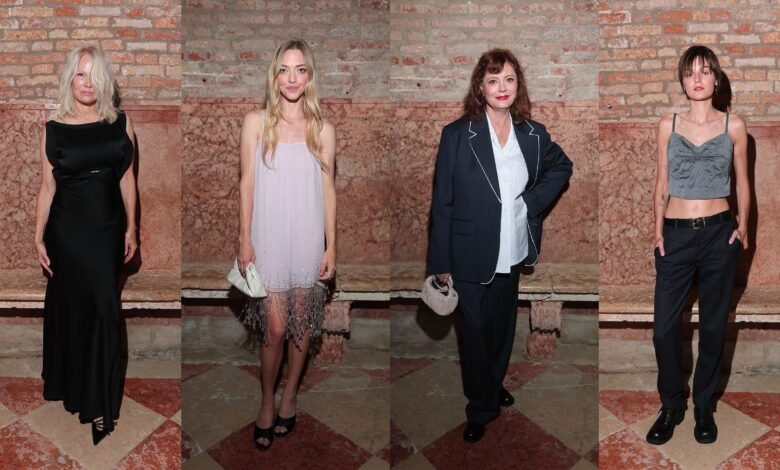
There are plenty of glitzy parties at Venice Film Festival, but none with quite the same sparkle as Miu Miu’s annual Fondazione Prada dinner. Held in honor of the brand’s Women’s Tales initiative—their short film series, which this year featured new entries from Mona Fastvold and Claire Denis—it draws not only the festival’s biggest stars, but its most prestigious filmmakers too.
Case in point: This year’s guest list included jury president Maggie Gyllenhaal, who could be spied chatting with The Voice of Hind Rajab director Kaouther Ben Hania, Oscar winner Chloé Zhao, and the legendary documentarian Laura Poitras, whose searing new film on the Minneapolis ICE raids premieres on Monday. Why, exactly, do they all flock here? For starters, there’s the location: after pulling up at the Fondazione Prada dock, guests filtered through the grand stone and marble entrance hall to pose for photos, then wandered through the Richard Prince and Arthur Jafa exhibition currently showing on the third floor.
Finally, it was up to the private top floor where a moodily lit series of rooms laid with brown tablecloths—and plenty of Select spritzes—awaited them. Which is another reason the party is a hit: the food. Buffet tables heaved with culatello ham, fresh figs, buffalo mozzarella, and stuffed zucchini flowers, followed by a rich tomato and straciatella risotto and rosemary beef tenderloin—all served on suites of Meissen china and with antique linen napkins
Prada’s own collection in Milan
Prada’s own collection in Milan. (Unlike many fashion dinners, they seem to actually want to feed you.)
Indeed, they may also be drawn to the party by the prospect of having an audience with Mrs. Prada herself: at the beginning of the evening, the designer could be seen in an embroidered tunic dress, sipping Champagne, and catching up with Pamela Anderson; as the evening progressed, she took her place for dinner at a table surrounded by Zhao, Luca Guadagnino, and Orlando Bloom, with Susan Sarandon later pulling up a pew to chat.
But the A-listers in town for the festival make a beeline for Miu Miu’s dinner, in particular, because it’s genuinely intimate. Taika Waititi was doing the rounds, catching up with Casey Affleck and sharing a spirited conversation with Amanda Seyfried; Emma Corrin and Zoey Deutch were happiest out on the balcony, enjoying the spectacular views down the Grand Canal as gondolas and water taxis zig-zagged across the shimmering black water below.
It was enough to have everyone staying and sipping wine at their tables far past midnight—even those with panel talks and screenings the next morning. That’s how you know it’s a good party. VENICE, ITALY – SEPTEMBER 05: Amanda Seyfried attends the Miu Miu Women’s Tales during the 83rd Venice International Film Festival at Ca’ Corner della Regina on September 05, 2026 in Venice, Italy.
(Photo by Victor Boyko/ for Miu Miu) VENICE,
(Photo by Victor Boyko/ for Miu Miu) VENICE, ITALY – SEPTEMBER 05: Susan Sarandon attends the Miu Miu Women’s Tales during the 83rd Venice International Film Festival at Ca’ Corner della Regina on September 05, 2026 in Venice, Italy. (Photo by Victor Boyko/ for Miu Miu) VENICE, ITALY – SEPTEMBER 05: Pamela Anderson attends the Miu Miu Women’s Tales during the 83rd Venice International Film Festival at Ca’ Corner della Regina on September 05, 2026 in Venice, Italy
(Photo by Jacopo Raule/ for Miu Miu) VENICE, ITALY – SEPTEMBER 05: Emma Corrin attends the Miu Miu Women’s Tales during the 83rd Venice International Film Festival at Ca’ Corner della Regina on September 05, 2026 in Venice, Italy. (Photo by Jacopo Raule/ for Miu Miu) VENICE, ITALY – SEPTEMBER 05: Thuso Mbedu attends the Miu Miu Women’s Tales during the 83rd Venice International Film Festival at Ca’ Corner della Regina on September 05, 2026 in Venice, Italy
(Photo by Jacopo Raule/ for Miu Miu) VENICE, ITALY – SEPTEMBER 05: Alicia Vikander attends the Miu Miu Women’s Tales during the 83rd Venice International Film Festival at Ca’ Corner della Regina on September 05, 2026 in Venice, Italy. (Photo by Victor Boyko/ for Miu Miu) VENICE, ITALY – SEPTEMBER 05: Zoey Deutch attends the Miu Miu Women’s Tales during the 83rd Venice International Film Festival at Ca’ Corner della Regina on September 05, 2026 in Venice, Italy
(Photo by Victor Boyko/ for Miu Miu) VENICE, ITALY – SEPTEMBER 05: Chloé Zhao attends the Miu Miu Women’s Tales during the 83rd Venice International Film Festival at Ca’ Corner della Regina on September 05, 2026 in Venice, Italy. (Photo by Victor Boyko/ for Miu Miu) VENICE, ITALY – SEPTEMBER 05: Orlando Bloom attends the Miu Miu Women’s Tales during the 83rd Venice International Film Festival at Ca’ Corner della Regina on September 05, 2026 in Venice, Italy
(Photo by Jacopo Raule/ for Miu Miu) VENICE, ITALY – SEPTEMBER 05: Kim Gordon attends the Miu Miu Women’s Tales during the 83rd Venice International Film Festival at Ca’ Corner della Regina on September 05, 2026 in Venice, Italy. (Photo by Victor Boyko/ for Miu Miu) VENICE, ITALY – SEPTEMBER 05: Maggie Gyllenhaal attends the Miu Miu Women’s Tales during the 83rd Venice International Film Festival at Ca’ Corner della Regina on September 05, 2026 in Venice, Italy
(Photo by Jacopo Raule/ for Miu Miu) VENICE, ITALY – SEPTEMBER 05: Suzanne Lindon attends the Miu Miu Women’s Tales during the 83rd Venice International Film Festival at Ca’ Corner della Regina on September 05, 2026 in Venice, Italy. (Photo by Victor Boyko/ for Miu Miu) VENICE, ITALY – SEPTEMBER 05: Mia Wasikowska attends the Miu Miu Women’s Tales during the 83rd Venice International Film Festival at Ca’ Corner della Regina on September 05, 2026 in Venice, Italy
(Photo by Victor Boyko/Getty Images for Miu Miu)
(Photo by Victor Boyko/Getty Images for Miu Miu) VENICE, ITALY – SEPTEMBER 05: Amelia Dimoldenberg attends the Miu Miu Women’s Tales during the 83rd Venice International Film Festival at Ca’ Corner della Regina on September 05, 2026 in Venice, Italy. (Photo by Victor Boyko/Getty Images for Miu Miu) VENICE, ITALY – SEPTEMBER 05: Benedetta Porcaroli attends the Miu Miu Women’s Tales during the 83rd Venice International Film Festival at Ca’ Corner della Regina on September 05, 2026 in Venice, Italy.
(Photo by Jacopo Raule/ for Miu Miu) VENICE, ITALY – SEPTEMBER 05: Brigitte Lacombe attends the Miu Miu Women’s Tales during the 83rd Venice International Film Festival at Ca’ Corner della Regina on September 05, 2026 in Venice, Italy. (Photo by Jacopo Raule/ for Miu Miu) VENICE, ITALY – SEPTEMBER 05: Cailee Spaeny attends the Miu Miu Women’s Tales during the 83rd Venice International Film Festival at Ca’ Corner della Regina on September 05, 2026 in Venice, Italy
(Photo by Jacopo Raule/ for Miu Miu) VENICE, ITALY – SEPTEMBER 05: Sofia Boutella attends the Miu Miu Women’s Tales during the 83rd Venice International Film Festival at Ca’ Corner della Regina on September 05, 2026 in Venice, Italy. (Photo by Jacopo Raule/ for Miu Miu) VENICE, ITALY – SEPTEMBER 05: Carla Simón attends the Miu Miu Women’s Tales during the 83rd Venice International Film Festival at Ca’ Corner della Regina on September 05, 2026 in Venice, Italy
(Photo by Victor Boyko/Getty Images for Miu Miu) VENICE, ITALY – SEPTEMBER 05: Casey Affleck attends the Miu Miu Women’s Tales during the 83rd Venice International Film Festival at Ca’ Corner della Regina on September 05, 2026 in Venice, Italy. (Photo by Jacopo Raule/Getty Images for Miu Miu) VENICE, ITALY – SEPTEMBER 05: Celia Rowlson-Hall and Mia Lidofsky attend the Miu Miu Women’s Tales during the 83rd Venice International Film Festival at Ca’ Corner della Regina on September 05, 2026 in Venice, Italy.
(Photo by Victor Boyko/ for Miu Miu) VENICE, ITALY – SEPTEMBER 05: Chiara King attends the Miu Miu Women’s Tales during the 83rd Venice International Film Festival at Ca’ Corner della Regina on September 05, 2026 in Venice, Italy. (Photo by Victor Boyko/ for Miu Miu) VENICE, ITALY – SEPTEMBER 05: Luca Guadagnino attends the Miu Miu Women’s Tales during the 83rd Venice International Film Festival at Ca’ Corner della Regina on September 05, 2026 in Venice, Italy
(Photo by Jacopo Raule/ for Miu Miu) VENICE, ITALY – SEPTEMBER 05: Daniel Blumberg attends the Miu Miu Women’s Tales during the 83rd Venice International Film Festival at Ca’ Corner della Regina on September 05, 2026 in Venice, Italy. (Photo by Victor Boyko/ for Miu Miu) VENICE, ITALY – SEPTEMBER 05: Francesco Vezzoli attends the Miu Miu Women’s Tales during the 83rd Venice International Film Festival at Ca’ Corner della Regina on September 05, 2026 in Venice, Italy
(Photo by Jacopo Raule/ for Miu Miu) VENICE,
(Photo by Jacopo Raule/ for Miu Miu) VENICE, ITALY – SEPTEMBER 05: Isabel Sandoval attends the Miu Miu Women’s Tales during the 83rd Venice International Film Festival at Ca’ Corner della Regina on September 05, 2026 in Venice, Italy. (Photo by Jacopo Raule/ for Miu Miu) VENICE, ITALY – SEPTEMBER 05: Kaouther Ben Hania attends the Miu Miu Women’s Tales during the 83rd Venice International Film Festival at Ca’ Corner della Regina on September 05, 2026 in Venice, Italy
(Photo by Jacopo Raule/ for Miu Miu) VENICE, ITALY – SEPTEMBER 05: Klaus Biesenbach attends the Miu Miu Women’s Tales during the 83rd Venice International Film Festival at Ca’ Corner della Regina on September 05, 2026 in Venice, Italy. (Photo by Victor Boyko/ for Miu Miu) VENICE, ITALY – SEPTEMBER 05: Laura Citarella attends the Miu Miu Women’s Tales during the 83rd Venice International Film Festival at Ca’ Corner della Regina on September 05, 2026 in Venice, Italy
(Photo by Jacopo Raule/ for Miu Miu) VENICE, ITALY – SEPTEMBER 05: Laura Poitras and a guest attend the Miu Miu Women’s Tales during the 83rd Venice International Film Festival at Ca’ Corner della Regina on September 05, 2026 in Venice, Italy. (Photo by Victor Boyko/ for Miu Miu) VENICE, ITALY – SEPTEMBER 05: Lila Avilés attends the Miu Miu Women’s Tales during the 83rd Venice International Film Festival at Ca’ Corner della Regina on September 05, 2026 in Venice, Italy
(Photo by Jacopo Raule/ for Miu Miu) VENICE, ITALY – SEPTEMBER 05: Taika Waititi attends the Miu Miu Women’s Tales during the 83rd Venice International Film Festival at Ca’ Corner della Regina on September 05, 2026 in Venice, Italy. (Photo by Jacopo Raule/ for Miu Miu) VENICE, ITALY – SEPTEMBER 05: Mackenzie Davis attends the Miu Miu Women’s Tales during the 83rd Venice International Film Festival at Ca’ Corner della Regina on September 05, 2026 in Venice, Italy
(Photo by Jacopo Raule/ for Miu Miu) VENICE, ITALY – SEPTEMBER 05: Mona Fastvold attends the Miu Miu Women’s Tales during the 83rd Venice International Film Festival at Ca’ Corner della Regina on September 05, 2026 in Venice, Italy. (Photo by Victor Boyko/ for Miu Miu) VENICE, ITALY – SEPTEMBER 05: Paul Schrader attends the Miu Miu Women’s Tales during the 83rd Venice International Film Festival at Ca’ Corner della Regina on September 05, 2026 in Venice, Italy
(Photo by Victor Boyko/ for Miu Miu)
Source: www.vogue.com





One Comment