

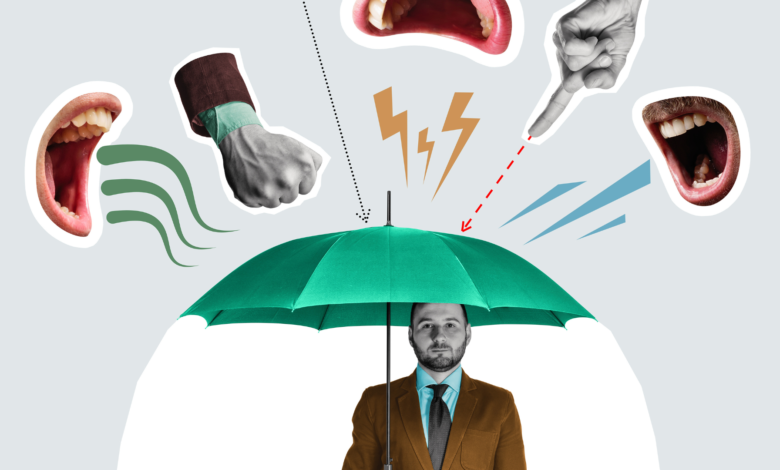
The strongest leaders know that great teams require both accountability and psychological safety.

Early in my career, someone gave me a piece of leadership advice I’ve never forgotten: Your team should be scared of you.
The reasoning was straightforward. Fear creates respect. Respect drives accountability. Accountability produces results. I understood the logic, but I never agreed with it.
Over the years, I’ve thought about that advice often, especially as I’ve built and led teams of my own. If there’s one thing experience has reinforced, it’s that fear may create compliance, but it rarely creates lasting commitment.
People do their best work when they’re trusted
People do their best work when they’re trusted to think, question, and contribute. That trust gives them room to take ownership. It allows them to exercise judgment and do better work.
The daily digest for entrepreneurs and business leaders
An Inc.com Featured Presentation
A culture of trust motivates people through high expectations and a shared standard of excellence.
I’ve never understood why instilling fear is so often mistaken for strength in leadership. There’s a belief that fear drives better performance and higher standards. Perhaps it does—for a while.
Fear can create urgency
Fear can create urgency. It can even improve short-term performance. But over time, it comes at a cost. People stop asking questions. They become less willing to challenge ideas. They hesitate to admit mistakes before they become bigger problems. Innovation slows because people begin protecting themselves instead of contributing their best thinking. Ironically, fear often limits a company’s greatest advantage: the collective intelligence, creativity, and perspective of its people.
Earlier in my career, I experienced this firsthand. I was on a client call brainstorming ideas for an upcoming initiative. I offered an idea, and the client responded enthusiastically. Immediately after, my boss reprimanded me and told me not to speak on client calls unless asked. I became more hesitant to contribute. The experience taught me that sharing an idea can have consequences, even when the idea itself is well received.
Some of the best ideas emerge when there isn’t a wall between leaders and their teams. They come when people feel like they’re already part of the conversation—not when they’re waiting to be invited into it or wondering whether they should speak at all. Fear silences the quietest voices while also discouraging the most confident ones.
The same dynamic can show up when someone
The same dynamic can show up when someone disagrees with a leader. If challenging an idea is treated as a confrontation to the relationship, people quickly learn that agreement feels safer. A strong leader can hear a different point of view, ask questions, and ultimately make the same decision. The difference is that people leave knowing their perspective is welcome, which makes them more likely to speak up the next time something important is at stake.
Fear also changes the quality of information that reaches a leader. When people stop asking questions, admitting mistakes, or challenging assumptions, leaders begin making decisions without seeing the full picture. That cultural issue becomes a business issue.
The best leaders I’ve worked with have something in common. They’re aware of how they carry themselves and how they come across to others. They listen as much as they speak, seek to understand and be understood, and know how to work through a problem before making a decision. Their authority comes from how they lead, rather than from intimidation.
The alternative to instilling fear is building enough
The alternative to instilling fear is building enough confidence in your team that they can think, contribute, and trust their own judgment. That still means having difficult conversations and being direct when necessary. The difference isn’t in what leaders say—it’s in how they make people feel when they say it.
Confidence creates clarity. Fear creates uncertainty.
When expectations are clear and communication is honest and constructive, people don’t spend energy trying to read the room or avoid making mistakes. Instead, they’re focused on solving problems, taking ownership, and doing their best work.
The strongest leaders create environments where people can think critically, challenge ideas, and contribute meaningfully.
Get 1 Smart Business Storydelivered straight to your inbox when you subscribe to Inc.’s free daily newsletter.
Source: www.inc.com