

Croatia has been praised by the European Commission for its implementation of the European Union’s Entry/Exit System (EES), with more than 2.3 million EES files created since the system was introduced.
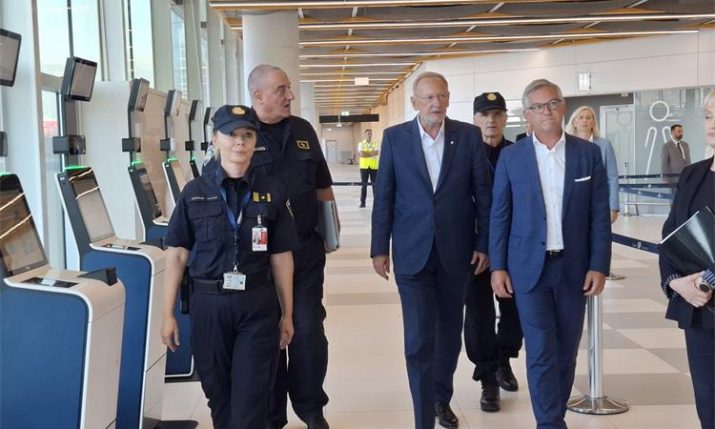
<a href="https://zagreb.today/croatian-wines-score-superb-points-in-wine-enthusiast/” title=”Croatian wines score superb points in Wine Enthusiast”>Croatian Interior Minister Davor Božinović and European Commissioner for Internal Affairs and Migration Magnus Brunner visited Split Airport on Thursday to inspect how the digital border control system is being used during the busy summer travel period.
Croatia began the gradual introduction of EES in October 2025 and has operated the system in full at all 77 international border crossings on the EU’s external border since 1 March 2026, more than a month ahead of the EU-wide deadline.
Since its introduction, Croatian border authorities have carried out more than 9.3 million checks and verifications of existing EES files.
At Split Airport, passengers can use 10 self-service EES kiosks for pre-registration, alongside automated border control gates. Eligible nationals of countries including the United Kingdom, Canada and South Korea can use ABC gates to help speed up the border control process.
Authorities said that, despite the heavy summer traffic, there have been no partial suspensions of the EES system at Split Airport and no departure flight delays caused by border control procedures.
“Croatia is a leader in the European Union from the very beginning,” Brunner said, praising the country’s preparation and ability to adapt the system to operational conditions at busy airports.
The EES is designed to strengthen the security of the EU’s external borders by digitally recording entries and exits and using biometric data to help verify travellers and identify identity fraud.
Since its introduction, 7,771 travellers have been refused or prevented from entering Croatia, accounting for around 15% of all such refusals recorded across the EU.
Brunner said around 50,000 entry refusals had been recorded across the EU, including about 1,500 involving people considered a security threat.
Croatia is also working with the European Commission on further technical solutions for land border crossings, including greater use of mobile EES devices that allow passengers to be registered before reaching the border control point.
The aim is to make border procedures faster while maintaining security, particularly during periods of peak traffic.
Božinović said the experience demonstrated that security and the smooth flow of passengers can be achieved together, with Croatia continuing to work with the European Commission on further improvements.
Source: www.croatiaweek.com