
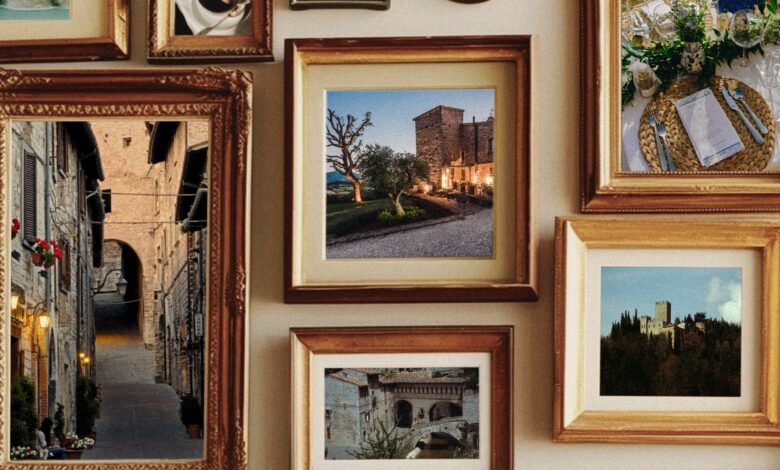
A stay at the Civitella Ranieri, the revered arts foundation and residency whose stunning castle is set in the hills above the friendly market town of Umbertide led Chang-rae Lee to make Umbria his second home. “My wife and I have enjoyed numerous long stays in Italy during our marriage, but in late 2019 we purchased a modest former farm property in northern Umbria,” he says.
“We’d been toying with the idea for years, mostly just fantasizing, but took the plunge after a stint as guests of the Civitella Ranieri. We’ve adored the peaceful pace of life and sublime vistas, and have been spending our summers steadily renovating the property and bringing back to productive health its large olive grove.”
While he has yet to write about the region, he finished his two novels in the old stone house “that’s always cool even in the high summer heat,” including this month’s A Tender Age (Riverhead), about a child of Korean immigrants navigating adolescence.
“Although we don’t venture out every day, over the years we’ve explored much of this area of the Upper Tiber River Valley, the Alto Tevere,” he says. Here, wisdom he’s gained as a result of that exploration. Restaurants: Our houseguests always ask this first, because of course eating well is a primary objective when here. Because black summer truffles are usually abundant in Umbria, I steer folks to two truffle-centric eateries, Da Baffone, which is perched far up in the hills above the medieval town of Gubbio, and the more easily accessed Osteria del Boccajolo in Umbertide.
Both places will shock you with the abundance
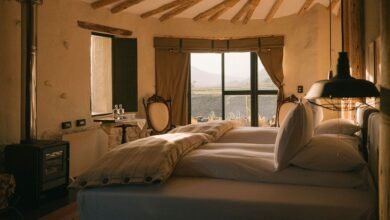
Both places will shock you with the abundance of truffle shavings that practically covers the handmade tagliatelle, or the scrambled eggs, and even the steak. Amazing stuff. Hotels: We’ve had friends stay at a number of hotels and shared meals in situ. A very fetching spot is Nikis Resort, near the commune of Preggio, with its understated modern Italian and Scandina
On the higher and highest end, respectively, are Vocabolo Moscatelli and the Reschio hotel, both offering a borgo-like experience, as if you’re staying in the luxurious little duchy of some design-minded noble. Villa Reschio even has an equestrian center. Caffeine: Needless to say, there are countless bars and cafés in the area where you can stand at the counter and get a bracing espresso.
I like to sit at Caffe Centrale in the main piazza of Umbertide, and especially on the market days of Wednesday and Saturday (every larger town in Umbria hosts an open-air market one or two days a week), when purveyors of vegetables, seafood, meats and cheeses, and even discount and vintage clothes, offer their wares. Food truck: Speaking of market days, look for the Blasi family porchetta truck and make sure to get a taste of their sublime fennel-seasoned pork roast.
I always order it in a panino misto,
I always order it in a panino misto, a sandwich featuring a mix of light and dark meats and also the crispy rind. It’s the best four euros you’ll ever spend. Art: Although technically just across the border in neighboring Toscana, some of the most famous works of the Renaissance master Piero della Francesca can be found in the towns of Monterchi and Sansepolcro. The sight of his Madonna del Parto in Monterchi always makes my chest ache, for its exquisite execution and glowing beauty.
Monterchi is hardly a town but also has a fascinating Museum of Scales and weights. Boat ride: Umbria might be Italy’s sole land-locked province, but if you fancy some time on the water visit Passignano sul Trasimeno, which sits on Lago Trasimeno, one of Italy’s largest lakes. From there you can take a ferry to Isola Maggiore, where there’s a medieval village and a restaurant.
Day trip: When we crave a beach day, we drive 2 hours east to the Adriatic Sea. I like the classic beach clubs in Portonovo where there are coved beaches. You can rent beds and an umbrella and dine at the beachside restaurants–just note that during July and August they’re packed. One of my favorites is Ristorante Emilia, very traditional and local, which serves a delectable pasta of clams in a garlicky chickpea sauce.
Architectural gem: Gubbio is one of the most
Architectural gem: Gubbio is one of the most well-preserved medieval towns in Italy, replete with a ducal palace, a grand duomo, and a Roman-era forum that still holds concerts, plus you can ride a basket-like cable to the top of Monte Ingino for a spectacular view of the valley. Secret spot: Just outside the center of Gubbio is Da Fulvio, which no matter the day or hour is packed with local diners.
At lunch you’ll see families, couples, groups of workers in their uniforms, all enjoying the homey casalinga cuisine. The pizzas are wafer thin and a great choice if you want to eat a whole pizza but still stay on your diet. Beef eaters should try one of the many aged steak selections, grilled on an open wood fire. Airport: Perugia airport (PEG) is a regional hub for several carriers, including Ryanair.
You can get to and from many destinations in Italy such as Sardinia and Sicily, as well as take direct flights to a number of cities, including Barcelona, Brussels, and London. Tourist spot: A fun spot to visit is Solomeo, clothing designer Brunello Cucinelli’s picture book town, which he’s invested millions in restoring and bringing back to life. There’s a scrubbed quality to it that can feel a bit Disney, but for those interested there’s also a Cucinelli outlet with sometimes sales, so there’s that.
People watching: During the summer months it seems
People watching: During the summer months it seems like almost every Umbrian town has their traditional sagre, most typically a public party and celebration of some local tradition or folklore, often centering around a specialty foodstuff, such as mushrooms or cinghiale (wild boar). One of the most fun is the Festa dei Barberi (Festival of the Barbarians) in Castel Rigone, with the townsfolk dressed in costume and geared up with period tools and weapons, with the young bare-chested men shooting wine into your glass from (oddly) a backpack agricultural sprayer.
Meaty dishes and pastas are served and there’s a raucous party that goes all night. Wine tasting: Montefalco, to the south, is the heart of Umbrian wine country, featuring powerful, deep reds based on the Sagrantino grape, and you can do any number of wine routes to both large and small producers. Closer to Umbertide is Chiesa del Carmine, an award-winning winery and agriturismo set in a lovely valley.
Best time to visit: Fall, as is the case most everywhere, but to experience the full richness of the greenery that Umbria is famous for, Spring and early Summer. To get around: You need a car, full stop. There are trains connecting most every large Umbrian town but to explore the beautiful countryside and tucked away hilltop villages, having your own wheels is essential. Chang-rae Lee’s A Tender Age (Riverhead Books) is out now.
Source: www.vogue.com