
Nvidia’s Next Massive AI Move Involves a $13 Billion Acquisition—and a Dancing Robot Duck
Nvidia is reportedly planning to buy Hugging Face. Here’s why.

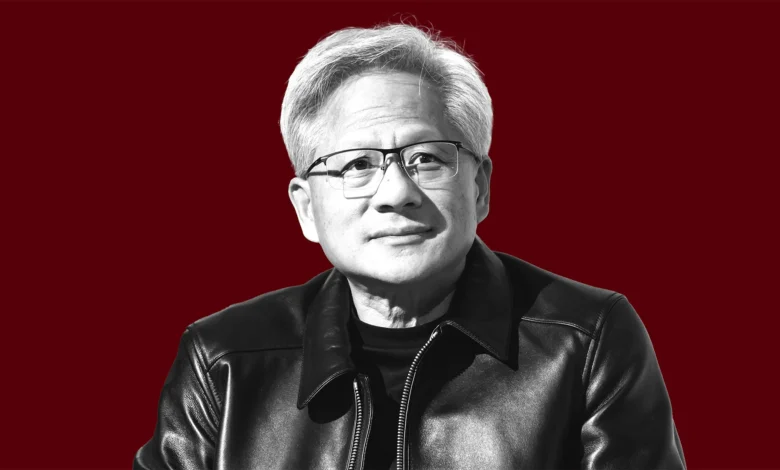
Nvidia CEO Jensen Huang. Illustration: Inc; Photo: Adobe Stock
Nvidia makes some of the most powerful AI chips out there, and thanks to that fact the $5 trillion company has already become the backbone of the AI revolution by powering the machines on which other companies run their AI software. Now it’s reportedly trying to expand its own AI software ambitions by spending some $12.9 billion buying a leading AI firm—but it’s not one you may have heard much about. Meanwhile, Nvidia’s acquisition target, Hugging Face, just landed itself in the news by releasing a weird physical AI development tool: a singing, dancing robot duck.
Here’s what’s going on.
Hugging Face is a small Brooklyn-based AI startup, founded in 2016, that is sometimes compared to the software development platform GitHub. That’s because it acts as a kind of central square for developers and researchers in the open-source AI space, where complex AI code is shared and discussed and improved, and where developers can even find critical training data. By acting as a repository for this important code, companies like Hugging Face play a vital part in advancing third-party AI systems.
So why is one of the world’s biggest AI names interested in this small startup? It’s likely to do with Hugging Face’s 16 million-plus users, and the fact that nearly one in three companies on the Fortune 500 have verified accounts or use some of Hugging Face’s business-centered tools.
Weekly roundup of the latest in tech news
An Inc.com Featured Presentation
In a March summary, the startup carefully highlighted
In a March summary, the startup carefully highlighted its role in helping advance the cause of open AI models, versus more proprietary closed code, and it noted that it’s occupying a central role in the AI revolution because “Big Tech companies are frequently creating new repositories on Hugging Face Hub.” The blog post suggested that the “strong increase” in code being created and referenced inside its systems showed “investment over time.” It was hinting that in some ways the fast growth in its user base and stored code is a temperature measure for overall AI growth. Fascinatingly, Hugging Face specifically noted that “NVIDIA has emerged as the strongest contributor” to its code repository.
Nvidia, formerly a leading computer graphics name, has become one of the most important infrastructure businesses in AI thanks to its chips, and the transformation has turned CEO Jensen Huang into a superstar. We know Nvidia has some ambitions for its own AI code, and for what some AI boosters called physical AI, or robotics—back in July, Huang called robotics the next “frontier” for the tech.
And speaking of robotics, this week Hugging Face announced that it’s expanding its own AI robotics effort by releasing an open-source AI development toy called Microduck. It’s a $400 walking robot that looks vaguely duck-like, and which acts as a test platform for robotics and AI algorithm development. The cute machine can, according to Hugging Face, “walk, sit, crouch, get back up from many common falls, and even roller-skate” and is likely to have broad appeal to the educational market where young developers could use it to hone their AI coding skills.
Source: www.inc.com