
The sound of drumbeats filled the pavilion. The first model emerged onto a sinuous runway in a nubuck coat paired with chiffon pants that fluttered in the breeze, revealing knee-high calfskin boots. The outfit matched the pale yellow of the venue but upheld the Hermès aesthetic of discreet, horsey timelessness. So when the next model came out, also wearing shades of margarine and lemon, it took a moment to register that her look—a skintight, bell-bottomed catsuit covered in blinking sequins—represented a deviation from, if not a challenge to, the Hermès ideal.
Hermès does not employ celebrity ambassadors, as most other major luxury brands do, but, perhaps in a nod to the setting, the evening’s front row was a touch starrier than usual. Miley Cyrus, open-mouthed, nudged Kerry Washington as the woman in spangles swept by—this was red-carpet clothing, flashbulb clothing, clothing to be seen in once rather than excavated annually from a closet of perennials.
Nadège Vanhée, the artistic director of Hermès women’s wear since 2014, described the event’s conceit to me as “How do I create a conversation between the mystique of a French fashion house talking about horse carriages and the spirit of Los Angeles, which is rewind, erase, restart?”
Thierry Hermès, an Alsatian-born harness-maker, founded Hermès in 1837. (Pronunciation hint: “air mess.”) Over nearly two centuries in trade, the company has dealt in germinal francs, Poincaré francs, de Gaulle francs, and euros, always remaining family-owned.
The current C.E.O., Thierry’s great-great-great-grandson Axel Dumas, presides
The current C.E.O., Thierry’s great-great-great-grandson Axel Dumas, presides over an empire of sixteen métiers, as the divisions are known in the house lexicon, including everything from saddlery, gloves, and belts to timepieces and tableware. Many people know Hermès for its intricately printed silk scarves (Grace Kelly once used one as a sling) and for its savagely coveted Birkin bags (whose rate of appreciation is said to outperform the S.
& P. 500). The latter have inspired so many knockoffs that Judge Judy once devoted an episode of her show to a Birkin-counterfeiting scam, marvelling, “Twenny-nine hundrud dollas for a pockabook!”
These days, that would be a bargain, as even the most modest models cost five times as much. Hermès is worth an estimated hundred and ninety billion dollars, making it the second most valuable luxury-goods firm in the world.
Last year, it briefly overtook the front-runner, L.V.M.H.—the slick conglomerate behind the likes of Louis Vuitton and Dior—its eternal nemesis and spiritual foil. In the capricious luxury sector, Hermès has a reputation for steady thinking. Protestants in a traditionally Catholic country, the family—now a tripartite mishmash of Dumases, Guerrands, and Pueches, owing to a surfeit of daughters at the end of the nineteenth century—is known for avoiding debt and investing for the long term.
Its bags inspire a fevered economy of influencers,
Its bags inspire a fevered economy of influencers, resalers, and aspiring buyers, thanks, in large part, to the company’s choice to keep supply diabolically low. Hermès positions itself above the melee, as a guardian of tasteful continuity. According to one former executive, the family sees money “merely as a means, especially for buying time,” and, according to one relative, “moral elegance” is considered a job requirement at Hermès.
In 2016, at a benefit auction, Jeffrey Epstein placed the winning bid on an internship at Hermès; the company withdrew the lot and reimbursed the charity. Dumas later explained that the last thing Hermès needed was to get involved with a “louche financier.”
Hermès is a sporty house, but it is also the wonkiest house. The company employs a paleographer, for deciphering handwriting in old company correspondence, and maintains a collection of leather-bound ledgers containing the specs of every saddle made from 1900 to today.
The first sixteen pages of last year’s annual report consisted of a cartoon about a globe-trotting Pegasus. It would be difficult to find another luxury brand that promoted an employee from sewing bags to designing them after he submitted a plea written entirely in Alexandrines. But Hermès did, and it is still producing that designer’s first creation, from 2002: the Picotin, inspired by feedbags.
Suckers for a touch of whimsy, the company’s
Suckers for a touch of whimsy, the company’s window dressers once garnished a display inspired by the Garde Républicaine, a famous French cavalry division, with a pile of horse manure. Such is the Hermès commitment to authenticity that the poop wasand quirk can sit uneasily in the distractible, self-serious fashion world, to the point that fashion at Hermès has historically been regarded as something of an oxymoron
Unlike its competitors, Hermès is a pre-haute-couture enterprise, founded before the rigid bureaucracy of French fashion was put into place, in the eighteen-sixties, with the establishment of a governing syndicate. Emilie Hammen, the director of the Palais Galliera fashion museum, explained that, as a result, the company “has never felt a need to prove itself within this framework.” Hermès tends to express itself through craft rather than through novelty.
“I’m not doing fashion,” Véronique Nichanian, who designed menswear at Hermès for more than three decades, told GQ, in 2021, preferring to call her creations “clothes-objects.” The house is, in many respects, the antithesis of the kind of fashion described in Miranda Priestly’s famous cerulean speech, from “The Devil Wears Prada”: unlike its bags, whose imitators include Walmart’s seventy-eight-dollar Wirkin, Hermès’s clothes have traditionally trickled down nowhere, influencing no one.
You will certainly not find an equestrian gilet
You will certainly not find an “equestrian gilet dress in satin-gray plongé ostrich” hanging on the racks at Target next year just because Hermès sent one down the runway. Yet, under the stewardship of Vanhée, fashion is an increasingly important venture for Hermès. Internally, the division has grown by forty-four per cent since 2022, accounting for more than a quarter of the sixteen billion dollars in revenue that the company reported last year, and Hermès’s cultural influence is likewise on the rise.
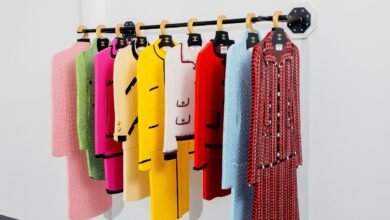
Lauren Sherman, the fashion reporter for Puck, wrote admiringly of the L.A. show, “This was the most Vanhée has ever inserted herself into the broader fashion conversation, which you don’t really have to do at Hermès.” A friend of mine who works in the industry was recently raving about a pair of stretchy, high-waisted black pants designed by Vanhée that she said insouciantly bundled together several desirable codes: equestrian, prep, surf, S & M.
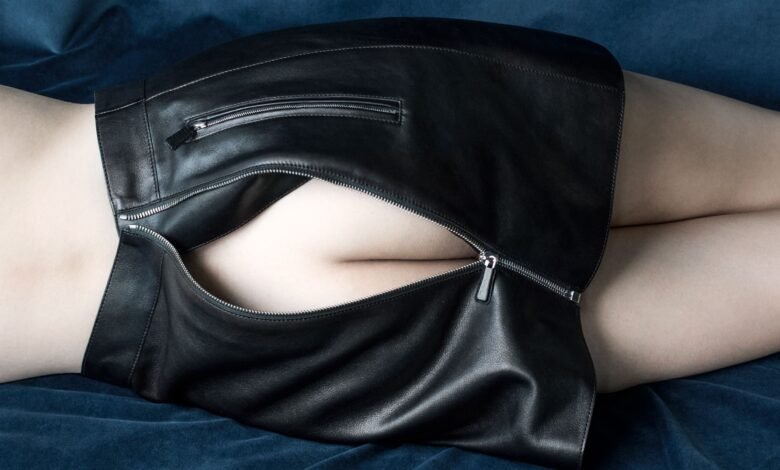
She continued, “You can wear them with literally anything and look like a sexy luxury bitch.” The writer and filmmaker Miranda July, who attended the show in L.A. wearing a blue turtleneck under a black leather Hermès overalls minidress, told me, “It’s kind of crazy that she’s making clothes for such wealthy people that are so sensuous and kinky. It’s for flesh—for beating skin with blood under it.”
Vanhée doesn’t fit the obvious profile of a provocatrice.
The first time I met her, this past
The first time I met her, this past spring, she was reading an essay by the French sociologist Nathalie Heinich about “visibility capital” and the economics of being seen. She likes Austrian spas and Jon Fosse novels. The tech executive Charles Porch, a close friend of Vanhée’s, told me, “She’s really nerdy, in the best way possible.” She dislikes digital mood boards, so much that she forbids her designers to use them, and she has zero presence on social media, which she dismissed as “kind of a sad-girl thing.” Her inspirations for another recent show included the fashion photographer Deborah Turbeville and the Greek goddess Hecate.
In Los Angeles, the sexy luxury bitches continued down the runway. The most persuasive dialogue between French pedigree and Californian freedom came in the form of a pair of short jackets, one in calfskin and one in goatskin, featuring motifs, realized in complicated leather marquetry, that equally recalled the Longchamp racecourse and the Wild West. After a series of slouchy suits and bustier dresses in turquoise and scarlet silks, the show exploded to black, culminating in a series of bravado gowns.
A two-piece set featured palazzo trousers trailing a nimbus of silk and a stomach-baring bandeau top cinched with a leather belt at the bust. Vanhée has said that she thinks of leather as the conscious and silk as the subconscious, the former structuring and the latter flowing—this look, then, was integration, fusing the banker’s accessory with the sexpot’s attitude. Vanhée emerged from backstage at the end of the show in red trousers, a red top, a caramel-colored leather bomber, and a pair of yellow-and-black La Sportiva trail-running sneakers that she wears everywhere, maybe to offset all those hides and tulles.
Because she is indifferent to self-mythologizing and thinks
Because she is indifferent to self-mythologizing and thinks intently about what she says—and perhaps also because, physically, she corresponds to some people’s idea of a melancholic Pre-Raphaelite maiden—she has often been characterized as “an enigma” or “mysterious,” or even “cold-blooded.” The more straightforward reality is that she is someone with a healthy sense of priorities, who considers it more radical to act as a steward than to play the renegade, even if she prefers to do a little bit of both.
“My work isn’t my personal diary,” she told me matter-of-factly. “As a creative, I want to give a certain orientation, but to work at Hermès is also to be of service.” She is, in other words, the anti-auteur—a mature, cerebral mortal to fashion’s babbling gods and kings. Free of undue pressure from her bosses or the public, from above or from below, she may be the last fashion designer unbeholden to the comments section.
Charles-Émile Hermès, the founder’s son, moved the company to 24 Faubourg in 1880. Baron Haussmann, making way for the boulevards, had demolished the original headquarters, near La Madeleine, and Charles-Émile wanted the company, which specialized in saddlery at the time, to be closer to the Élysée Palace, with its great stables and tony crowd. By the turn of the twentieth century, the area counted some forty maisons du cheval, including riding schools and makers of saddles, harnesses, and carriages.
With Charles-Émile’s sons, Émile and Adolphe,
With Charles-Émile’s sons, Émile and Adolphe, at the helm, the company became the area’s star tenant, furnishing saddles to a Continental élite, including Nicholas II, the Tsar of Russia. Émile’s leatherworkers often married Jeanne Lanvin’s seamstresses, who were confecting gowns for society women just across the way. A photograph from the era shows Émile’s four daughters, in braided buns and white drop-waist dresses, posing with an iron rocking horse that still sits in his former office at 24 Faubourg.
In July, Menehould de Bazelaire du Chatelle, who was Hermès’s artistic director of cultural patrimony until her recent retirement, welcomed me into Émile’s lair, which has been lovingly preserved as a private museum. The place teemed with treasure: a samurai’s coral-studded stirrup, a miniature game of dominoes that could be worn as a pendant, a cane whose head popped open to reveal a mustache brush and a pick for gathering wild mushrooms.
Bits and bridles filled every corner, giving the place the feel of the world’s poshest Cracker Barrel. A shelf held dozens of obscure cookbooks, which Hermès scarf designers can consult for gastronomy-themed prints. There was a nineteenth-century praxinoscope that recalled the magic lantern from Marcel Proust’s “In Search of Lost Time.”
“Émile and Proust were born in the same year,” de Bazelaire du Chatelle told me.
Proust said he built his book the way
“Proust said he built his book the way a couturier constructs a dress.”
It was touching to hear her speak about the long-dead men as though they were her intimate friends, two neighborhood guys frequenting the same haunts in an eternal Belle Époque. Hermès is a luxury-goods company, but it operates a bit like a farm or a vineyard, rooting itself in a sense of place. “We are peasants of the city, and twice a year we have our own crop,” a family elder once told Axel Dumas.
Part of the brand’s appeal is that even its placemats and wristwatches seem imbued with terroir. The First World War changed everything for everyone, but Hermès faced a double problem: in addition to decimating its workforce and its clientele, the conflict clarified the need to transform the business. In 1914, the French government had sent Émile to the Americas to requisition horses and cavalry equipment.
He came back talking about cars, having witnessed Henry Ford’s assembly lines in Detroit. Émile chose not to modernize his company’s way of working—one man, one saddle—but it was clear to him that the automobile owned the future. Soon, some eighty thousand horses had disappeared from a capital newly thrumming with Citroën Type As. Company legend holds that a pair of veterans appeared at 24 Faubourg: one had lost his left hand and the other his right, so they went Dutch on a single pair of gloves.
Émile could have folded the company, but he
Émile could have folded the company, but he had an idea. On his requisitioning tour, he’d observed another newfangled creation fastening the cloth top of a Cadillac convertible—the zipper, which he introduced to France in 1922, having obtained the patent to the invention in the country. The next year, Hermès launched the Bolide, thought to be the first handbag to use a zip closure.
Émile continued to diversify. In 1937, Hermès débuted a silk scarf, depicting horse-drawn omnibuses inspired by a popular board game. When the Second World War broke out, Hermès was not existentially threatened. With less money to spend on clothes, clients gravitated toward more affordable accessories; silk became difficult to obtain, so the company released rayon scarves. Perhaps the most lasting consequence of the war years occurred when the manufacturer that supplied Hermès with mustard-colored bags and boxes ran out of paper, forcing the company to switch to a bright-orange hue.
Hermès embraced the shade as its signature, to the point that, years later, when Eric Clapton custom-ordered a crocodile-skin guitar case, it arrived in an enormous orange box in the shape of a Martin 000-28EC. The business podcast “Acquired” has described Hermès’s strategy as “the opposite of everything you learned in Econ 101.” The company maintains a scarce supply of its handbags on the ground that it’s impossible to expand production without decreasing quality.
Competing luxury brands have wildly increased the prices
Competing luxury brands have wildly increased the prices of their bags in recent years—a Chanel classic flap bag that cost fifty-eight hundred dollars in 2019 cost ten thousand eight hundred dollars by 2024—but Hermès has taken a relatively restrained approach, with hikes at several percentage points less than the rate of inflation. Even when outsourcing could provide opportunities or economies, the company is maniacally focussed on controlling all aspects of the process.
It doesn’t sell sunglasses, for example, because it would have to subcontract the manufacturing of the lenses. Parts of the belts and ties are sewn by machine, but artisans, many of them trained in schools established by Hermès, still saddle stitch leather goods by hand and screen-print scarves using up to forty-nine separate screens per scarf from an archive of more than seventy-five thousand proprietary colors.
(By superstitious tradition, an Hermès scarf never features a knife or a sword—anything that is not “nice” to the neck.) Vanhée’s pride in her team’s impractical craftsmanship was evident during a rehearsal for the L.A. show, at a studio in Culver City, as we walked by a leatherworker molding the shoulders of a dress with a hammer and a marble plate he’d brought all the way from Paris.
Vanhée said, You only see that chez Hermès,
Vanhée said, “You only see that chez Hermès, eh?”
Eccentricities aside, Hermès is capable of acting with steely discipline when necessary. In 2010, Bernard Arnault, the chairman of L.V.M.H., called Bertrand Puech, then the chairman of Hermès’s supervisory board. Arnault told Puech that he had managed to accumulate a 14.2-per-cent stake in Hermès and would be announcing this to the media in two hours.
Hermès executives and family members hadn’t had a clue. (Arnault, who eventually acquired a twenty-three-per-cent stake, was later fined for failing to make mandatory disclosures.) The C.E.O. at the time, Patrick Thomas—not a family member, it should be noted—indelicately conveyed his sense of shock, telling reporters, “If you want to seduce a beautiful woman, you don’t start by raping her from behind.” Business bros still recount what happened next with the kind of awe usually reserved for events like the siege of Stalingrad: in a remarkable show of unity, more than fifty family members banded together to form a holding company, fighting off the possibility of a takeover by pledging not to sell some 50.2 per cent of the company’s stock for twenty years.
The Birkin dates to 1984, when Jean-Louis Dumas, the executive chairman of Hermès at the time, boarded a flight and encountered the famously basket-carrying actress Jane Birkin, who complained that she could really use a bag big enough to hold both scripts and diapers. Dumas mocked up a sketch on the spot, and the Birkin was born—a squarish satchel with top handles and a trim leather belt to hold down the flap, although, according to Connecticut Luxury magazine, many owners prefer to leave their bags open, in imitation of Jane herself.
Her original Birkin (which sold last year
Her original Birkin (which sold last year at Sotheby’s for some ten million dollars) was black, but diehards today compete for models like the Himalaya, made in white-and-gray crocodile skin that supposedly mimics snowcapped mountains, and any bag in such colors as Rose Confetti or 5P Bubblegum Pink; the latter is said to have a “near-mythical” status among connoisseurs. The Financial Times has compared the hype that surrounds the bags to the tulipomania that seized seventeenth-century Holland.
Both the Birkin and the smaller but nearly as coveted Kelly—created in the nineteen-thirties but popularized by Grace Kelly, who used it to camouflage her pregnancy in the fifties—are known in fan circles as “quota bags.” Hermès decides who gets them and who doesn’t, refusing to sell them online and tightly controlling their availability in boutiques. Because of the bags’ popularity, Hermès has developed an unusual relationship with some of its clients, who ask not only what Hermès can do for them but what they can do for Hermès.
At the L.A. show, I met a pair of young women named Brittany Kane and Andrea Henderson, D.M.D. and D.D.S., respectively. (“We love dentistry and we love fashion,” Kane told me.) Henderson explained later that “you don’t go into the Hermès store and ask for a Birkin” off the bat, adding that she’d broached the topic only after paying her respects by buying jewelry and shoes.
This works for some people but apparently not
This works for some people but apparently not for others. In 2024, three customers filed a class-action lawsuit alleging that Hermès uses the promise of handbags to induce people to buy teacups and trinkets and seven-thousand-dollar wastepaper baskets, all the while knowing that many of them “will not in fact get a Birkin bag.” The suit was dismissed. Hermès told me, “Under no circumstances is the sale of a product conditional upon the purchase of another.”
The “Hermès game,” as it’s known, has spawned an entire repellent vocabulary.
The ancillary purchases, for example, are euphemized among shoppers as “pre-spend” or “Birkin bait,” and tales circulate of aspirants attempting to curry favor with sales associates, or “S.A.s,” by offering cash and trips on private jets. In order to justify the expenditure, or perhaps the humiliation of having to beg for the privilege of parting with their money in a public store, some participants tend to treat what is realistically a one-way capitalistic transaction as some sort of bilateral spiritual quest.
Reddit abounds with threads such as “What was your journey to a Special Order?”(A “special order” allows a client to customize her bag.) One lucky buyer replied, “In my case, I think my SA felt that I had enough neutral bags (two Birkins, an Evelyne, a KTG) that it was time for me to go through a special order to get a bag unique enough for me.” Drafting on Hermès’s cachet, a New York City plastic surgeon recently began providing a package of procedures for new moms known as the Birkin Body—lipo, a tummy tuck, breast surgery, and a butt lift.
All this rapacious consumerism sits somewhat awkwardly alongside
All this rapacious consumerism sits somewhat awkwardly alongside Hermès’s image of Old World gentility. You can see why the company would want to move further into fashion and other retail categories, hedging its bets as leather goods, traditionally its most profitable division, risks overexposure. Hermès deals nonchalantly with the discordance. When I asked Vanhée about the bag-unboxing videos that proliferate on Instagram, she quickly dismissed the topic, saying, “Isn’t that old?” The company does, though, sell a scarf called Tulipomanie, covered in frilly blooms of an exquisiteness that seems to rebut the charge of excess hype with a wink.
When the call came from Axel Dumas’s office, she was in the middle of a hiking trip in Okinawa. “I was wearing this beautiful brand from the West Coast of America which is called Patagonia,” she joked. “Total look Patagonia. All I had was a little duffelbag.” Dumas summoned her to Paris, but she had nothing appropriate to wear. “Of course, big drama,” Vanhée recalled.
“What do I do? I’m a pretty tall girl. It’s Japan.” She ended up with a navy-blue suit from the men’s department at Comme des Garçons. “And then I went with some classic loafers, because I was a wild animal!” she said. When she finally made it to 24 Faubourg, she sat down and started talking about Plato’s cave. Dumas, who has a degree in philosophy, was impressed.
Upon hiring her, the only brief he gave
Upon hiring her, the only brief he gave was that he be “pleasantly surprised.”
Vanhée was born in 1978 in Seclin, a small town near Lille. Her father was a doctor, a French Catholic who had lived in Morocco before moving to Algeria, where he met her mother, a Muslim nurse from Constantine. As Vanhée’s birth approached, the expecting couple decided that the baby should be born in France, so they went to Seclin, where she had relatives living—“Voilà,” Vanhée told me.
Soon, the family was back in Algeria, living in Algiers. “I spent my first two years there,” Vanhée recalled. “And after that we moved back, and there was a certain melancholy, because, bon, when you go from those beautiful white views, it takes time to love the North of France.”
Vanhée was a studious child. She thought that she might like to be an archeologist, until, as a teen-ager, she started contributing music reviews of indie bands such as Placebo and Moloko to a zine.
Fandom led to flea markets, which led to a curiosity about fashion. She began taking apart the garments she bought and sewing her own. Sure, she dyed her hair black and wore it half-punk, half-goth style, but the classic fashion narrative of the yearning provincial outsider, slavering over Vogue spreads and dreaming of urban glamour, holds little resonance for her. Fashion was “a hyper-repressed desire”—something to admire, maybe, but not to join or conquer.
I had as much cultural stimulation there
“I had as much cultural stimulation there as I do in a big city like Paris,” Vanhée said of Seclin one day at the Hermès atelier, proffering a dark-chocolate-covered speculoos cookie, a favorite northern delicacy. Designing clothes at Hermès isn’t the easiest job. In addition to fashion’s historically muted role at the brand, there is the simple fact that an Hermès designer must use a lot of leather, to honor the house’s equestrian heritage, but that, if the looks get too leathery, they can easily veer toward barnyard or bordello.
The Birkin and the Kelly have been around for decades and look much the same as they ever did, but a fashion designer at Hermès has to think about freshness as much as function and form. “Don’t be too much of a creator, and don’t be too much of a traditionalist,” one house motto goes. Vanhée handled that dilemma confidently in her first collection, for the Fall 2015 season.
Even if the looks could be uneven, ranging from a sublime pair of blue-black lambskin dungarees to a frumpy quilted parka with saddlebag-like pockets, the collection was received warmly, with Vogue calling it “a respectful journey around the house.” Vanhée told the Telegraph that year, “I don’t think a garment needs three sleeves to be experimental.”
In the seasons that followed, Vanhée mostly stuck to making incomparably crafted, gimmick-free, calmly intelligent clothes.
They performed well with customers, but detractors suggested
They performed well with customers, but detractors suggested that she was uninspired, dismissing her as “Nabeige.” The idea that Vanhée’s work was dull or overly conservative sprang, in part, from her tenure at the Row, which is often credited with launching the “quiet luxury” trend of monochrome wearable pabulum for a public obsessed with projecting good taste. Still, in her early years at Hermès, she was crucified on the rare occasions when she attempted something different.
In 2017, she showed boho vests and plaid trousers to criticism that, as the Business of Fashion put it, her “remarkable clarity and sense of intent had gone completely AWOL this season.”
Vanhée loathes the phrase “quiet luxury” and seems exasperated by the association. She emphatically rejects the idea that she was ever “playing it safe.” What some people see as “boring as hell,” she said, is “delicacy and structure” done to an extremely high standard.
One season, she sent models down the runway in rigorously cut leathers and then made it rain, dumping droplets from the ceiling. Tashjian, the style reporter, told me, of Vanhée’s designs, “I have moments where I feel like I’m eating at one of those fussy restaurants where everything is square, but there’s something punk in that she just does whatever she wants.” She added, of the rain stunt, “It was so aggressive and sensual and then just completely arrogant, these extravagantly expensive clothes in a downpour.”
Sometime around the pandemic, Vanhée’s clothes got perceptibly more outspoken.
Hedonism just upended the classy, even classic, austerity
“Hedonism just upended the classy, even classic, austerity that seemed to be Vanhée-Cybulski’s signature,” the French newspaper Libération wrote delightedly, in 2021, reviewing a show that featured crop tops, peekaboo bralettes, and snatches of strategically exposed skin. Vanhée-Cybulski was Vanhée’s married name. Gossips contend that the transformation in her designs coincided with her divorce from Peter Cybulski, an English art gallerist with whom she has a young daughter.
“That’s sexist, and it’s not true,” Vanhée told me. In fact, she insists, she’s been exploring notions of feminine desire for years. (“I still believe the Hermès woman is seen as a vestal,” she told W, in 2019, vowing to spice up that image.) Max Pearmain, a stylist who often works with Vanhée, told me that, almost every season, she “homes in on an erogenous zone and tries to push that within the silhouette.” In Los Angeles, the focus was the hip, which she accentuated with a series of leather peplums, creative belting, and nipped-waist overcoats.
One of her best collections, for Spring 2026, was devoted to the bust, with almost every model donning a sort of “neo-harness” that the fashion magazine Numéro deemed “the must-have accessory of the season.” Vanhée showed the harness with vibrant indiennes prints inspired by Provençal folk costumes, suggesting a rooted, anti-porn idea of eroticism. Sex appeal, too, can have terroir.
There may be some practical considerations at play
There may be some practical considerations at play in the bombshellification of the Hermès woman. Peter Malachi, a communications executive at the company, told me, as we rifled through the racks at the Hermès boutique in Beverly Hills, that Vanhée, more than her predecessors, is designing for an American audience. “It’s more body-conscious—you have all these women spending a lot of time doing Pilates and looking amazing,” he said.
But Pearmain told me that he sees “a French attitude” in Vanhée’s “bluntness about attraction and shape.” Even if her designs are not her personal diary, as Vanhée put it, they are informed by aspects of her identity. One day, when I asked her about the difference between objectification and liberation, she replied, of the latter, “I think it was showing clothes that could be associated with shame, like the bra or the harness.” She continued, “For me, modesty and sexiness have always had a real tension that also comes from my double background.
I think that when one grows up with a Muslim mom and a Christian dad, there’s always this weight about what’s sexy, and I wanted to take that away.”
Ostensibly, the party was being given to celebrate the grand opening, after years of work, of a sprawling new Hermès boutique on London’s New Bond Street. I had been warned that Hermès loves a theme, and that the company’s approach to events could be a little fanatical, but the scene we encountered on the club’s lawns was commitment on a scale I had never seen before.
A man sat on a rock, a map
A man sat on a rock, a map spread out over his knees, holding an umbrella. He was a hired performer, as was another man, who was splayed out in a beach chair, tabloid over his face and thermos by his side, like something out of a Martin Parr photograph. A full team of white-suited cricketers batted and bowled on a village green. The hedges were moving, doing pirouettes around a pony-topped Maypole, as though Burning Man had relocated to Albion.
Five restaurants had been erected for the occasion, including a tiffin stand and an air-conditioned “potting shed” with chandeliers made of leeks and radishes. I asked a member of the events team to define the evening’s theme. He replied, without further explanation, “It’s a French horse who comes to London and doesn’t know how to act.”
More than a hundred Hermès family members were said to be in attendance.
It was fun to try to pick them out, using their perfect tailoring and amusing silk accessories as a sort of Habsburg chin. Pierre-Alexis Dumas, the company’s artistic director, sat nursing a pint in the Horse and Carrot, a wood-panelled English pub, as an m.c. conducted a pub quiz. “What is the meaning of ‘petrichor’?” the m.c. called out. People were really getting into it, shouting out guesses (answer: the scent of rain hitting the ground) and generally abandoning the blasé attitude that typically serves as a sort of emotional dress code at fashion-world parties.
Bells rang outside, and a team of dancers
Bells rang outside, and a team of dancers began wrapping multicolored satin ribbons around the Maypole. Then the sky lit up with a fireworks display in the same colors. Dumas watched, charmed, his arms encircling his wife’s shoulders, and accepted an ice-cream sundae in a silver parfait cup. The evening was beautiful, strange, and so far removed from the prerogatives of retail as to suggest that its entire purpose was not to have one.
It was an aristocrat’s folly, positing that real luxury is not so much quiet as super weird. Vanhée ended the night dancing alongside her bosses to a Fatboy Slim set in the pub. The next day, she visited the sculptor Rachel Whiteread at her studio, a former pickled-walnut factory in Tufnell Park. Vanhée often calls on artists, preferring to draw inspiration from IRL, cross-disciplinary exchange.
The women had never met before, but the rapport was easy. “Was the party fun?” Whiteread, who had declined to attend, asked. “It was this very Hermès world,” Vanhée said, adding, of the venue, “As a Parisienne, I had to laugh, because apparently it takes, like, forty years to get into that club.”
Vanhée seemed relieved to be in the company of another creative person, and the conversation turned toward the difficulty of maintaining integrity in the ever-more-corporatized fashion and art industries.
Damien Hirst always says, ‘Back when I
“Damien Hirst always says, ‘Back when I was a good artist . . .’ ” Whiteread said, laughing. “You either fit in or you get killed,” Vanhée replied. “I’m aware of what I’m doing, and I’m still a good designer. My curiosity pushes me to say yes, but I can say no if it’s jeopardizing the sincerity of the work.”
Just as Hermès is at a crossroads in its fashion, Vanhée is facing a critical moment at Hermès.
Her growing public presence may express a desire to cement her status at the house before the arrival, this winter, of the highly esteemed, mediagenic British designer Grace Wales Bonner, who is replacing Nichanian, the Hermès veteran, as the creative director of menswear. In a sign of confidence in Vanhée, Hermès recently announced that she will present the company’s first-ever couture collection, in January.
Couture is a departure from the house’s origins in industrial-age design, but it is also an extension of what Hermès has always done, in pursuing painstaking construction. Money, after all, buys time. Vanhée told me that she sees couture as an opportunity to dilate on her ideas in an era when time itself feels “increasingly dizzying and increasingly abstract.” She explained, “We can’t stand waiting anymore.
We always want everything to be highly optimized
We always want everything to be highly optimized and very fast. Couture is the opposite of this.”
Before one conversation with Vanhée, I’d come across a review by The Cut’s Cathy Horyn, the doyenne of American fashion criticism. In the past, Horyn had been supportive of Vanhée, calling her “the best women’s designer to work at Hermès” since Martin Margiela and “among the very best working in fashion today.” This review, however, dissented from the widespread view that the L.A.
show had been a triumph, suggesting that Vanhée, after more than a decade at Hermès, was mailing it in. Horyn wrote, “I don’t understand Nadège Vanhée’s clothes for Hermès anymore—why they’re trapped in such a narrow and predictable vision of an élite woman in a tasteful leather suit, jodhpurs, and boots, and a horse-inspired harness top with a black skirt. Is that what she really believes in?”
Thinking of Vanhée and Whiteread’s discussion about the limits of creativity, I asked Vanhée about Horyn’s critique.
She seemed particularly irked by Horyn’s contention that certain competitors—Dario Vitale, who made raucous, eighties-inspired looks during a brief tenure at Versace; Matthieu Blazy, who is injecting playfulness into Chanel—were doing a better job of expressing the spirit of the day. “I think she’s probably asking, ‘What is the aesthetic of the twenty-first century?’ And me, too, I’d like to know,” Vanhée said.
Some designers show up with a certain platform,
But some designers “show up with a certain platform, almost like a d.j. reboot,” she added, and remix “a little bit of this, a little bit of that” from various eras and aesthetics. “It’s a bit Grandmaster Flash, quoi.” She trailed off for a minute, as if not wanting to offend, then picked back up. “Hermès genetically isn’t looking for that. It’s looking for authenticity.
Vous comprenez le sujet?” Despite her designs’ frank sensuality, all the harnesses and black leather, her real kink is Hermès’s craftsmanship. “My new obsession is to preserve this savoir-faire that is in the process of disappearing,” she said. She went on, “If the idea is just to do something divisive, that’s easy. That’s never interested me. If it interested me, I would never have done fashion.
Source: www.newyorker.com