

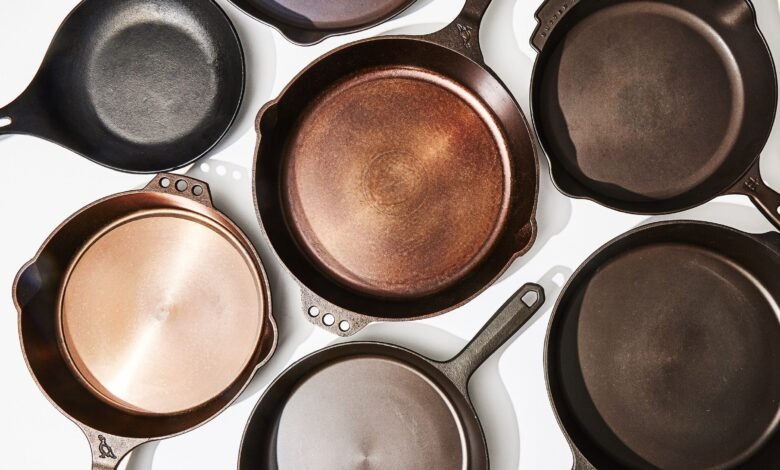
For some people there isn’t much of a debate around who makes the best cast-iron skillet. There is a diehard fanbase, loyal to the affordable, USA–made Lodge cast-iron pan, that will not hear of any other suggestions.
There are others (cast-iron nerds and collectors) who swear by the superior quality of their vintage pan from Griswold or Wagner that they found at a scrap yard, de-rusted in a bucket with a DIY electrolysis setup, and seasoned with a proprietary oil blend in the furnaces of their bespoke restoration workshop.
To these two camps of people I say: “ I don’t want to fight you, and I already know why you feel the way you feel. Please do not send me any angry emails.”
If you’ve been loyal to your own cast-iron pan for years—or decades—I don’t expect to change your mind. My goal is merely to provide recommendations for cast-iron cookware based on side-by-side testing and the input collectively provided by members of our staff. Agree with me and my team or don’t, either way, I’m happy if people are passionate about cooking with cast iron because I too enjoy it a great deal.
The heirloom pan your kids will fight over when you die: Lancaster No. 8 Skillet
Just give me a good, cheap, slick pan so I can make hash browns: Victoria Cast Iron Skillet
Cast-iron frying pans were the original nonstick pans, before ceramic nonstick and PTFE rolled around, and unlike modern nonstick coatings, a cast-iron pan’s surface actually gets more nonstick over time rather than degrading week by week. This is because, through continued cooking, thin layers of oil polymerize to the surface of the pan, creating a glassy nonstick surface that improves with continued use. They are also strong enough to handle metal utensils. The same can’t be said for that Instagram-famous nonstick pan (you know the one).
Yes, there are ways you can damage this seasoning layer, but these pans are far more resilient than lots of people think and they aren’t actually all that difficult to care for. Talk to cast-iron enthusiasts and they’ll tell you the best way to season a cast-iron skillet is to just keep cooking with it.
And cook with it you can. Cast-iron pans are amazing for fried eggs, skillet hashes, cornbread, and sautéed greens. At a high heat, they do an incredible job searing strip steaks, London broil, and chicken thighs, giving you a crispy, burnished exterior.
Bottom line, cast-iron cooking is an absolute joy, and every kitchen tool kit should include some cast-iron alongside their stainless steel, carbon steel, and enameled Dutch ovens.
New in this update: A review of Made In’s new cast-iron pan, as well as more long term testing information for our winner.
What I loved: Because they’re much more expensive
What I loved: Because they’re much more expensive than the Lodges folks got used to, many feel a certain type of way about the new era of smooth, vintage-style cast-iron pans that includes this Lancaster. But when you have the opportunity to test a bunch of these pans side by side, you really get a sense of their differences (however small), and you’d be surprised by the things you notice. It was in this apples-to-apples testing that this pan, manufactured by a small company based in southeastern Pennsylvania, really set itself apart.
The Lancaster is the lightest cast-iron pan I’ve tested, weighing in at 4 pounds for the No. 8 (10″-diameter) pan. Most cast-iron pans of a similar size are around 5 pounds or more—a seemingly small difference in number that makes a surprisingly big difference in hand. When laid out next to a dozen pans in the Test Kitchen, multiple testers singled out this pan as being the most comfortable to hold and maneuver.
It has thinner walls than a typical cast-iron skillet, which allows it to heat up faster. In testing, it came to temp over one minute faster than pans with thicker walls. We were concerned this would mean a reduction in the level of heat retention you’d want to crisp up the edges of some skillet cornbread, but we didn’t find that to be a problem at all. The cooking surface also demonstrated relatively even heat for a cast-iron pan (you really can’t expect too much from cast iron though; cold spots are sort of inevitable with the material).
The pan comes preseasoned, but as is the case with most smooth cast-iron pans, this seasoning layer isn’t nearly as robust as what you’d find on a conventional Lodge or Victoria pan. The polished surface does aid in the pan’s nonstick properties though, so we found the pan was exceptionally nonstick right out of the box.
Other testing sites have criticized this style of smooth cast-iron pan for getting stained after cooking, but to that we say: This is the process of seasoning developing on the pan. That staining is a feature, not a bug.
An earlier design of this pan didn’t include a helper handle, a feature we missed but forgave because the pan was already so easy to wield. However, Lancaster recently updated the design to include one—all the better in our book. Check out my full review of the Lancaster No. 8 here.
What I’d leave: The main drawback here is the cost. This pan will set you back $175, a steep price for cookware with a reputation for being budget-friendly. I’ll just say this: People happily pay comparable prices for nonstick ceramic cookware that lasts only a year or two at best. This pan, provided you don’t drop it in an industrial crucible, will last a lifetime.
In the long run: I have more patience than a lot of people when it comes to taking care of pans. So I will concede that the out of the box seasoning isn’t that robust. Some tasks, like searing off meat, can strip the seasoning slightly at first. With the Lancaster, I’ve found that this doesn’t impact the pans overall nonstick-ness. It does, however, mean you have to keep an eye out for rust until it gets a couple uses under its belt.
Below you’ll see two Lancaster pans. The left is four years old and the right is fresh from the box (you can tell because the earlier generation of pans didn’t have the helper handle). These are the pans after searing off two chicken thighs. You can see how the pan on the left has a robust, established seasoning, while the one on the right has some grey patches where the chicken skin pulled off some of that seasoning. From experience (I am the owner of the pan on the left), I can say that all you really need to do is keep cooking with it to get that seasoning back, but if you want to do a whole round of seasoning in the oven yourself, it certainly won’t hurt. Honestly, had I just sautéed some onions in the rendered schmaltz after cooking the chicken, those spots would be taken care of.
Some people complain about the cosmetic changes to these smooth pans when breaking them in To reiterate: It does not impact the performance of the pan. If it bothers you, I encourage you to think about how it’s a record of use, and proof that it’s growing and developing alongside you. Or, if you’re just an unsentimental aesthete, perhaps read up on the concept of wabi-sabi. I personally think that my pan is the most beautiful piece of cookware I own!
If you want a high-quality pan that’s not only a pleasure to cook with, but can serve as a family heirloom for generations to come, consider this one. If you’re just looking for a workhorse that won’t break the bank, go for the budget option below.
What I loved: Again, I apologize for snubbing Lodge, as even in our office we have a number of staunch brand loyalists. But in my testing, the Victoria edged out the fan favorite on two separate metrics. Victoria pans are preseasoned with flaxseed oil, and arrive glossy and exceptionally nonstick. Having a more thorough preseasoning is more important on cast-iron pans, as they are prone to sticking early on. We found the Victoria pan’s factory seasoning slicker than Lodge’s, which made frying potatoes and eggs ever so slightly easier. Do all cast-iron seasonings improve with continued use over time? Yes. But we know that some people want as much of a head start as they can get, and this pan offers you the best one.
The other way the Victoria bested the Lodge is in its form factor. The pour spouts on the Victoria are nice and wide, making it easy to pour off oil or other pan juices, and testers found the handle shape slightly more comfortable than the Lodge.
I’ll be honest, though, these differences are pretty small, and if you feel drawn to the Lodge name, I recommend it as well.
What I’d leave: Given it’s bargain pricing, there isn’t much to dislike here. I will note this pan is significantly heavier than the Lancaster pan—a full pound and a half for the same diameter skillet. Heavier skillets are cheaper and easier to produce, so it’s a trade off you’ll have to accept if you want a less expensive piece of cookware
Stargazer Cast-Iron Skillet
The Stargazer is a lovely pan. Like the Lancaster, its a vintage-style skillet, so it has a smooth texture that’s easy to clean. The surface develops seasoning well, and the curved lip allows for easy pouring at any angle. Ultimately, it is one of the heavier high-end skillets available on the market, which is why we don’t have it as a winner, however if weight isn’t a huge concern for you it is still an excellent pan.
If you know cast-iron pans, you might see the Yeti cast-iron skillet and might find that it looks somewhat familiar. This is because Yeti acquired cult-favorite Butter Pat several years ago. The Yeti skillet is just the Butter Pat by a new name, and apart from the logo, the finish, handle shape, and overall design remain unchanged. This pan has a nice velvety surface that holds on to seasoning very well, while still maintaining a smooth, glossier finish that makes vintage-style pans so desirable. Small gripes: The handle design wasn’t a favorite among testers, and the side walls are a slightly shorter than most other cast pans. It’s also a touch heavier, and a couple touches more expensive than our winner. Still, this is an excellent cast-iron pan and makes a great family heirloom.
People who track recommendations like these tend to be shocked that we don’t place the Lodge as our winner or budget pick. It is a fantastic pan, make no mistake. It has a great factory seasoning that’s resilient from the jump, and the 10″ costs around 20 bucks—so what gives? When it came down to it, the Victoria pan had a slicker factory seasoning out of the box and a more comfortable handle design.
Another high-end polished cast-iron pan on the list. Smithey pans are gorgeous, so much so that it almost feels wrong cooking with them. However, you should cook with it straight away, as the factory seasoning is a little light on these, and we observed a little bit wearing away after the first couple rounds of cooking prior to us adding an additional layer of seasoning. Senior editor Noah Kaufman has been cooking with the Smithey multiple times a week for a couple years and says that within a few months of regular use and two bouts of seasoning in the oven he no longer worried about stuck eggs or steaks.
Gorgeous as they are, Smithey pans are heavy though, 5.8 lb. for the 10″ skillet.
This skillet is the second lightest (4.3 lb. at 10″) and has a velvety surface that holds on to seasoning a little better than the smooth polished pans. Like the Stargazer, it also has a curved lip instead of a pour spout, but I found that this pan does have a bit of a dribbling problem, which I wasn’t crazy about. Still, one member of our team who has now lived with this pan for years loves it and uses it every day.
Lodge released this pan in response to the wave of new and fancy polished pans, and as beautiful (quite beautiful), well-seasoned (three glossy layers), and lightweight as it is (almost even with the Lancaster), our testers found the handle uncomfortable to hold.
Ooni is a pizza oven company, and this pan is really designed for cooking in an oven rather than on the stovetop. It has a detachable handle, which is actually a genius bit of design that makes it easy and comfortable to grab out of a blazing hot pizza oven. But the sides are too shallow for doing more normal cast-iron things like frying chicken or sautéing greens. It is, however, great for cornbread and pizookies.
Made In Skillet
This is Made In’s official entry into the cast-iron new wave. The pan has a smooth machined surface, nice design touches, like curved sidewalls. and a spacious helper handle. The primary handle is nice to hold, however, a longer handle can make a pan feel heavier and add strain on the wrists. This pan is not the lightest either. I found it difficult to transport the full pan from the stovetop to the oven using only one hand, so consider this a pan for people with meaty forearms. Made In also uses flaxseed oil for the factory seasoning, which is a controversial choice in the cast-iron world. The reason for that controversy is that, while the finish flaxseed oil produces is glossy and attractive, it tends to be brittle. Especially with newer pans, a flaxseed seasoning has a tendency to wear away with regular cooking. After testing, I did notice this pan had some grey (unseasoned) patches after a round of searing meat. Again, not a big deal—just keep cooking with it— but something to keep in mind. All of that being said I do still think this is a high quality pan. During the cooking tests, I had absolutely no issues with sticking whatsoever.
Get a handle on cast-iron
How to Clean Your Cast-Iron Skillet the Right
How to Clean Your Cast-Iron Skillet the Right Way (Yes, With Soap)
I’ve Tested Cast-Iron Pans for Years and This Is the Best One I’ve Ever Used
How to Season a Cast-Iron Skillet So That It Lasts Forever
Get to know your reviewer
Wilder Davies: I have been Epicurious and Bon Appétit’s resident cookware tester and researcher for over 6 years. I have cooked with hundreds and hundreds of pans, and have asked chefs, materials scientists, and manufacturers far too many questions about things that go clank in the kitchen. I am a big apologist of nonstick alternatives, and strongly believe in a buy-it-for-life ethos when it comes to outfitting your pantry.
Source: www.bonappetit.com