

Cheap mystery beef, wild mustangs and the strange consequences of an opaque food system
ByAshlie D. Stevens
Senior Food Editor
PublishedAugust 27, 2026 6:30AM (EDT)
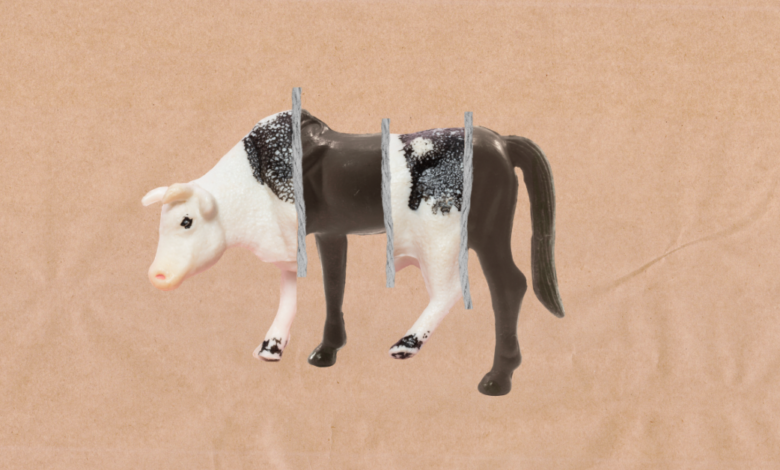
Cow and horse toy collage (Illustration by Salon / princessdlaf / Jorg Greuel /
One of the things I have always loved about “Bob’s Burgers” is the bittersweet certainty that the Belchers may get ahead, but never by very much. Sixteen seasons have been built, in part, around the small economies of restaurant life: Bob picking up a second job as a late-night cabbie to pay for Tina’s thirteenth birthday party; Bob picking through the remains of a restaurant estate sale like a slightly ashamed grave robber; Bob agreeing to increasingly questionable arrangements because somewhere at the end of them is a piece of kitchen equipment he otherwise cannot afford.
This makes him an ideal mark for a certain kind of salesman.
Ten years ago, the show introduced Bob to a charismatic meat supplier with an irresistible proposition: USDA Prime beef, for substantially less than Bob was accustomed to paying. For a struggling burger restaurant, this was less an offer than a small miracle.
The catch, naturally, was that the beef was horse.
This came back to me last week when Donald Trump announced a somewhat similar proposition. For the next 90 days, he said, the United States would allow as much as 300,000 metric tons of imported product for ground beef to enter the country without the usual out-of-quota tariff. Better still, Trump said there was a commitment that the meat would be sold at 25% below current market prices. The arrangement, he promised, would lower grocery bills while giving America’s depleted cattle herd time to rebuild.
There was only one slightly awkward question: Where, exactly, was all this bargain beef coming from?
Asked Tuesday which countries beyond Mexico were involved, Agriculture Secretary Brooke Rollins declined to say. “I am not privy to talk about that,” she told a reporter, explaining that negotiations were still being worked out by U.S. Trade Representative Jamieson Greer and the president. It was not quite the revelation that your new meat guy has been selling you horse, but as openings for an internet rumor go, it was almost too generous.
The timing supplied the rest. Days earlier, The New York Times had reported that the Bureau of Land Management was selling federally protected wild mustangs for as little as $25 apiece, using a legal loophole that could strip the animals of their protections after sale. Some subsequently appeared in the slaughter pipeline; inspection records showed mustangs ending up on trucks bound for Canadian slaughter plants. There is no evidence in the reporting that those horses were being processed into American ground beef — quite the opposite, the meat was described as being sold abroad — but by then the internet had already noticed that the Trump administration seemed simultaneously to be selling very cheap horses and promising a huge supply of very cheap mystery meat.
At first, the joke was pleasantly stupid. AI images appeared of supermarket cases stocked with packages of “Mr. Ed Imported Beef.” Then came illustrated guides purporting to explain how an anxious shopper might distinguish horse meat from cow meat by color, texture, fat and smell. On Facebook, Occupy Democratsran with “YAY OR NEIGH!?” while warning readers that rumors were “swirling” around Trump’s imported beef, even as the post acknowledged there was no hard evidence that the meat was equine. Somewhere in the space between obvious joke and well, would you really be surprised?, a meme had begun acquiring the texture of consumer advice.
That progression is funny.
Our Summer sale ends August 31!
Premium members read ad-free and save 58%. Join now
It is also increasingly familiar as buying food in America now seemingly requires a modest talent for detective work. A shopper may find herself trying to determine who actually manufactures a supermarket’s private-label product, whether the lettuce in her refrigerator came from the same supplier implicated in a recall, whether two apparently unrelated brands share a parent company or processing plant, or what, precisely, an official announcement means when it promises hundreds of thousands of tons of cheap imported beef without yet supplying some of the most basic details about its provenance.
The contemporary grocery aisle is full of labels, QR codes, lot numbers and assurances of transparency; nevertheless, the person pushing the cart is increasingly asked to perform the work of tracing the food backward herself.
Under Trump, and particularly under the food politics that have gathered around his administration and the MAHA movement, that tension has become almost surreal. Americans are repeatedly encouraged to scrutinize what is in their food, who made it and whether the institutions responsible for regulating it can be trusted. That invitation to suspicion does not disappear when the government itself leaves something unexplained. It simply changes direction.
And when official information leaves a blank space, folklore is very happy to fill it.
The horse-meat rumor is unsupported. But the fear beneath it is not entirely fantastical. We know this because, not very long ago, millions of European consumers discovered that products sold to them as beef contained something else entirely.
In 2013, testing by Irish food-safety officials found horse DNA in more than a third of the frozen beefburger samples they examined; one Tesco burger was 29% horse. As testing widened, frozen lasagna and spaghetti bolognese sold across Europe were found in some cases to contain “beef” that was almost entirely horse. The scandal exposed supply chains of almost comic complexity: brokers selling to processors selling to subcontractors across national borders, with one consulting firm estimating there were roughly 450 points at which the integrity of the chain could break down.
The lesson was not that suspiciously cheap beef is secretly horse. It was that ordinary shoppers generally know remarkably little about the journey between an animal and a package bearing the name of a supermarket they recognize. Most of the time, that arrangement functions well enough that we hardly think about it. When something goes wrong, however, reconstructing that journey can begin to feel like a real investigation.
As I recently reported,someone has already built an app for exactly this sort of problem. Taylor Detector allows shoppers to scan a grocery barcode and learn whether the product has a documented connection to Taylor Farms, the massive produce company that supplies not only products bearing its own name but subsidiaries and private-label goods whose relationship to the company may be invisible from the front of the package. The company was recently tied to a massive cyclosporiasis outbreak.
I tried it recently in my neighborhood supermarket and discovered, phone in hand, that a package of Earthbound Farm broccoli florets had a Taylor Farms connection I would otherwise never have known about.
Want more great food writing and recipes? Sign up for Salon’s free food newsletter, The Bite.
The app worked. What it could not tell me was what to do with that information.
That distinction has stayed with me. The defining problem of modern food vigilance is not necessarily that we know too little. Often we are swimming in information: recall alerts, traceback reports, lot codes, congressional inquiries, corporate ownership records, corrected test results, viral posts and, increasingly, apps designed to help us interpret the whole mess. What remains stubbornly difficult is determining what any individual piece of information should mean to the person deciding what to put in her cart.
The Trump administration has made that problem stranger by simultaneously elevating suspicion into a virtue. The MAHA projectasks consumers to question ingredients, interrogate labels and become more skeptical of the institutions and corporations that have traditionally told them what is safe or healthy to eat. There are perfectly good reasons to ask many of those questions. But suspicion is difficult to curate. Teach people that discernment requires looking behind the label, and eventually they may look behind yours, too.
Which brings us back to the mystery beef.
There is, at present, no evidence that Trump intends to feed Americans wild mustangs. What we do know is that his administration announced an enormous influx of unusually cheap imported ground beef before providing basic answers about exactly where all of it would come from. There is also evidence that, almost simultaneously, another arm of the federal government was allowing inexpensive wild horses to enter a chain that could end at foreign slaughterhouses. The internet supplied the connecting tissue because the government had supplied the blank space.
Perhaps by the time the first of Trump’s bargain beef reaches supermarket shelves, we will know considerably more about it. Its countries of origin will be clear. Its suppliers will be known. The horse jokes will retreat into the great digital stable where memes go when their moment has passed.
Or perhaps someone will build an app.
I can already imagine it: point your phone at a package of ground beef and wait while a tiny animated horseshoe spins on the screen. BEEF: CONFIRMED, it will finally announce, in reassuring green letters.
And for a moment, at least, we will know what we are having for dinner.
- Trump’s catering-cart farce
- When fast food runs to red states
- I don’t want another restaurant app
ByAshlie D. Stevens
Related Topics ——————————————
AnalysisBeefCattleFood SafetyWild Horses
Source: www.salon.com