


On a Friday night in July, Nidia Evangelista walked with her arms crossed over the Puente Flotante toward East Santo Domingo. Six lanes of traffic jockeyed inches from her left shoulder, while the black waters of the Río Ozama coursed below. “Oh my God, Oli, what are we doing?” she said. “Nobody does this.” Evangelista is the communications manager for Santo Domingo’s most intriguing restaurant, Casarré. Her boss, Swiss Dominican chef Olivier Bur, was leading Evangelista, photographer Clay Williams, and me beyond the fortified walls of the Zona Colonial, where few travel on foot.
On the other side, we turned a corner and found hundreds gathered around a dance floor in the undercroft of a bigger bridge. Live bachata drowned out the traffic overhead. Bur procured a big bottle of Presidente and plastic cups from a vendor, poured, and raised a “Salud!”
Bur normally walks (or bikes) everywhere. Moving slowly, he’s learned the textures of the city. Still, for the next six days, he took Williams and me to his most beloved restaurants by car. We visited a string of chimi stands where hawkers compete for clientele through the night; a chicharrón spot where couples dance shoeless on the cool tile floor; and a cafeteria where boys shuffle stewed eggplant, beets, and goat to bus drivers en route. Places like these are the “infrastructure for life,” Bur said. “Thirty years ago, there was nothing else.”
Over the last couple of decades, however, another dining scene has sprouted. Dominican chefs have returned from kitchens in Mexico, Japan, or Switzerland to explore the forgotten and sometimes shunned ingredients of their (or their parents’) homes. They served us conch, cassava, breadfruit, and djon-djon mushrooms in sashimis, foams, tostones, and surprising dessert creams. The dishes were fresh and exciting, but local and global traditions have always mingled—as such, the cuisine is not “New Dominican,” it’s simply “Dominican,” fully expressed.
Calle Andrés Julio Aybar 13
+1 829 545 7503

The Piantini neighborhood was once verdant and sleepy Now it’s a bustling business district. Most of the remaining vegetation decorates the façades of restaurants, like Ajualä’s. Brushed palm thatch and a bushy barba de Fidel (Fidel’s beard) tree greet you at the tall aged-steel door
Venezuelan chef Saverio Stassi is a leader among the culinary new guard. His treatment of local ingredients is virtuosic. He confits guinea hen in cocoa butter and tops breadfruit tostones with local yellowfin and Cambita avocado; and over two days, his team bathes the succulent goat from the northwest—where they famously graze on wild oregano, self-infusing their meat—in Seville orange juice before roasting it in a barbacoa pit.
Calle Max Henríquez Ureña 14
+1 809 547 3592

Chef Erik Malmsten has cooked at his parents’ cabaret in Gothenburg, Sweden, at Aquavit in New York, and at Bocuse d’Or competitions around the world. But to take his career to the next level, he returned to his mother’s homeland to open a Nordic-Japanese restaurant.
“You’ll see, it’s really good,” Bur told us. The meal starts with “lobster chicharrón,” with a reduced crustacean bisque, fried into airy orange sheets of bubbly crackling and served with tōgarashi Kewpie. Then, a parade of sashimi, like king fish, served with brown butter soy emulsion, ikura, and lemon zest. It ends with Dominican chocolates, molded, painted, and plated to look like koi fish on a synchronized swim.
Calle Caonabo 35
+1 809 584 9481

If, like me, you come from a pizza region, you might not be inclined to use one of your Santo Domingo meal slots on a pie. But I urge you: Make time for Casa Gazcue. Spanish Dominican chef Francis Pena’s 48-hour-fermented crust comes blistered and sometimes covered in honeyed sesame seeds. Iterations are variously laden with spicy Dominican oxtail, chimi sandwich sauce, pistachio, and jamón ibérico, but you don’t have to choose: For groups, he serves a rosca (a round with an open middle) of six sections arranged like floral pizza petals.
Calle Pablo Casals
+1 809 562 6060
In 1954, the Bonarelli family opened the legendary Italian restaurant Vesuvio. For decades, it was the place—the only place—to go out for a formal sit-down meal around here. Vesuvio closed over 20 years ago, but the founder’s grandson, Giancarlo Bonarelli, now runs Bottega Fratelli in a sleek modern building in Naco (Piantini’s equally upscale neighbor).
You’ll notice a great variety of beet dishes in the Dominican Republic. Farmers harvest them year-round in the cool, pine-forested Costanza Valley. Try them here, roasted and served with blue cheese, chèvre, candied nuts, and honey. Also try a carpaccio of king mackerel, caught off the eastern coast, or any of the risottos, an emblem of the family’s enduring Italian culinary influence.
Calle del Seminario #57
+1 809 565 1621
Hideyoshi Tateyama’s parents opened Samurai in 1990. The restaurant joined Vesuvio, along with one or two others in that era’s small restaurant scene. It still stands out today among the many dozens.
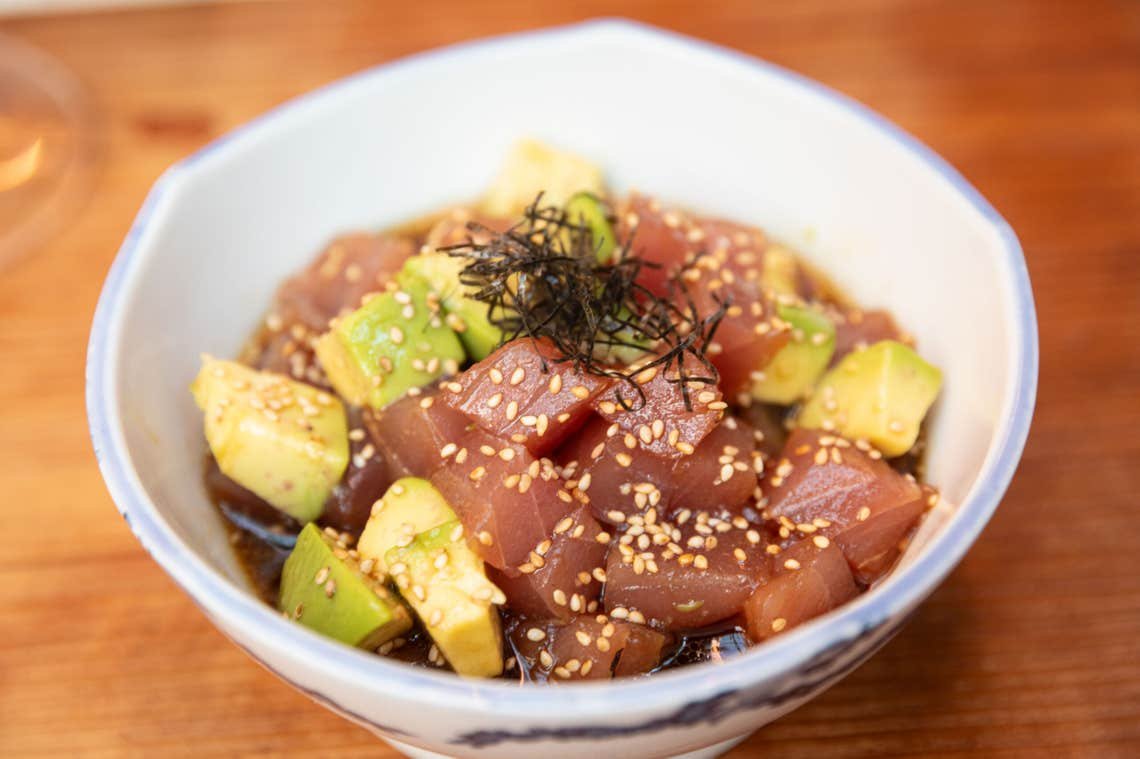
Be sure to order the guatapaná con coco. A tried-and-true combo of shrimp and coconut imbued with native guatapaná leaf, tobiko, sesame seed, and scallion—it’s been on the menu for two decades. Also, don’t miss the chance to sample a sashimi of the meter-long “calamar diamante” from the Samaná region. It’s simply brightened with lemon zest. Meals are capped with a green tea amaro. Once a month, Tateyama personally runs a chef’s-choice omakase service.
Avenida Independencia 312
+1 809 682 1433
On the day we visited Villar Hermanos, lines formed around the block for each of two buffets. Women balanced towers of takeout containers tightly wrapped in plastic. It was the World Cup Final, and people were rushing to get some of the city’s best comfort food to their coffee tables. “This is the place to come for all the Dominican classics,” Bur told us.
We found a large table under the sprawling canopy of a banyan tree and ordered mofongo. It was moist, punctuated with crisp chicharrón crackling. The sancocho, the classic Domincan stew thick with potato and yuca starch, assumed extra body when alternating spoonfuls of broth and rice. While I didn’t have my coveted mangú and tres golpes (salami, queso frito, and eggs), I would trade my house and car to live next door and eat breakfast there every morning under the filtered sun.
Avenida San Vicente de Paúl, Santo Domingo Este 11504
+1 809 244 8906

On Avenida San Vicente de Paúl in East Santo Domingo, scooters zip down the busy street all through the night, many popping over a curb into the Plaza Del Chimi. The “plaza” is a stretch of 10 to 15 “chimi” sandwich stalls outfitted with griddles and prep stations heaped with roasted pork shoulders. Dealers quickly slice the meat, lay it on the griddle, flip it onto a squishy pan de agua roll, and top it with cabbage, tomato, and tangy pink sauce before sliding it into your mitts. The stalls are open till 6 a.m. When they run out of beer, a man runs bottles from a cooler at his house and serves them in paper bags.
Avenida Independencia KM 8
+1 809 532 2580

Across from a shopping mall on Avenida Indepencia, about a dozen cars cram into five parking spaces for the lunch or late-night staple pica pollo. Behind a crowded serving station, a woman slides eight pounds of chicken into a hotel pan, and the picking begins. Six sets of tongs compete for room, like bird beaks, snapping the chicken into styrofoam containers before barely holding them shut with strained rubber bands. Another eight pounds comes out less than two minutes later.
Pica pollo is one of the lasting influences of Chinese immigrants in Santo Domingo. Usually cooks marinate it in bitter orange, garlic, and oregano before coating it in flour and spice (in this case we detected Chinese five-spice) and deep-frying it to golden brown.
Avenida Cayetano Germosén
+1 809 286 2141

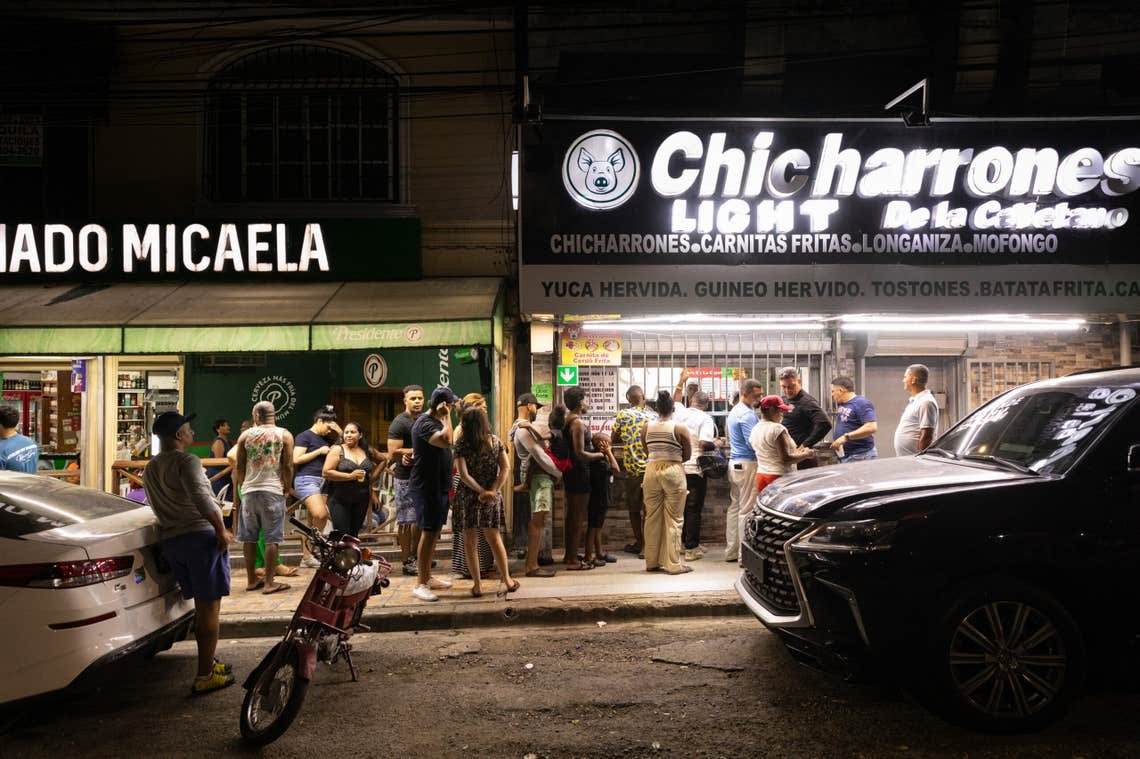
At Parque Mirador Sur, teens and whole families perch along concrete walls and hilltops eating fried yuca and succulent mojo-dipped chicharrón with long toothpicks. It comes from the crowded, steel-barred serving window across the street: Chicharrones Light de la Cayetano.
Among all the chicharrón we ate in the city (there was a lot), theirs stood out. There’s a small covered seating area where you can order beer to share. Bachata plays loud over a hanging speaker. Women take turns kicking off their heels to do the four-step shimmy with their jevos (boyfriends).
Calle Ciriaco Ramirez 70
+1 809 689 5544
The Colmado, Bur says, “is essential to Dominican life. Everything happens there.” For 70 years, Colmado La Venganza has anchored a prominent corner in the Don Bosco neighborhood. It’s hosted thousands of late-night domino games and sports viewing parties. We were there during the World Cup.
At the entrance, a man with a crisp-edged haircut, big sunglasses, and a pressed floral shirt parked his shoe on a milk crate while a boy polished it with a rag. Inside, groups spanning all ages gathered at high-tops and around the bar. Folks shared triple-stacked ham, pickle, and cheese sandwiches, pressed, cubed, and spiked with toothpicks: the “sándwich especial.” Leaving the bar, chef Raniel Cruz (part of our party) texted his mom in Montreal. She responded: “Wait, you’re at Venganza? I used to drink there.”
Calle Luperón 52
+1 849 460 5600

One couldn’t understand the Dominican Republic’s vast culinary splendor in a lifetime, but if you had just one night to try, you’d want to dine at Casarré. Every Tuesday, the team takes excursions. We accompanied them to meet the countryside cooks, who wrap guáyiga root masa in leaves from the almond trees on Najayo beach and bake it in coal-covered pots. We visited a produce market, where vendors passed fruit samples, like little red “frutas milagrosas” that, when chewed beforehand, make bitter limes taste like sweet limeade.
At night, in a candlelit, contemplative room in the Zona Colonial, Bur and his team showcase their findings in a series of sublime, thoughtful dishes. On our visit, they presented djon-djon mushrooms from the Haitian borderlands in a sweet, guáyiga-thickened foam and in the broth of a citrusy okra and fish soup. Chef Isabella Sánchez explained: “The broth is murky, like the current state of the Río Ozama. It represents the negative aspects of our water—contamination and conflict—and the beautiful: the fish, the beaches, and our grandmother’s tea.”
Avenida Lope de Vega 44
+1 809 816 7200
Smoke from an open Uruguayan-style parrilla floats in the soft light over two stories. Our waiter said, “We want this to feel like a Sunday asado.” Indeed, the smoke, the char, and the Malbec are there. This asado, though, also has Negronis smoked tableside and poured from a glass goose. As we awaited a perfect aged rib eye, we enjoyed paper-thin beef carpaccio with foie, and a paella-esque rice with soft leeks, cilantro, and pork trotters.
Keep Reading
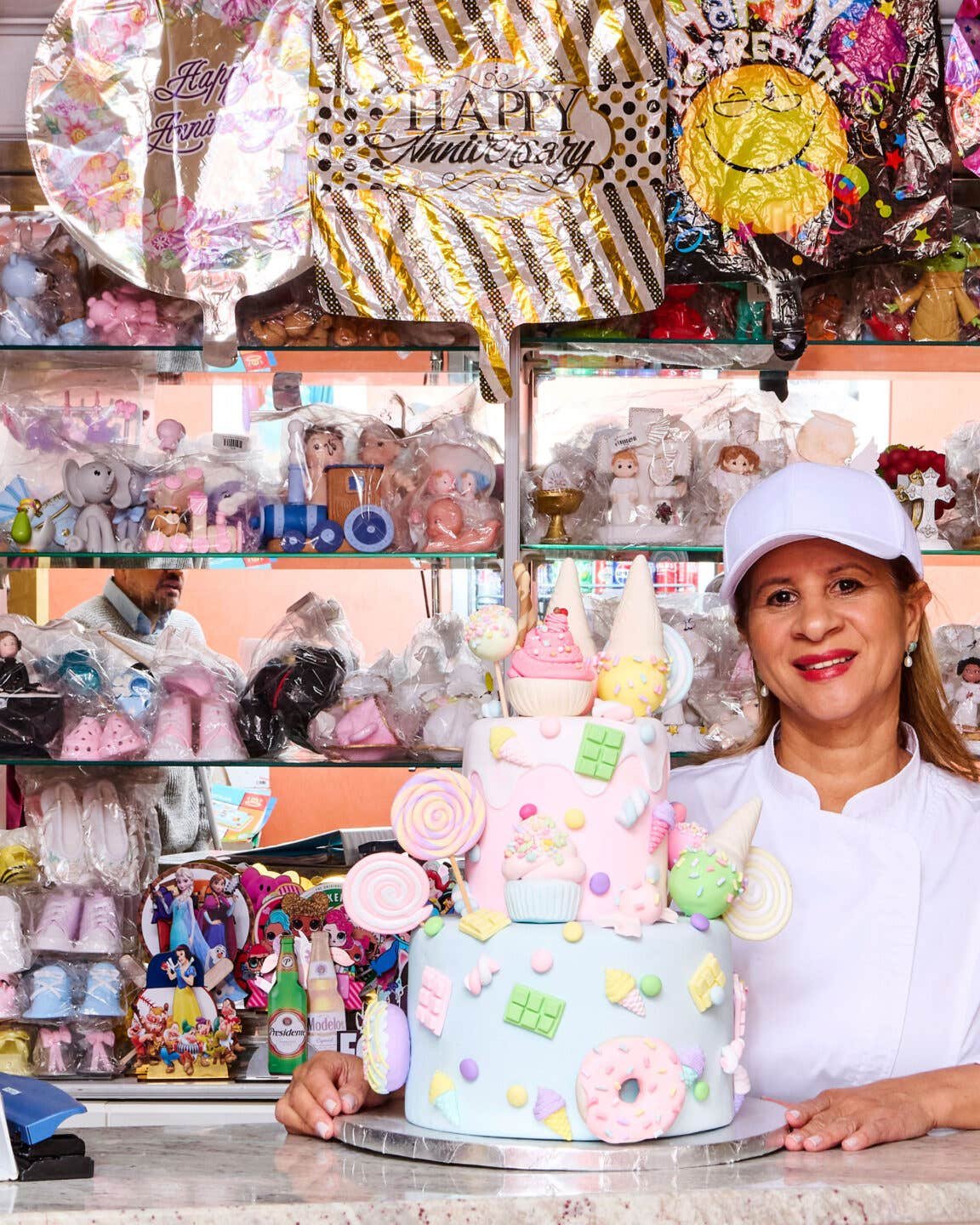
At Vilma’s Bakery, Bizcocho Dominicano Is a Slice of Nostalgia

5 Easy, No-Cook Caribbean Condiments to Put on Everything

In Barbados, Flying Fish Is More Than a National Dish

The Unmistakable Caribbean Roots of Lowcountry Cooking

Keeping the Diwali Flame Burning in New York City
How a Jungle Farm in the Yucatán Is Transforming Its Maya Community

The Buried Tamales at the Heart of the Yucatán’s Day of the Dead

Hasan Minhaj Thinks America’s Greatest Accomplishment Is Cereal

12 Dishes and Drinks Everyone Should Try in Mexico City

Source: www.saveur.com