
Can Saudi Arabia’s 2034 Fifa World Cup survive the Center East’s escalating wars?

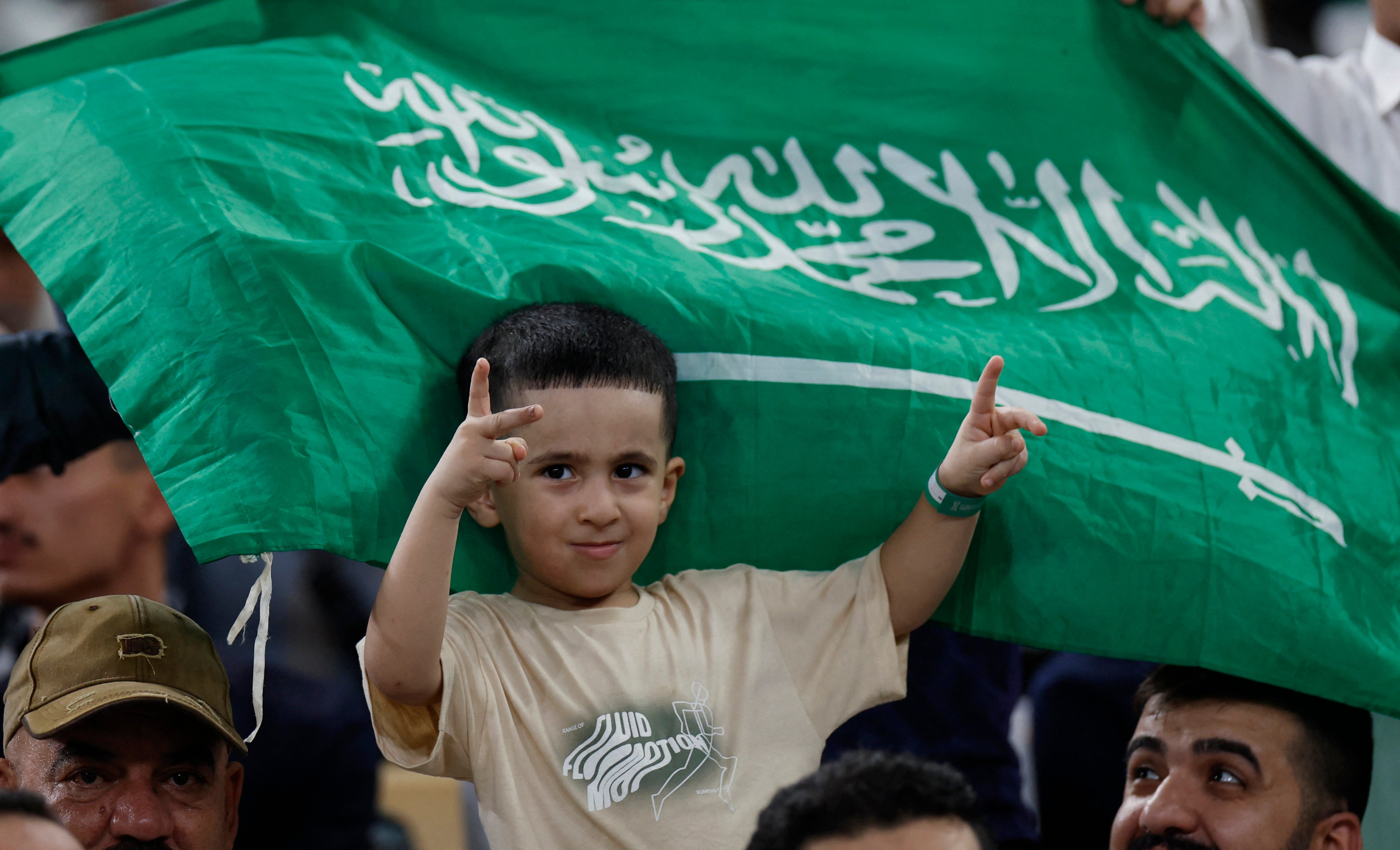
When 60,000 football fans gathered in Jeddah for the Arabian Gulf Cup on Tuesday, they inadvertently highlighted the vulnerability of major sports events hosted by Gulf monarchies to the wars raging across the region.
The previous day, Saudi Arabia resumed strikes on Yemen’s Iran-allied Houthi rebels after a four-year ceasefire collapsed. That truce had originally followed a Houthi attack on an oil facility near Jeddah’s Formula One track during a practice session.
While the two-week football tournament went ahead as planned, lingering risks were highlighted on Wednesday when a Houthi air strike on Riyadh’s international airport killed three people, including a Saudia Airlines captain.
Analysts say the threats from the Houthis and Iranian air strikes against Gulf Cooperation Council (GCC) states – Saudi Arabia, the United Arab Emirates, Qatar, Bahrain, Kuwait and Oman – do not bode well for the region’s ambitious sporting calendar.
If these conflicts drag on or end inconclusively, the resulting uncertainty could undermine coming major events, including the 2030 Asian Games in Qatar, as well as the 2034 Fifa World Cup and Asian Games in Saudi Arabia.
While regional instability was not unique to the Gulf, it would weigh heavily on host decisions, according to Guy Burton, a Brussels-based international relations researcher and co-host of The FootPol Podcast, a sports show focusing on the intersection of football and politics.
Security considerations are built into every major event bid, but the Middle East presents particular challenges. “What is distinctive in this context is the volatility,” Burton said, noting how difficult it was to predict whether threats would escalate or subside.
Past hosts have always had to manage security risks ranging from crime to state-sponsored threats – such as London hosting the 2012 Olympics following the events of September 11, 2001, and Britain’s involvement in the wars on terror.
Diversification under pressure
But the risks do not end with security concerns. Gulf monarchies have invested heavily in sports to diversify their economies away from dependency on oil and gas revenues.
“The pressure on that model now comes from material realities, in particular less certainty over government revenues as hydrocarbon exports come under strain,” Burton said.
If conflicts disrupt these events, the tens of billions of dollars invested in stadiums, hotels, airports and airlines could be left redundant, along with the economic policies underpinning them.
As if to drive home the point, the Bahrain and Saudi Formula One Grand Prix races scheduled for April were postponed and relocated to Malaysia last weekend, incurring an estimated US$200 million in losses. That follows the March cancellation of the Finalissima football match in Qatar between Spain and Argentina.
Similarly, the Esports Nations Cup was moved from Saudi Arabia to France in August, casting a shadow over the Public Investment Fund’s (PIF) US$55 billion leveraged buyout of EA Sports – the largest transaction of its kind.
The 2027 test
According to Kristian Coates Ulrichsen, fellow for the Middle East at Rice University’s Baker Institute for Public Policy, “the next big test” would be the AFC Asian Cup across Saudi Arabia in early 2027.
“That experience will be closely studied for what it may portend for future large-scale events in the Gulf,” Ulrichsen said, including the Fiba Basketball World Cup in Qatar later that year.
Risk-averse investors in these and other coming events will be watching closely.
Simon Chadwick, a professor of Afro-Eurasian sport at the Emlyon Business School in France, said regional stability was paramount.
Without a lasting peace, Chadwick warned, long-term ambitions – such as the 2030 and 2034 Asian Games, the 2034 Fifa World Cup and Qatar’s confirmed bid to host the 2036 Olympics – faced serious challenges.
Qatar spent US$240 billion on infrastructure for the 2022 Fifa World Cup, aiming to reuse those assets for future events. But war and political instability risk turning that infrastructure into costly white elephants. Only US$6.5 billion of that spending went to stadiums, putting into perspective the US$22 billion Saudi Arabia is pouring into venues for 2034.
“This year is really challenging historic strategic decisions,” Chadwick said.
Fears over viability have already led the PIF to shelve a number of unprofitable projects, including LIV Golf after US$5 billion in losses. In contrast, the acquisition of EA Sports is seen as a step in the right direction, reflecting a shift towards building a sustainable domestic ecosystem – incorporating intellectual property ownership and a joint venture with Lenovo – rather than relying solely on hosting single events.
Nonetheless, active conflicts in the region had “certainly complicated” the Gulf’s ambitions to become a global sports hub, Ulrichsen said. The long lead-up to the 2034 World Cup provided some cushion, but officials in the region were hoping 2026 was “a one-off rather than the start of a longer-term pattern of uncertainty and unpredictability”, he added.
Source: www.scmp.com


