

Influencer gifting, once a savvy play, is now standard practice: on affiliate platform ShopMy, the typical brand now sends 350% more gifts a year than it did in 2022, while rival platform LTK’s annual study with Northwestern University found the average number of creators brands work with rose 275% in the past year. But more product hasn’t necessarily meant more visibility. Algorithms now reward reach beyond a creator’s followers, affiliate platforms have made posting feel transactional, and access to A-listers increasingly runs through paid placements and a gatekept network of stylists.
That gifting has become an overplayed strategy is precisely the problem. “There has just become too much of it all: too much gifting, too much content, too many paid posts,” says celebrity stylist Dani Michelle, who styles It-girls including Kendall Jenner, Hailey Bieber, and Daisy Edgar-Jones. Tyra Booker, assistant VP of integrated marketing at Rare Beauty, says at a past job, she witnessed the earned media value (EMV) of send-outs falling.
“It’s not that these mailers are bad,” she says. “It’s just that fewer people are opening them.” (EMV is the monetary value of brand publicity or exposure that is gained organically.)
Creators are also less willing to post for free. “There’s now a healthier amount of awareness around being paid to play,” Booker says, meaning brands can no longer simply send product and expect content in return.
If a brand requires a guaranteed post, that’s
“If a brand requires a guaranteed post, that’s a paid partnership, not organic seeding,” says Jenine Leigh, managing partner at LA-based influencer and marketing agency The A List. That means without an agreement, gifted goods are more likely to just vanish into the abyss. Affiliate platforms offer a middle ground. On sites like ShopMy and LTK, brands upload a curated selection of products, often called a gifting lookbook, and creators choose what they’d like to be sent.
If a creator then shares the piece, they do so with a trackable link, earning commission on any sales it drives, so the brand can see exactly which posts convert. Creators have an incentive to post, too: beyond the commission, a strong track record on the platform helps brands identify the creators who actually drive sales, which, ShopMy’s marketing head Ivy Zhang says, means gifting starts to work more like a sales channel than a marketing expense.
The algorithms have shifted, too. Reach increasingly comes from those who don’t follow a creator at all: follower growth is down, while non-follower views are up, as social strategist Rachel Karten notes in her newsletter, “Link in Bio”. “I hear from brands all the time that follower count doesn’t correlate with engagement, clicks or purchases,” Karten says. If gifting is no longer the promised publicity — and sales — boost it once was, how should brands evolve their seeding strategies?
The shifting tiers — and fees — of product
The shifting tiers — and fees — of product placement
Unlike gifting, a paid placement is a contract: a brand pays a stylist to put a specific piece on a client. These deals are nothing new, but over the past three to five years, they’ve spread well beyond a select few brands, says one PR agency founder who brokers them, speaking anonymously. What’s changed is the pay-off.
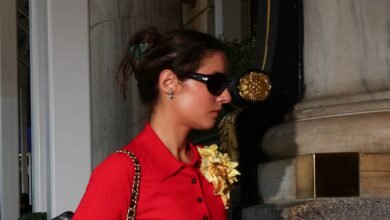
Brands can now repurpose the image and link it directly to their shops, and the shots they prefer are the ones that look unplanned, like an airport outfit or a coffee run, the founder says. “Brands 100% want a photo of a celebrity papped wearing their outfit more than an editorial shot, because it feels like the celebrity chose to wear it, even if they didn’t,” they add. In an era where consumers are hyper-aware of brand deals, this approach offers at least an air of authenticity — even if, behind the scenes, the brand PRs are the ones coordinating with the paps.
An average A-list placement costs $25,000 to $30,000, rising to north of $50,000 for a top name — and that’s often for a single piece, such as a necklace, or a pair of shoes or sunglasses, which the stylist works into an outfit. The fee usually goes to the stylist rather than the celebrity, though one stylist, speaking anonymously, says she splits the fee with her client. Payment only happens once a piece is worn and documented.
You still cannot ultimately control if they’re going
“You still cannot ultimately control if they’re going to wear it,” says the agency founder. “At the last minute, the celebrity could be like, ‘Nah, I’m not wearing that.’” If a piece doesn’t work for the look or the event, no money changes hands. Other arrangements are murkier. “Sometimes, the brand just has a really good relationship with the stylist. They gift them a lot, a bit of cash changes hands [for paid placements],” says the agency founder.
“It’s a little less ‘get that dress on’, and more ‘keep us around’.”
The price to play may have skyrocketed, but the exact return on a paid placement is hard to quantify. Still, the agency founder says placements can earn back their fee and more in direct sales, though they concede it’s “case by case”. One brand recently paid an extra $20,000 after running a placement image as an ad without the rights, and shrugged it off: “We made so much money off that image.
Who cares?”
Not every brand can make the math work, though. “You need a significant budget for paid partnerships with VIPs these days,” says Julia Chalmers, founder of LA-based brand marketing and communications agency Lucky Chalm, and “often a brand won’t see the return from such a high investment.”
For brands that seed organically, such as Colleen Allen’s self-funded label, the return depends on timing.
Gregory Mitola, founder of brand development and communications
Gregory Mitola, founder of brand development and communications firm Etagere, held off on influencer gifting until the brand was stocked at Net-a-Porter and Moda Operandi. “We weren’t at major retailers, so it felt a bit premature,” he says. Instead, the label built awareness through intimate salon-style presentations and by dressing industry women it believed in, offering them friends-and-family pricing, “so they’re out and about wearing the brand.” Its first round of gifting, focused on the new Bustle Bag, went out in late October, and even now, it’s measured.
Mitola gifted 15 people: eight celebrities, five influencers, and two industry professionals. “We’re not gifting up the wazoo,” he says. What works now
For brands unwilling or unable to pay the big bucks for paid placements, they need to get savvy about how they seed. Rather than sending product to as many people as possible, the brands cutting through are now focusing on a handful of the right names.
“Volume on its own isn’t what drives value anymore, it’s the precision,” says Alison Bringé, CMO at Launchmetrics. “The real advantage in seeding today comes from knowing which talent is creating measurable impact for your brand, and building your strategy around them.”
For Rare Beauty’s Booker, that means specificity: a new, targeted list for each launch, built around niche creators, such as the early-2000s nostalgia accounts she targeted for Rare’s recent Selena Gomez x Demi Lovato campaign.
It also means rethinking the send-out itself
It also means rethinking the send-out itself. Booker’s test is whether it’s worth filming. She also works as a model and content creator, so experiences it from the receiving end too. “I get a million boxes a day, and I barely post any of them. But I post the one I feel most compelled to take a photo or video of,” she says. This includes practical gifts: “Something I can use, like a fragrance tray,” or an experience.
Luxury brands, she adds, often get it right by pairing a product with a way to use it, “like a skincare product with a gift of a facial.”
Given the diminishing impact of gifting, and the high cost of paid placements, some brands are leaning further into loaning for high-profile talent. “Each sample is worth thousands of dollars,” says Mitola, which is why premium labels like Colleen Allen lean on loans rather than gifts.
“When we agree to dress somebody, in a way we’re paying for that moment, because we won’t be able to place it again in a big way once it’s worn.” The goal is consistency, to establish recognizability for the brand. “When you see a talent in Colleen’s work without a tag underneath it, you can just tell energetically that it is probably Colleen’s dress.”
When brands do carry out traditional gifting, they need to re-think the channels they go through.
Chalmers has stopped gifting VIPs through their personal
Chalmers has stopped gifting VIPs through their personal teams altogether. “We see a much faster return by working directly with stylists,” she says. Chalmers opens her Hollywood showroom on the weekends for last-minute fittings, since stylists rarely have time to wait for an international shipment. It pays off: when Sabrina Carpenter wore Australian label Kat The Label, the style immediately built a waitlist.
Charli XCX’s wears landed just as press began covering the peek-through bra trend, placing Kat at the center of that conversation and boosting its global awareness almost overnight, says Chalmers. Michelle feels that stylist-placed pieces can translate better. “It has intention behind it. It’s chosen for them, fitted to them, and part of a bigger story. It means something.”
Sometimes, the best placement isn’t a placement at all.
Jennifer Lawrence first came to Colleen Allen through being dressed in the brand by her stylist, Ryan Hastings, and soon became a fan. Recently, she was photographed in the label’s chartreuse velvet house coat, which she’d bought herself, and it sold out immediately. The moment that landed was the one no amount of brand investment could have teed up. It’s why the stylist relationship is worth nurturing.
“A PR I trust will lead you to a new like-minded brand that wasn’t on your radar,” says Michelle. “I go back to brands that I connect with, that fit the body well, that use great fabrics, that have great PR teams that make moments happen.”
Source: www.vogue.com