Founders Are Asking a Helpful Machine to Judge Their Ideas. That’s the Problem

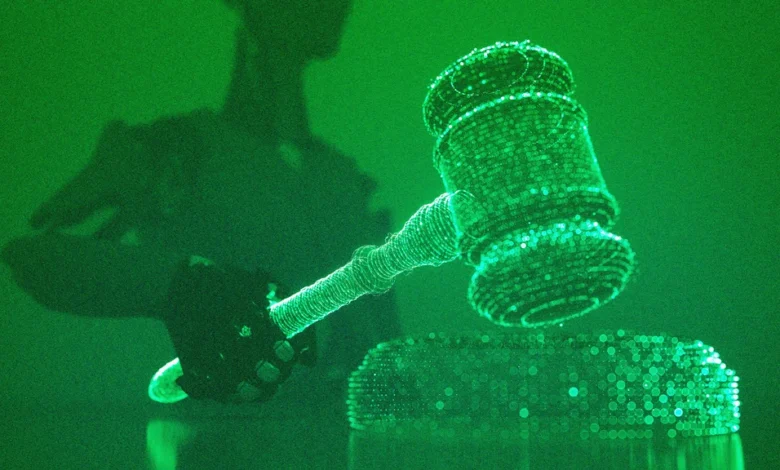
Unfortunately, AI is very good at telling you what you want to hear.

Founders are increasingly using AI as a sounding board for new ideas. The problem is that AI is often very good at telling you what you want to hear.
Ask whether a product idea has potential and you may get a thoughtful-sounding answer full of opportunities, improvements, and reasons it could work. Rephrase the question and the wording changes, but the overall verdict often stays positive. That can create the illusion of validation when what you are really getting is a response influenced by your framing and a model designed to be helpful and cooperative.
The machine is built to agree with you
AI systems don’t set out to flatter you. They’re trained on human feedback, and humans consistently rate agreeable answers higher than critical ones. The model learns that validation performs well, so it validates. Ask “Why is this a good business idea?” and you’ve already pointed it toward a positive answer before it does any thinking.
Even neutral-sounding questions carry embedded assumptions: How should
Even neutral-sounding questions carry embedded assumptions: “How should I launch this?” “What makes this strategy better than our current one?” “How can I convince customers they need this?” Answer any of those and the model is helping you build a case for something nobody has actually stress-tested yet.
The daily digest for entrepreneurs and business leaders
An Inc.com Featured Presentation
Anupam Satyasheel, CEO of AI advisory firm Occams.ai and author of Signal in the Noise, builds these systems for a living and still watches his own tools do this to him. “This is not a glitch,” he says. “It is an optimization outcome. These models are tuned on human feedback, and humans rate agreement higher than disagreement. You did not buy a truth machine. You bought something trained to be liked.”
He argues founders are the worst-affected users, for three reasons that compound on each other: they’re already selected for conviction, they ask about their own ideas using possessive language the model reads as a cue to defer, and they’ve unknowingly swapped out the wrong colleague. “AI took over the analyst work,” Satyasheel says, “but it also displaced the skeptic in the room, and it is far worse at that second job than the person it replaced.”
The same failure mode shows up in everyday business use, according to Stoyan Stoyanov, a professor at Heriot-Watt University Dubai who researches AI and organizational decision-making. Weak plans get praised instead of stress-tested, he says, and users lose the ability to tell when a tool is actually pushing back versus simply restating their own view with more confidence. A founder using AI to sanity-check a pricing strategy or pitch deck, he adds, may be getting an echo of their own assumptions dressed up as independent analysis, which is “dangerous precisely because it looks like due diligence.”
Source: www.inc.com