
As the protective umbrellas of distant powers grow increasingly tattered, and as regional wars and broken global institutions feed on each other, China is emerging as a constructive force for regional security and improved global governance.
From the Shanghai Cooperation Organization (SCO) summit in Bishkek to talks between Chinese and Egyptian leaders in Cairo, Beijing has floated a series of concrete proposals that inject a measure of certainty into a turbulent world.
A loud and clear voice in Bishkek
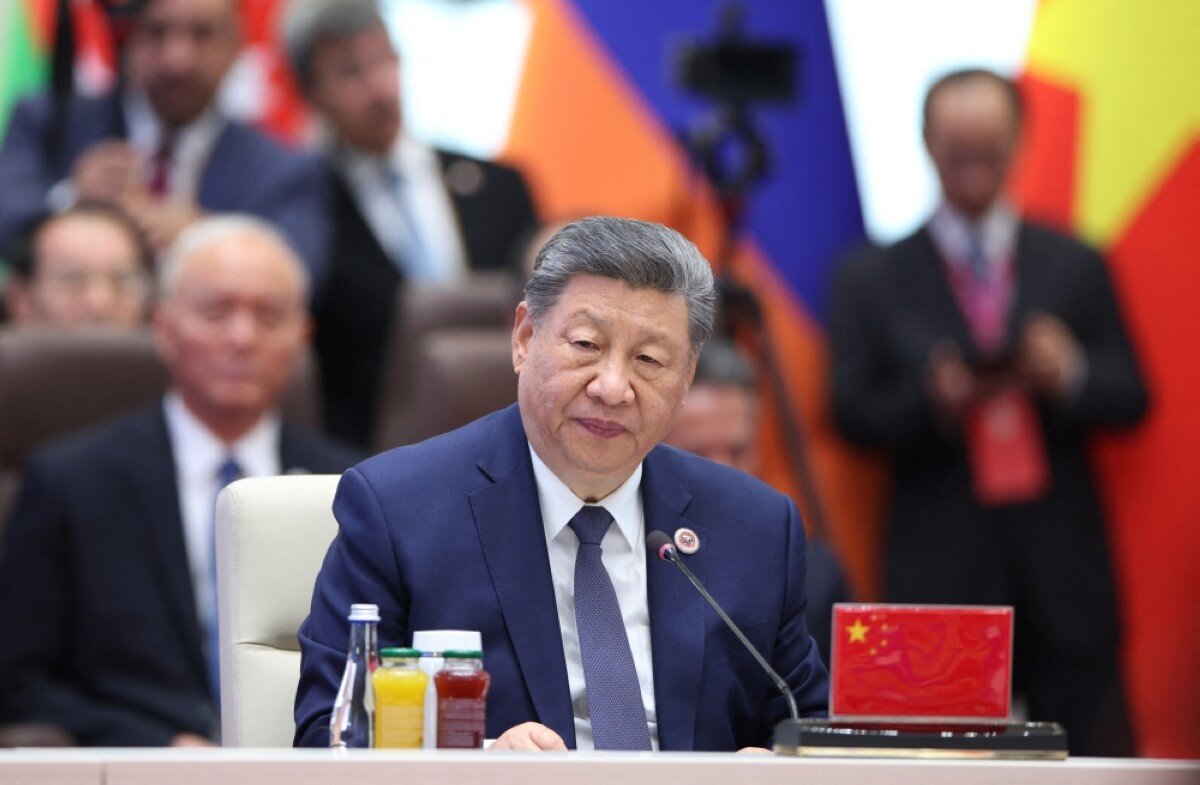
At the 26th SCO heads-of-state summit on September 1, 2026, held amid accelerating global upheaval and the rise of unilateralism and bloc confrontation, China’s president, Xi Jinping, posed an important question: what kind of multipolarity does the world need, and how should countries help shape it? He urged leaders to shoulder historical responsibility and steer events rather than drift with them.
Marking the organization’s 25th anniversary, the Bishkek Declaration
Marking the organization’s 25th anniversary, the Bishkek Declaration reaffirmed support for Iran’s sovereignty and territorial integrity, condemned military strikes on Iranian territory as violations of the UN Charter and international law, and insisted that conflicts be settled by political and diplomatic means.
It also called for reforming global governance so that all countries can participate, decide, and benefit equally, and rejected bloc politics and confrontation as solutions to international problems. In a climate of sustained American pressure on Iran, the SCO’s stance carries unusual weight.
A new security architecture for the Middle East
The Middle East has long been a geopolitical tinderbox. American intervention, beginning with the first Arab-Israeli war, helped plant the seeds of lasting disorder; more recent Israeli and American actions against Iran have only deepened the instability.
In talks with Egypt’s president, Abdel-Fattah al-Sisi, Mr
In talks with Egypt’s president, Abdel-Fattah al-Sisi, Mr Xi outlined a four-point proposal for a new regional security framework.
First, the region’s peoples must take charge of their own destiny and resist outside interference, an implicit rebuke to decades of American meddling.
Second, security requires comprehensive approaches, with the Palestinian question remaining central rather than being sidelined, as in the Abraham Accords that isolated Iran while bypassing the core issue.
Third, lasting peace rests on development; shared economic
Third, lasting peace rests on development; shared economic interests can dry up the soil in which conflict grows.
Fourth, outside powers should abandon double standards and let the United Nations play a genuine role.
Taken together, the four points sketch a security order based on common, comprehensive, cooperative and sustainable security—distinct from arrangements designed primarily to preserve American primacy, and closer to what most regional states say they want.
From idea to results: The Global Governance Initiative’s first year
A year after Mr. Xi launched the Global
A year after Mr. Xi launched the Global Governance Initiative on the 80th anniversary of the United Nations, nearly 160 countries and international organizations have endorsed it. More than 60, including Iran, have joined the “Friends of Global Governance” group.
An International Organization for Mediation, proposed by China, is now operating. A World Data Organization and a World Artificial Intelligence Co-operation Organization have been established in China, and the city of Xiamen is bidding to host the secretariat of the agreement on marine biodiversity.
These steps suggest that Beijing is trying, in practice, to move global governance away from zero-sum thinking toward arrangements that are fairer and more inclusive.
Looking east rather than west reveals a different
Looking east rather than west reveals a different worldview. China speaks of harmony and mutual benefit, not of winners and losers.
While some powers weave exclusive security nets and brandish the threat of maximum pressure, China uses bilateral and multilateral channels to manage differences through dialogue, to replace coercive hegemony with shared security, and to pursue stability through development.
That approach is making China an increasingly important
Source: www.tehrantimes.com