
Elite football tends to pull its best young players away early, away from their homes, their families and everything they know.
Lionel Messi was just 13 when he left Rosario for Barcelona, while Cristiano Ronaldo was a year younger when he traded Madeira for Lisbon.
And while football’s pull rarely lets go, Welsh rugby is different.
There are past and present professionals across the country who remain deeply rooted in their community clubs.
Josh Adams has won 70 caps for Wales
Josh Adams has won 70 caps for Wales and toured with the British and Irish Lions, yet has still taken on the role of assistant attack coach at his boyhood club Hendy.
Wales back-row Aaron Wainwright is another example. He may have left Dragons for Leicester Tigers, but remains director of rugby for Whiteheads RFC.
Other players include Wales centre Joe Hawkins who helps out at Ystalyfera, Wales back-row Harri Deaves who is heavily involved at Pontyclun, while former Wales Under-20s captain Ryan Woodman gives time to Caldicot.
Before all of them, Wales and Lions forward
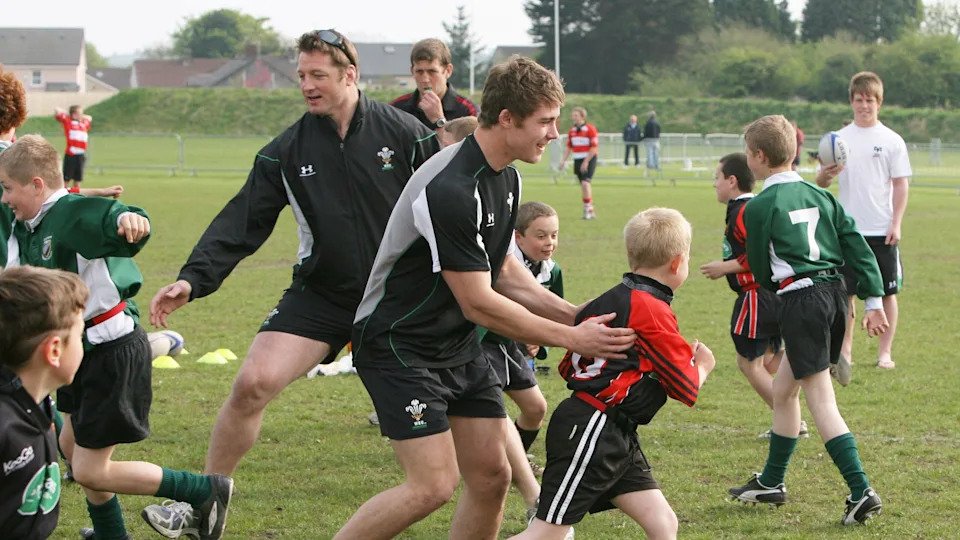
And before all of them, Wales and Lions forward Justin Tipuric was a shining example of giving something back having spent years coaching at Trebanos.
Staying connected
It is not just about coaching, it is what coaching represents.
These are not retired players easing into the next phase, some are still in their early 20s trying to establish themselves.
They are doing it while their own careers are happening, while the meetings, reviews, travel and pressure of professional rugby are still very real. Not afterwards but now, and not for the optics either.
This is not some tidy little side hustle,
This is not some tidy little side hustle, it is not a story for Instagram. Most of them probably do not even want the attention. It is just a way of staying connected – to the village, to the club, to the mates still there, to the game before it became a job.
Hawkins, 23, is one of the clearest examples.
“Ystalyfera is in my blood,” said the Scarlets player.
“My grandfather used to be chairman and president at the club, my grandmother used to work in the burger van, my mother’s been physio, my head coach now – Gareth James – is my cousin.”
That does not sound like networking, it sounds like home, and when Hawkins explains why he does it, the point sharpens further.
No, not at all, he said when asked
“No, not at all,” he said when asked if he is doing it for money or some kind of professional development.
“In the professional game, there’s so much pressure at times to perform and everything. It’s nice to come back to community rugby where everyone’s doing it for the love of the game and just enjoying themselves.”
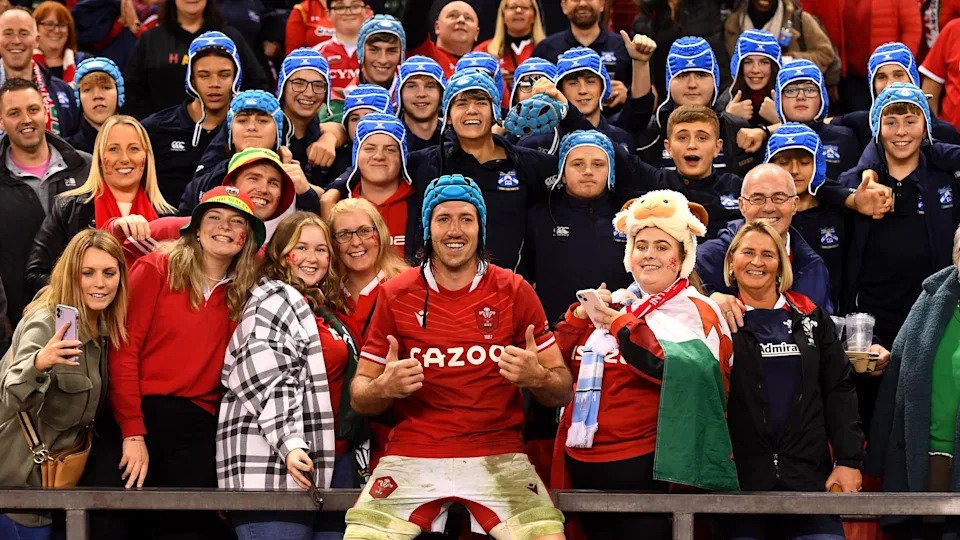
That is the bit modern sport does not always leave much room for.
At the 2022 World Cup, only Qatar and Saudi Arabia had squads made up entirely of players from their own domestic league.
Welsh rugby, for all its flaws, still leaves
Welsh rugby, for all its flaws, still leaves room for a player to go back and run a village session on a Thursday night.
“I love doing it,” Hawkins added.
“This is where it all starts for everyone and there are people who go on to play professionally. They all start in community rugby somewhere.”
There is a bigger point here for Welsh rugby too. For a sport that spends much of its time talking about pathways, identity and reconnecting the professional and community game, it already has some of that connection in plain sight.
That is why Adams at Hendy is more than a nice local story.
It is a reminder that, in one important way, Welsh rugby still works differently.
Its players do not always disappear into
Its players do not always disappear into the distance. Some still come back. Some still coach. Some still feel that the place which made them deserves something back.
And in a sporting age that keeps dragging its stars further and further from home, that feels rare enough to be worth holding on to.
Source: sports.yahoo.com