

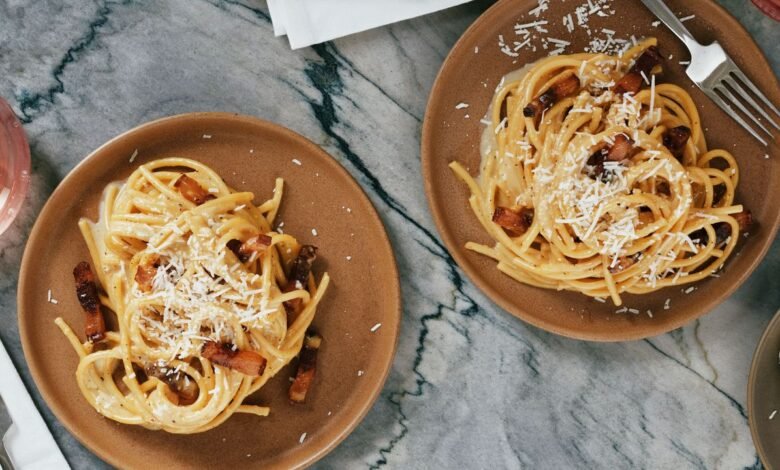
With crispy pork, plenty of black pepper, and a simple, glossy sauce, this carbonara recipe delivers a lot with very little. The Roman pasta combines spaghetti with guanciale, Pecorino Romano, eggs, and pasta water—no cream required.
The trick is temperature control. Temper the egg and cheese mixture with hot pasta water, then toss it with the spaghetti off the heat so the eggs thicken into a silky sauce instead of scrambling. Guanciale gives the dish its classic savory richness, but pancetta or bacon work too; Parmesan can stand in for Pecorino. From there, all you need is 22 minutes and a fork.
Spaghetti Carbonara FAQ
What is guanciale, and what can I substitute for it?
Guanciale is cured pork jowl and the traditional choice for carbonara. If you can’t find it, pancetta is a great substitute; thick-cut bacon works too, though its smoky flavor will change the character of the dish.

How do you keep the eggs from scrambling in carbonara?
Remove the pot from the heat before adding the eggs. Whisk ¼ cup hot pasta water into the egg and cheese mixture to temper it, then slowly pour it over the spaghetti while stirring constantly. The residual heat will gently thicken the eggs into a glossy sauce instead of scrambling them.
Doesn’t carbonara have cream in it?
No. Classic carbonara gets its creamy texture from eggs, cheese, rendered pork fat, and starchy pasta water, which come together to form a silky, emulsified sauce—no cream required.
How much pasta water should I use for carbonara?
Reserve 1¾ cups before draining the spaghetti. You’ll use 1 cup to finish cooking the pasta and ¼ cup to temper the eggs. Once the egg mixture is added, thin the sauce with more pasta water, 1–2 Tbsp. at a time, until it’s glossy and about the consistency of heavy cream. You probably won’t need all of it. Read more:

Pasta Water is Liquid Gold, Here’s How to Use It
Is Pecorino Romano or Parmesan better for carbonara?
Yes. Pecorino Romano is sharper, saltier, and more traditional in carbonara; Parmesan is nuttier and milder. Either works in this recipe, or use a combination of the two. Read more:

3 (Cheaper!) Substitutes for Parmesan Cheese
How do I keep carbonara from getting too salty?
Cured pork and hard cheese already bring plenty of salt, so measure the salt for the pasta water carefully. This recipe calls for 3 Tbsp. Diamond Crystal or 1 Tbsp. plus 2¼ tsp. Morton kosher salt for a full 6 qt. water. Different salts have different densities, so don’t substitute an equal volume of table salt. Taste the finished carbonara before adding any more.
Recipe information
Ingredients
Tbsp. Diamond Crystal or 1 Tbsp. plus 2¼ tsp. Morton kosher salt, plus more
oz. guanciale (salt-cured pork jowl), pancetta (Italian bacon), or bacon
oz. Parmesan or Pecorino Romano
large eggs plus 3 large egg yolks
Freshly ground black pepper
Need to make a substitution?
Preparation
-
Step 1
Heat 6 qt. water in a large pot over high heat. When water starts to steam, add 3 Tbsp. Diamond Crystal or 1 Tbsp. plus 2¼ tsp. Morton kosher salt and cover pot with a lid (this will bring water to a boil faster).
Step 2
While you are waiting on the water, do a little prep. Slice 4 oz. guanciale, pancetta, or bacon into about 1x¼” strips. Finely grate 2 oz. Parmesan or Pecorino Romano and set aside a quarter of the cheese for later.
Step 3
Whisk 2 large eggs plus 3 large egg yolks in a medium bowl until no streaks remain, then stir in bulk of the grated cheese. Add several cranks of freshly ground black pepper and set aside.
Step 4
Working next to pot, heat 2 Tbsp. extra-virgin olive oil in a large Dutch oven or other heavy pot over medium. Add sliced guanciale, pancetta, or bacon and cook, stirring occasionally, until crisp around the edges, 7–10 minutes.
Step 5
Remove pot from heat. Using a wooden spoon, scoop out pork and transfer to a small bowl. Pour fat into a heatproof measuring cup, then add 3 Tbsp. of rendered fat back to pot. (Discard any remaining fat or reserve for another purpose; it’s great for frying eggs.)
Step 6
Cook 12 oz. spaghetti in salted boiling water, stirring occasionally, 2 minutes shy of package instructions. Just before pasta is finished, scoop out 1¾ cups pasta cooking liquid with same heatproof measuring cup.
Step 7
Add 1 cup reserved pasta cooking liquid to Dutch oven and bring to a boil over medium-high. Drain spaghetti in a colander, then transfer to Dutch oven.
Step 8
Cook pasta, stirring constantly and vigorously, until al dente and water is reduced by about half, about 2 minutes. Remove pot from heat.
Step 9
Whisk ¼ cup reserved pasta water into egg mixture, then very slowly stream into Dutch oven, stirring constantly, until cheese is melted and egg is thickened to form a glossy sauce. Season with kosher salt, if needed. Thin sauce with remaining ½ cup pasta cooking liquid, adding a tablespoonful at a time, until it’s the consistency of heavy cream (you most likely won’t use all of it).
Step 10
Mix in pork and divide pasta among bowls. Top with pepper and reserved cheese.
Editor’s note:This recipe was first printed in our January 2018 issue; it has been updated for style. Head this way for more of our best pasta recipes →

Photo by Travis Rainey, Food Styling by Leslie Raney Garetto
Weeknight MealsDinnerPastaItalianEuropeanGuancialeCured MeatMeatPancettaBaconSpaghettiPasta & NoodlesEasyQuick5 Ingredients or FewerMainNut-FreeRecipe All-Star
Source: www.bonappetit.com