

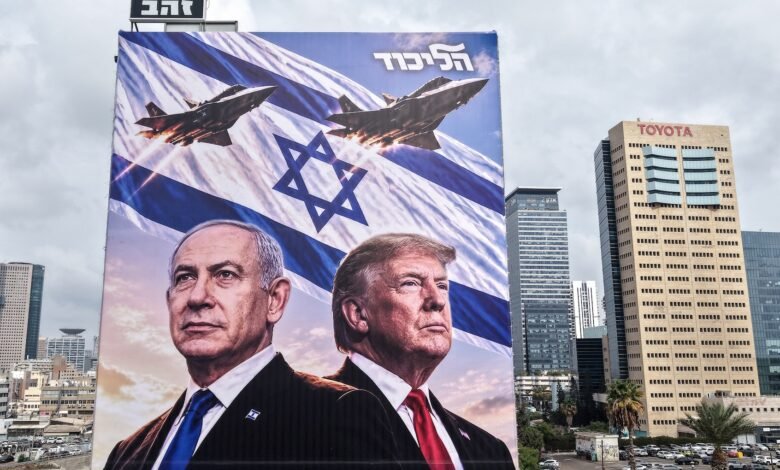
Benjamin Netanyahu didn’t win last week’s election in Israel. But he didn’t exactly lose it either. The real loser may have been Israel’s fragile democracy, already corrupted from within, perhaps past the point of no return, by Netanyahu’s decades-long death-grip on power.
On the eve of a momentous election in the United States, the parallels are both inexact and unavoidable. Israelis must now decide what kind of country they will have, or at least what kind they aspire to have. They must decide whose votes actually count, and whether some citizens are more equal than others.
Those same questions also confront Americans, both in this week’s midterm elections and, in a more general sense, on the larger political and historical stage. No doubt it is tempting for liberals and progressives to express outrage at the blatant flaws and contradictions of Israeli democracy. But to invoke the Christian tradition here, it might be better to remove the plank from your own eye before trying to remove the speck from your brother’s.
On the surface, the electoral arithmetic in Israel
On the surface, the electoral arithmetic in Israel appears straightforward. Parties opposed to Netanyahu’s far-right government won 67 of the 120 seats in the Knesset, Israel’s parliament. So a majority coalition of anti-Netanyahu forces is clearly achievable, right? You would think so, except that 19 of those 67 seats were won by Israel’s “Arab parties,” an all-time high, and that startling fact has thrown the entire political system into confusion.
Netanyahu and his allies have spent the last week airing groundless allegations that the election was fraudulent or rigged, a refrain that Americans are likely to hear a great deal in coming days. What the Zionist far right means is that too many Israeli Arabs — meaning the Palestinian population that remained in Israel after the state was created in 1948 — decided to vote this time, an outcome that no one expected, and that none of the parties representing the Jewish majority particularly wanted.
Now, in a masterstroke of historical or perhaps biblical irony, Israel’s Arab minority — which is not a monolithic group in political or cultural terms, and until now has never been electorally significant — holds the balance of power, and perhaps the nation’s future, in its hands.
In a masterstroke of historical or perhaps biblical
In a masterstroke of historical or perhaps biblical irony, Israel’s Arab minority — which is not a monolithic group in political or cultural terms, and until now has never been electorally significant — holds the balance of power, and perhaps the nation’s future, in its hands.
Gadi Eisenkot, the former general who leads the centrist-Zionist opposition to Netanyahu, promised during the campaign not to form a government with Arab support. Over the last several nights, thousands of demonstrators in Tel Aviv and Jerusalem have urged him to do precisely that, since the only realistic alternative is the grim default setting of Israeli politics: another wobbly right-wing government headed by Netanyahu, which means more brutality and destruction in Gaza, more war with Iran and more settler violence in the West Bank.
As Gideon Levy of the left-leaning Israeli newspaper Haaretz explains it,
The future of Israel now depends on its Arab citizens and on the attitude of its Jewish citizens toward its Arab ones. Eighty years after the Nakba and the establishment of the Jewish state, Israeli Palestinians may determine its fate. Is there greater historical justice than that?
The election’s unexpected results are “a cause for rejoicing,” Levy writes, in that they have presented Israelis with a clear choice “between a government led by Benjamin Netanyahu and a government that includes the Arab parties.” If the “change bloc” within the Zionist majority cannot accept a coalition with Arab Israelis, he continues, “they will make it clear that they are actually the same as Netanyahu, that they prefer even the devil Netanyahu over repressing their racism. … [E]veryone will know that racism is the supreme value in this country, across the board, above any other value.”
That ferocious language certainly does not represent mainstream
That ferocious language certainly does not represent mainstream Israeli opinion, but it’s fair to say the strong emotion beneath Levy’s words is far more widely felt. I don’t think it’s possible for a non-Jewish observer (such as myself), however well educated or sympathetic, to understand the anguish felt by Jewish people — wherever they live, and whatever their political views — at the enormous distance between what Israel originally represented to the world, or claimed to represent, and what it represents now.
We need your help to stay independent.
Become a member to support Salon’s progressive journalism. Join today!
I’m old enough to remember when most American liberals and progressives viewed the state of Israel in overwhelmingly positive terms, as a locus of charismatic or heroic renewal for the people Hitler couldn’t kill, infused with the spirit of European socialism and, not far below the surface, the collective guilt of the Holocaust. I grew up in one of the most left-liberal corners of America, surrounded by educated adults who supported the civil rights movement, opposed the Vietnam War, hated Richard Nixon and loved Israel. Golda Meir and Moshe Dayan were beloved celebrities; the Six-Day War of 1967 and the Yom Kippur War of 1973, as narrated by U.S. media, were straight-up battles between the forces of light and darkness.
That says more about the moral blindness or willful innocence of American liberalism, I must admit, than it says about Israel. In any event, when I saw Joe Biden’s fateful bear hug with Netanyahu on the tarmac of Ben Gurion Airport in the aftermath of the dreadful Oct. 7 attack, I understood it. I recognized the country Biden was coming from, because I came from there too: It was the Democratic majority of the not-so-distant past, when Israel was embraced as a light to the nations and left-wing radicals who brought up the Palestinian cause were being unreasonable hotheads, if not openly antisemitic and a little bit Nazi.
What Israel has become during Netanyahu’s long
What Israel has become during Netanyahu’s long and destructive reign is now clear to most of the world, and most of all to the many Jewish or Israeli critics who have been speaking difficult truths for many years, often at enormous personal cost. I am disinclined, however, to judge too harshly those who cling to the vision of Israel as an exceptional nation — one that has stumbled, perhaps, but may yet regain its true path.
Want more sharp takes on politics?
Sign up for our free newsletter, Standing Room Only by Amanda Marcotte, also a weekly show on YouTube or wherever you get your podcasts.
Like I said earlier, we should mind the plank in our own eye first. Isn’t that the same vision that many Americans still cling to? That somehow, on the other side of this dreadful phase of our history — yes, a full decade of Donald Trump, but I’m afraid the damage goes back a lot further than that — the “indispensable nation” variously articulated by Abraham Lincoln, John F. Kennedy and Barack Obama is still there, still retrievable, still bending its moral arc toward justice.
Americans and Israelis are conjoined by history,
Americans and Israelis are conjoined by history, for better or worse, and now see each other as distorted reflections, through a glass darkly, as the King James Bible puts it. We face versions of the same decisions this week, about whose votes count and whether the highfalutin words of our constitution apply to everyone. About whether to see terror and tyranny for what they are, and turn the page.
from Andrew O’Hehir on our bewildering world
- Everybody hates Bibi — but he keeps on winning
- Why are young people so angry? Why isn’t everyone?
- Israel and Ireland wage a soccer war
The post The dark paradox of Israel’s election — and ours appeared first on Salon.com.
Source: www.salon.com