Janice Lyons was upstairs in her Summerland, B.C., home when there was a flash at her doorbell, which lights up in her Deaf household in place of a chime.

The 74-year-old came downstairs to find her neighbour Larry at the front door. He pointed to the black clouds on the horizon and wiggled his fingers to pantomime a fire. It was bad, he seemed to be saying, but he was not leaving yet.
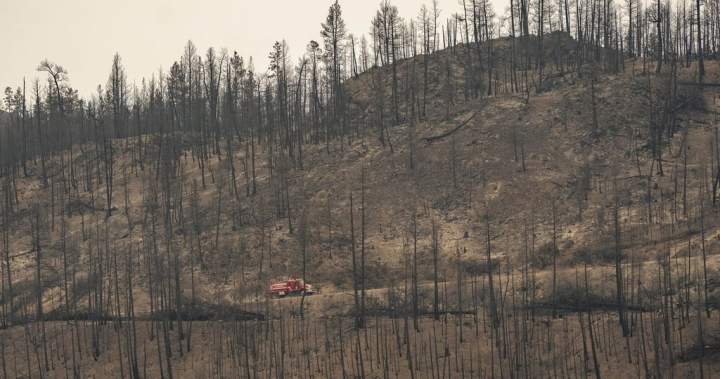
Back inside, Lyons said there was no mention of the fire on her TV or an alert on her phone. She did not realize it yet, but the Bald Range fire was on a blistering path toward her community.
Lyons stayed awake with her husband, who
Lyons stayed awake with her husband, who is also Deaf and uses a walker, as she tried to piece together what was happening. When the doorbell flashed again about four hours later, close to midnight, Larry had returned and this time he looked far more panicked. Ash rained down from the sky as he showed her a piece of paper with the name of an evacuation registration centre in nearby Penticton.
“He’s gesturing, no, no bad, bad. Get going,” Lyons said in an interview, through an interpreter.
“If Larry never came to tell me, I have no idea” what would have happened, she said.
Lyons’ experience earlier this month is illustrative
Lyons’ experience earlier this month is illustrative of the persistent accessibility gaps in Canada, where surveys indicate roughly one in four people have at least one disability. As wildfires, floods and storms grow more intense and frequent due to climate change, researchers and advocates say evacuation procedures are still largely built around the assumption that everyone can hear the sirens, understand the alert, drive themselves to safety or line up to register at a shelter. Globally, people with disabilities are far more likely to be killed in a disaster than others, studies indicate.
The issue is getting harder to ignore. More than 670,000 people in Canada were evacuated between 1990 and 2020, mostly from floods and wildfires, and some estimates suggest that rate could triple by 2030. Yet, research finds Canadians with disabilities rate evacuation plans as mediocre or poor.
Accessibility is often recognized in principle but rarely built into emergency plans in concrete ways, said Tabassum Zarin, a co-author of a recent study of inclusive B.C. wildfire evacuations.
That research found creating enforceable provincial standards, such
That research found creating enforceable provincial standards, such as requiring alerts to be delivered in multiple accessible formats and ensuring shelters are accessible, could help address those gaps. It also pointed to a greater role for people with disabilities in designing those policies in the first place.
“If emergency systems are designed from the beginning with accessibility in mind, they’re more safe and effective for everyone,” said Zarin.
The researchers stressed that their findings were not a criticism of local emergency managers, many of whom are responsible for large remote regions with limited staff and re
2:37
Chile declares state of emergency after catastrophic storm leaves 10 dead, destroys 1,100 homes
- Chile declares state of emergency after catastrophic storm leaves 10 dead, destroys 1,100 homes

B.C. officials monitoring landslide site 24/7
India landslide: At least 93 dead in Kerala as heavy rains cause hillsides to collapse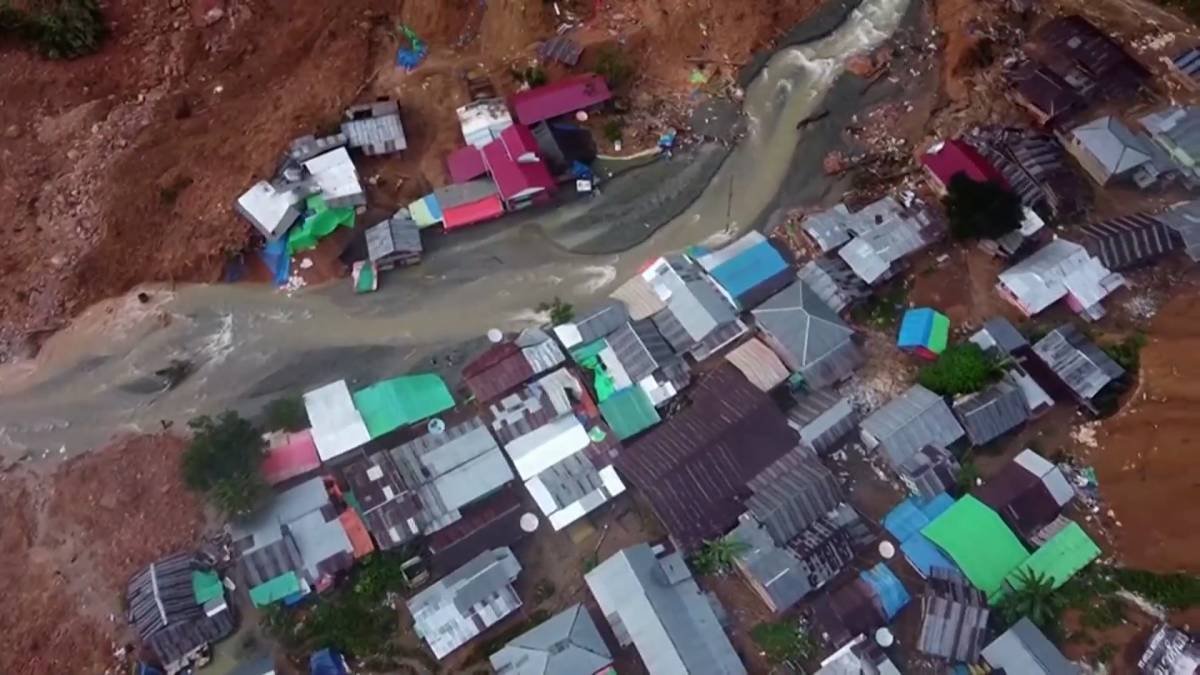
Indonesia landslide: Dozens buried in disaster at illegal gold mine on Sulawesi island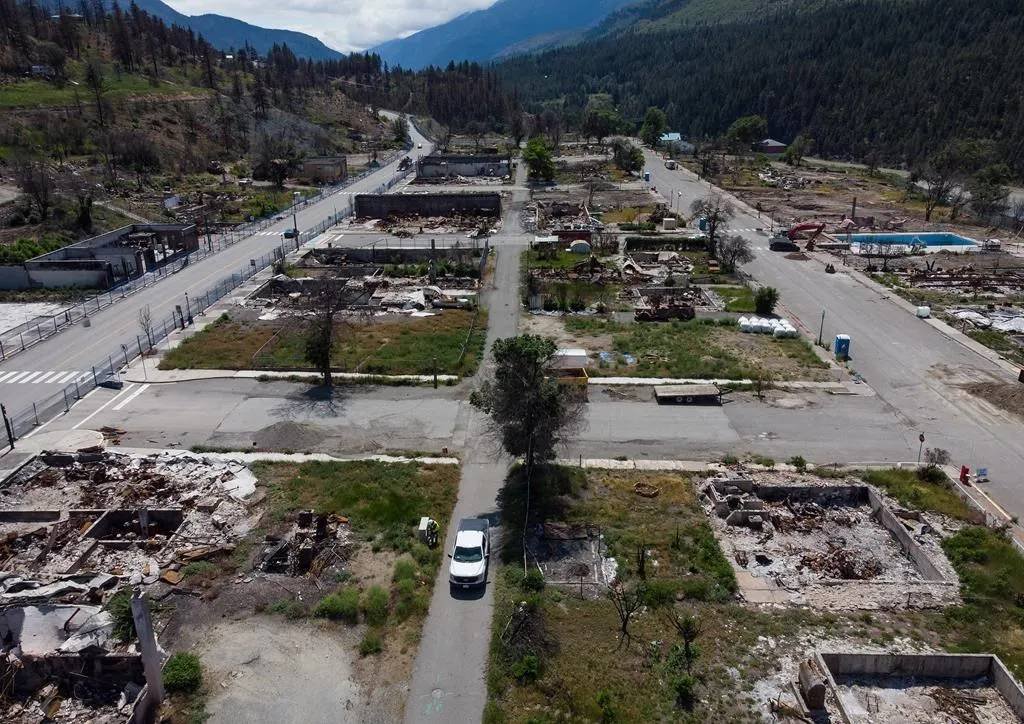
Auditor General to report on B.C. response to Lytton wildfire
B.C. government looks to modernize how it helps disaster evacuees
B.C. offers support for areas impacted by flood waters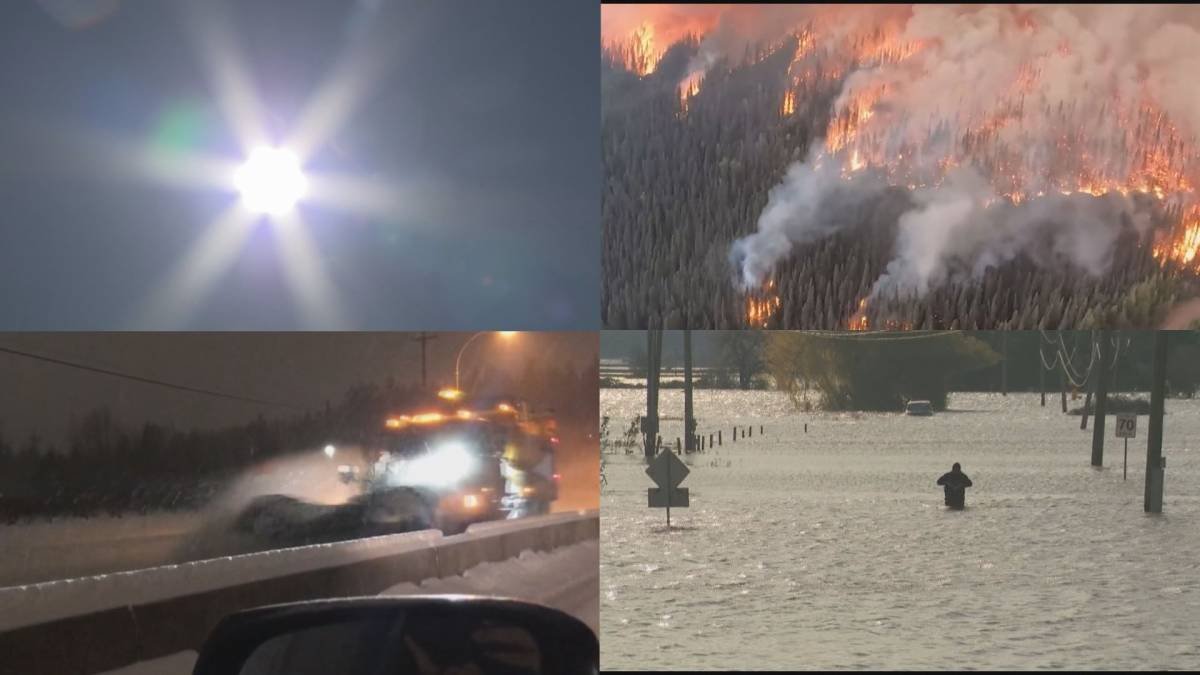
B.C. officials tracking risk of flood and wildfire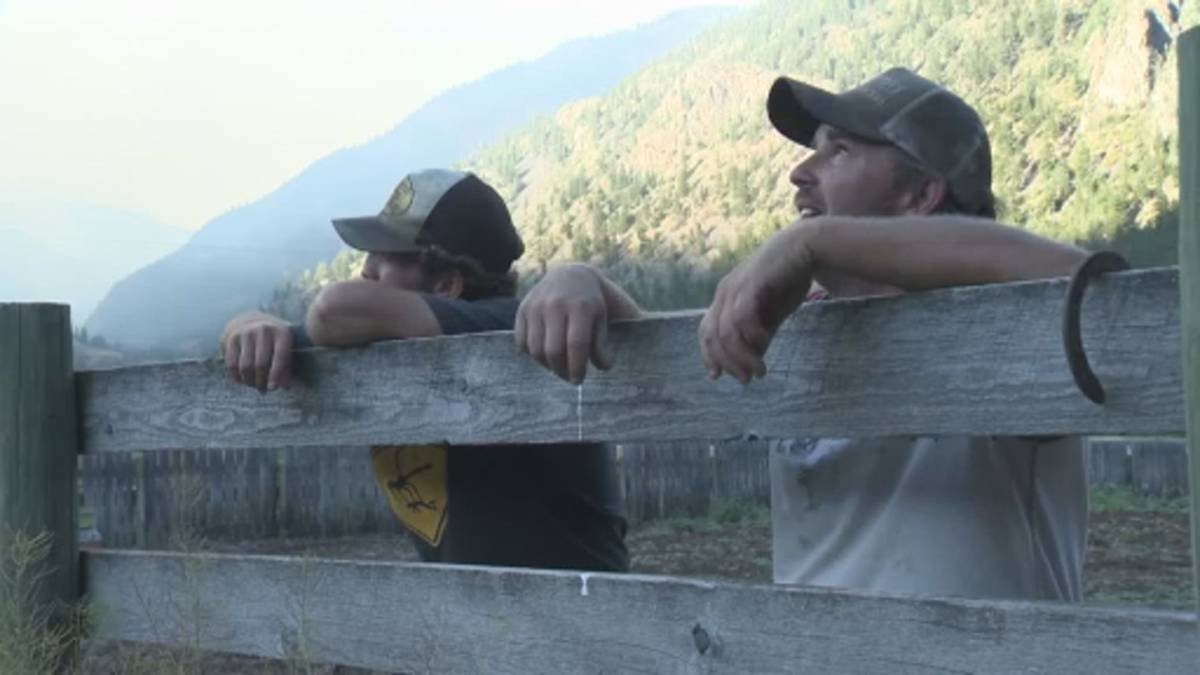
‘This is everything for us’: B.C. residents decide to stay or flee as Keremeos fire swells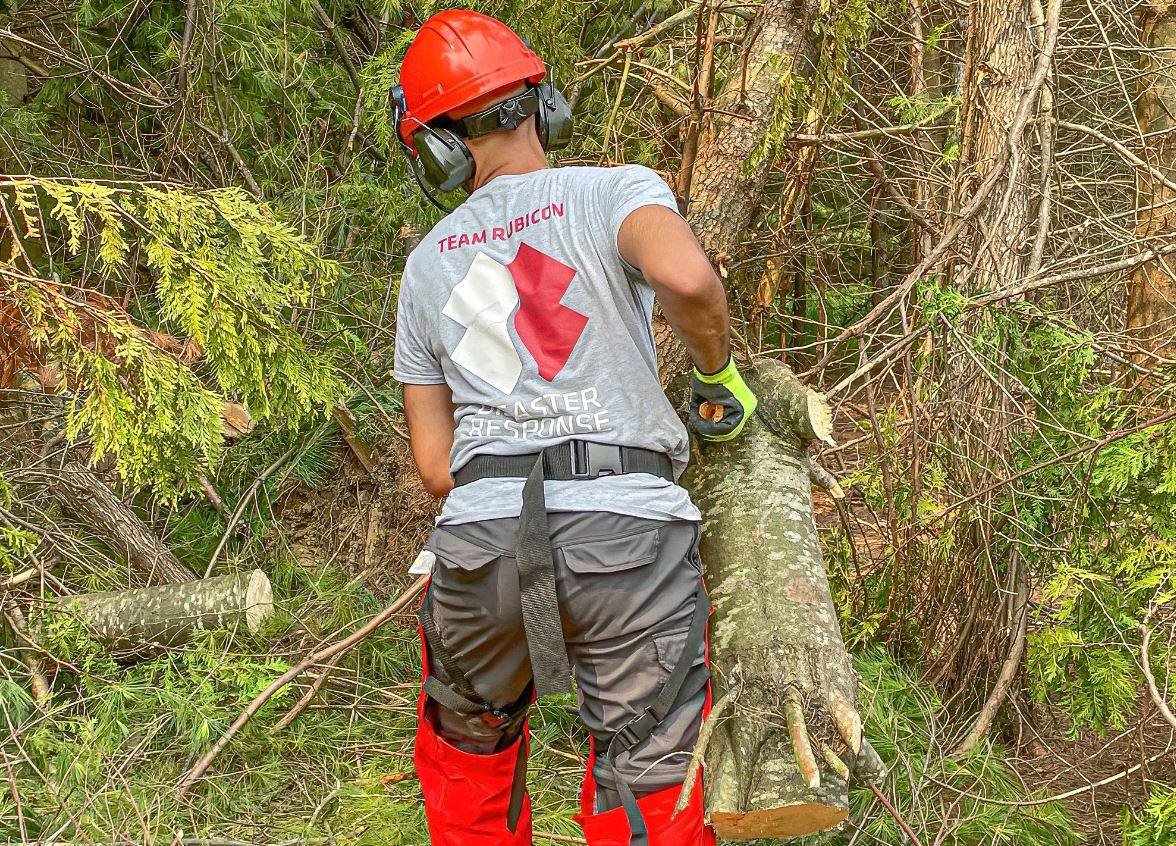
Volunteer-led Team Rubicon to help Peterborough with storm damage cleanup
The goal isn’t perfection because it’s hard
“The goal isn’t perfection because it’s hard to implement that for different communities, different needs. But it’s reducing predictable barriers that we already know exists,” said Zarin.

Get breaking National news
Get breaking Canada news delivered to your inbox as it happens so you won’t miss a trending story.
By providing your email address, you have read and agree to Global News’ Terms and Conditions and Privacy Policy.
Predictable barriers showed up several times during Lyons’ evacuation.
After she packed up her car with her three dogs — who are also deaf — she headed for the registration centre in Penticton. There were no interpreters there and Lyons, whose first language is American Sign Language, struggled to communicate with staff through pen and paper, she said. When her husband tried to register for evacuation aid by phone, through a free interpretation service used widely by Deaf Canadians, he was told it had to be done in person, even if an interpreter was unlikely to be available. The wildfire briefings broadcast throughout the week were held without ASL interpretation.
In a statement, B.C.’s emergency management and climate
In a statement, B.C.’s emergency management and climate readiness ministry said it recognizes people with disabilities can face added barriers during evacuations. It said its emergency management legislation requires planning to consider disability, among other factors.
“This represents a shift toward mandatory inclusion of disability and equity considerations in emergency planning throughout B.C., rather than a patchwork approach,” read the statement.
Accessibility shortcomings can mask the full extent of the problem, says Vinu Abraham Chetipurackal, who is Deaf and sits on the province’s accessibility advisory committee. Deaf, deaf-blind and hard-of-hearing residents make informal arrangements with friends or family outside wildfire zones, plans that only work if there is support nearby. Since some may never register with emergency support services, they don’t appear on the evacuee counts, and their experience never shows up on a post-incident review.
When people can’t access evacuation centres, it’s not
When people can’t access evacuation centres, it’s not just a safety issue, it’s also a visibility issue, he said.
Those same dynamics tend to repeat themselves for people with different disabilities, not just within the Deaf community, says Evan Wicklund, a senior researcher with the Manitoba-based disability organization E
Communication is only part of the challenge. People with disabilities may depend on powered wheelchairs, support workers, oxygen equipment and backup batteries, all of which can be harder to access during an evacuation, he said.
Governments too often treat wildfire or flood
Governments too often treat wildfire or flood as “one-offs” rather than a recurring risk that demands the same advance planning people with disabilities are told to do for themselves, said Wicklund.
“We know it’s cyclical and this will happen again, and we need to be much more robust in our planning, our preparedness and our mitigation afterwards,” said Wicklund. Eoject about accessibility barriers during climate emergencies
When people with disabilities do show up in post-incident reviews, the reports are often grim. A review of the 2023 Northwest Territories fire season found vulnerable residents were not adequately prioritized. Some participants described the operation as an “evacuation of privilege,” reporting that people with disabilities and the elderly waited hours and sometimes all day for evacuation flights, only to be sent home and told to try again the next day. Some individuals with what the report called unique needs, which included language barriers or addictions, were not located for days or even weeks after a fire.
One challenge is knowing who may need help
One challenge is knowing who may need help before an evacuation is declared. In response, some municipalities have looked to voluntary registries.
For Lisa Tssessaze, whose 57-year-old brother Dean Keinberger is on a registry, it offers some reassurance. Keinberger lives independently in Fort McMurray, Alta., but struggles to read and write and leans on Tssessaze for support, she said.
After the 2016 Fort McMurray wildfire, the Regional Municipality of Wood Buffalo created its own registry run through the fire department. Eligible residents, many of whom live independently, meet with an official to discuss their needs in advance and are provided with training about what to do in case of an emergency, plus a bag loaded with some evacuation basics, such as a blanket and a flashlight radio.
Emergency officials can use that information to identify
Emergency officials can use that information to identify who needs help and what resome cases, registrants are moved ahead of a full-scale evacuation
Jasper, Alta., Halifax, and East Kootenay, B.C., are among the communities who have followed suit.
The voluntary program costs Wood Buffalo the equivalent of about half a full-time employee, plus the kits, officials say. About 200 registrants were enrolled as of last summer.
Keinberger, an avid Edmonton Oilers fan who enjoys
Keinberger, an avid Edmonton Oilers fan who enjoys keeping up with the news and has worked at Canadian Tire for years, agreed to be interviewed but asked not to be recorded. When asked what he thought of the registry, he said it was good. He said he better understood what to do during an evacuation after speaking with officials as part of the registry onboarding.
Before Keinberger joined the registry, a major 2020 flood left Tssessaze scrambling to reach him. She said she eventually persuaded officials to let her through barricades so she could check on him.
She has since moved away from Fort McMurray and takes comfort in knowing emergency officials are aware of her brother’s needs.
I find it very helpful, she said
“I find it very helpful,” she said. “There’s other people with my brother’s interest in mind in case of emergencies.”
While the registry works for some, advocates and researchers caution it’s not a panacea. Some noted there are privacy concerns with a registry, especially if it’s held by police. Others noted people with disabilities are already heavily documented by service providers and may be reluctant to sign up.
It may also give registrants a false sense of security if they assume it will guarantee them an immediate response in a fast-moving emergency, said Erin O’Connell, a University of Waterloo associate professor and co-author of the accessibility paper on B.C.’s wildfire response.
They have to be done very carefully
“They have to be done very carefully in a way that is actually realistic in terms of what first responders are able to provide so that people don’t have unrealistic expectations of what supports might be provided to them,” said O’Connell.
After days of uncertainty, Lyons returned to Summerland this week. Ash was scattered around the property and the smell of smoke clung to her home.
Others were less fortunate. Officials said about 150 structures have been damaged in the fire. An 80-year-old woman died suddenly as she left her home, police said.
Many shops remained closed and firefighting helicopters
Many shops remained closed and firefighting helicopters were parked at the local school, Lyons said.
The relief of homecoming has not shaken her concern about what could happen the next time disaster strikes, but it has underlined her desire to see people with disabilities at the forefront of evacuation plans and decision-making.
“It’s often hearing people who look and they go, ‘Oh, here’s what we’re going to do.’ They make a decision, but it doesn’t match the requirements for deaf-blind, Deaf, hard-of-hearing people,” she said.
This report by The Canadian Press was first published Aug. 22, 2026.
Source: globalnews.ca